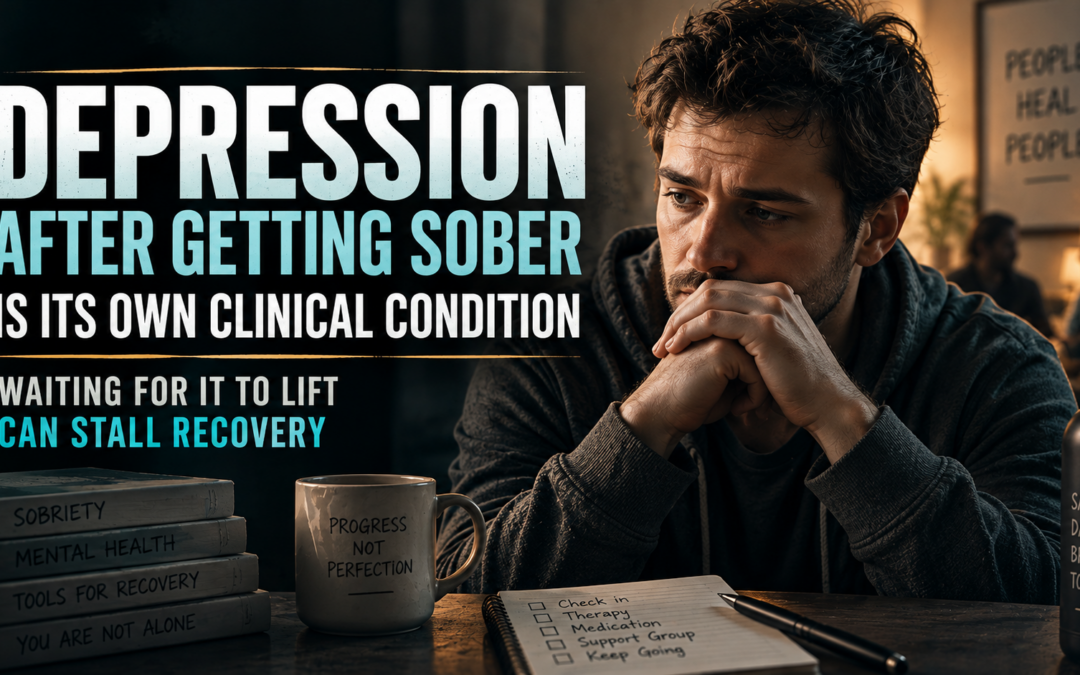
Depression after getting sober is its own clinical condition, and waiting for it to lift on its own is one of the most common ways recovery quietly stalls. Many people expect to feel better once substances are gone, then feel confused and discouraged when a heavy, lingering sadness settles in instead.
If you or someone you love has reached sobriety and still feels low, empty, or hopeless, you are not doing recovery wrong. This experience is real, common, and treatable.
The hopeful truth is that depression after sobriety responds well to care, especially when it is treated directly rather than waited out. Understanding why it happens is a gentle first step toward steadier days ahead.
Why Does Depression After Getting Sober Happen?
Depression after getting sober happens because the brain and body need time to rebalance, and for many people, an underlying mood condition surfaces once substances are no longer masking it. What feels like a setback is often the brain doing hard, necessary work.
During substance use, the brain adapts to artificial changes in mood and reward. When the substance is removed, it takes time for natural chemistry to recover, and low mood can fill that gap.
Think of it like turning off bright stage lights and stepping into a dim room. Your eyes need time to adjust before you can see clearly again. The brain needs that same adjustment period, and depression can settle in while it heals.
Was the Depression There All Along?
For many people, depression was present before substances ever entered the picture, quietly shaping the reasons they used in the first place. Sobriety simply removes the thing that was covering it up.
Alcohol or drugs can numb sadness for a while, which makes it easy to lose track of an underlying condition. Once that numbing effect is gone, the original pain becomes visible again.
This is not a sign of weakness or failure. It is a sign that a real condition finally has room to be seen and treated.
Why Should Depression After Sobriety Be Treated as Its Own Condition?
Depression after sobriety should be treated as its own clinical condition because it does not always resolve just because a person stops using. Assuming it will fade on its own can leave someone struggling far longer than necessary.
Recovery from substance use and recovery from depression are related, but they are not the same journey. Each one deserves focused, intentional care.
What Happens When People Wait for It to Pass?
When people wait for depression to pass on its own, it often deepens and quietly increases the risk of returning to substances. The waiting itself can become dangerous.
A person may tell themselves the sadness is just part of getting sober. Weeks go by, hope fades, and the low mood begins to feel permanent.
During that stretch, everyday life gets harder and the pull toward old coping habits grows stronger. Treating depression directly closes that gap before it widens.
How Is This Different From Ordinary Post-Sobriety Adjustment?
The difference is that clinical depression persists, deepens, and interferes with daily life, while normal adjustment tends to ease over time. Some ups and downs in early recovery are expected. Lasting hopelessness is not something to simply endure.
Adjusting to life without substances naturally comes with tough days. Those feelings usually soften as new routines take hold.
Clinical depression lingers regardless of circumstances. When low mood, exhaustion, or emptiness stick around for weeks, that is a signal to reach out rather than wait.
How Does Depression After Sobriety Affect Relapse Risk?
Depression after sobriety raises relapse risk because untreated low mood recreates the exact pain a person once used substances to escape. When that pain returns and nothing eases it, the old solution can start to look tempting again.
This connection is one of the most important reasons to treat depression early. Protecting mood is a direct way of protecting recovery.
Why Does Low Mood Pull People Back Toward Using?
Low mood pulls people back toward using because the brain remembers substances as a fast way to feel relief. In a heavy moment, that memory can feel louder than every reason to stay sober.
Depression drains energy, hope, and motivation. Fighting cravings takes all three, so a depressed mind has fewer resources to resist.
This is not about willpower. It is about giving a struggling brain the support it needs so relief does not have to come from a substance.
How Does Depression Affect Daily Functioning?
Depression affects daily functioning by draining the energy and focus needed for ordinary tasks, which can make early recovery feel overwhelming. Simple responsibilities start to feel like heavy lifting.
You might sleep too much or too little, lose interest in things you once enjoyed, or struggle to concentrate. Showing up for work, relationships, or recovery meetings can feel exhausting.
These struggles are symptoms, not personal shortcomings. With the right support, energy and focus tend to return.
What Does Treatment for Depression After Sobriety Include?
Treatment for depression after sobriety includes therapy, medical support when appropriate, and steady daily structure that helps the brain and body recover together. Care is personalized, never one-size-fits-all.
The process often begins with a thoughtful assessment. A caring team learns about your history, your symptoms, and the support you have around you.
From there, treatment tends to blend several proven approaches:
- Individual therapy to explore what is driving the depression and to build practical coping tools
- Cognitive Behavioral Therapy, which helps you notice and gently reshape the thought patterns that fuel hopelessness
- Medication support when helpful, guided by a caring prescriber who monitors how you feel
- Group support that reminds you others understand and you are not walking this road alone
- Attention to daily habits, since sleep, movement, and routine play a real role in mood recovery
Each piece works toward the same goal. The aim is to help you feel steadier, more connected, and more like yourself again.
How Does Integrated Care Treat Both at Once?
Integrated care treats depression and substance use as connected rather than separate, so neither one gets left behind. This whole-person approach gives recovery a much stronger foundation.
When mood and substance use are treated together, progress in one area supports progress in the other. Our mental health treatment programs are built around this idea, keeping your care coordinated under one team.
That coordination helps you feel understood as a full person, not a list of symptoms. It also prevents the gaps where setbacks often grow.
How Does Ongoing Support Protect Progress?
Ongoing support protects progress by keeping care in place during the vulnerable months after early recovery begins. Depression can appear or return well after the first sober weeks.
For many people, outpatient care offers a way to treat depression while staying connected to work, family, and daily life. It provides real structure without asking you to step away from everything.
A thoughtful aftercare plan also keeps support steady over time, so mood struggles get addressed as they arise rather than quietly building.
How Do You Decide When to Seek Help?
You decide to seek help when low mood lingers, deepens, or starts interfering with your recovery and daily life. You never have to wait for a crisis to deserve care.
Consider reaching out if any of these feel true:
- The heaviness has lasted for weeks and shows no sign of lifting on its own.
- You have lost interest in things that once brought you joy, even in sobriety.
- Sleep, appetite, focus, or energy have shifted in ways you cannot shake.
- Thoughts of using again feel louder when your mood drops.
- A loved one has gently expressed concern about your mood since getting sober.
If any of these resonate, that is reason enough to start a conversation with a caring professional. An honest assessment can bring clarity and help you understand which kind of support fits best.
Common Questions Families Often Ask
Is it normal to feel depressed after getting sober?
It is common, yes, but common does not mean it should be ignored. Depression after sobriety is a real clinical condition, and treating it directly is far safer than waiting for it to pass on its own.
Will the depression go away once the brain heals?
Sometimes mood improves as the brain rebalances, but for many people the depression is its own condition that needs its own care. A professional assessment helps sort out what is happening and what will help.
Does treating depression always mean medication?
Not always. Some people benefit from medication alongside therapy, while others find relief mainly through counseling, structure, and support. A caring provider helps you weigh what fits your situation.
How soon can care begin?
Support can start soon after you reach out. Our admissions team is available to answer your questions, verify insurance, and guide you toward the next step with patience and care.
You Do Not Have to Wait for It to Lift
Depression after getting sober is its own clinical condition, and waiting for it to lift on its own is one of the most common ways recovery stalls. Treating that depression directly is not a detour from recovery. It is a vital part of protecting the progress you have worked so hard to build.
Healing is possible, and no one should have to face this heaviness alone. With compassionate support and care matched to your needs, the weight you have been carrying can begin to ease.
If you or someone you love is struggling with depression after getting sober, please reach out to the Robert Alexander Center for Recovery® today. Our caring team is ready to listen, answer your questions, and help you take the next step toward steadier, more hopeful days ahead. You are not alone, and help is here whenever you are ready.