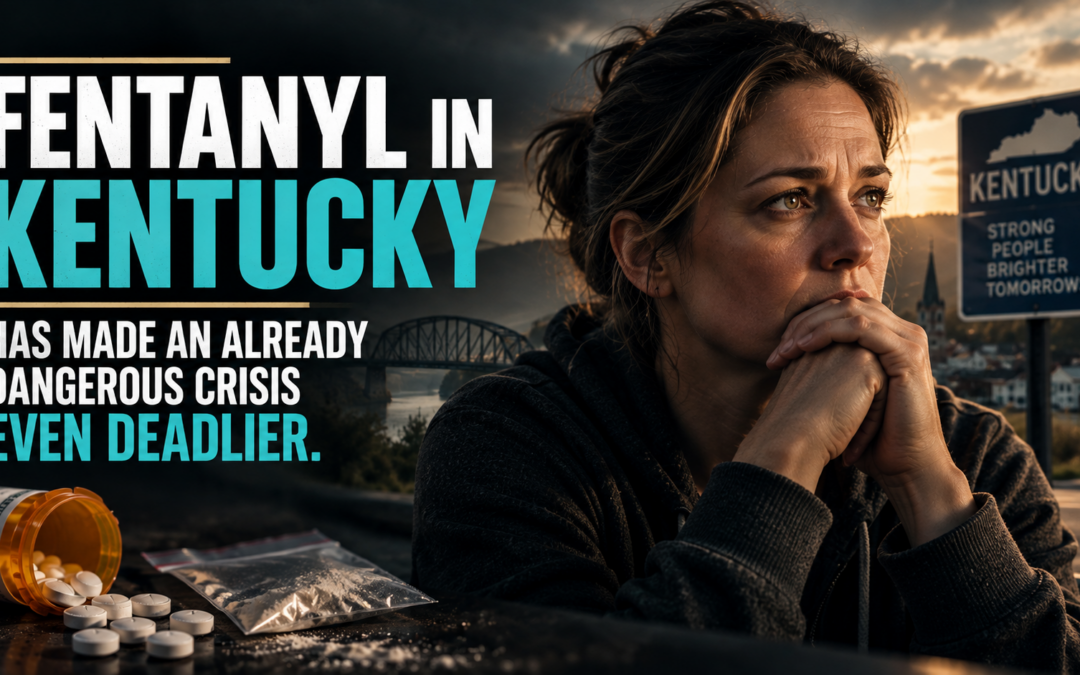
Fentanyl in Kentucky has turned substances that were already dangerous into ones that can take a life with no warning at all. What used to be a known risk has become an unpredictable one, and that change has touched families across the state.
If you or someone you love is using any substance right now, you are not beyond help, and you are not alone in this fear. The uncertainty is real, and so is the hope for a safer path forward.
The good news is that recovery is possible, and support is closer than you may think. Understanding how fentanyl has changed the danger, and why it hides so well, is a caring first step toward safety.
What Is Fentanyl in Kentucky and Why Is It So Dangerous?
Fentanyl in Kentucky is a synthetic opioid that is extremely potent and increasingly mixed into other substances, often without the user knowing. It is dangerous because a very small amount can be deadly, and it now shows up in places people never expect.
Fentanyl is many times stronger than most other opioids. An amount smaller than a few grains of salt can be enough to stop someone’s breathing.
Think of it like a single drop of dye in a glass of water. You cannot see it, taste it, or measure it by looking, yet its effect changes everything. That invisibility is exactly what makes it so risky.
How Has Fentanyl Changed Overdose Risk?
Fentanyl has changed overdose risk by making the danger unpredictable, even for people who believe they know what they are taking. In the past, a person often had a sense of a substance’s strength. Now that certainty is gone.
Because fentanyl is so potent, even a tiny miscalculation can be fatal. There is often no safe margin for error.
This is why overdoses can happen so suddenly. A dose that felt manageable before may contain a hidden, lethal amount today.
How Are People Exposed to Fentanyl Without Knowing?
People are exposed to fentanyl without knowing because it is often mixed into other drugs to increase their potency or cut costs. Someone may believe they are taking one substance while fentanyl is quietly present in it.
This hidden mixing is now common across Kentucky. It reaches pills, powders, and substances that people assume are something else entirely.
Which Substances Can Contain Fentanyl?
Fentanyl can be found in a wide range of substances, including counterfeit pills, heroin, cocaine, and methamphetamine. It is not limited to opioids, which surprises many people.
Counterfeit pills are especially concerning. They can look nearly identical to legitimate prescription medications, yet contain a deadly dose of fentanyl.
This means a person does not have to seek out fentanyl to be exposed to it. The risk can be present in almost any street substance.
Why Is It So Hard to Detect?
Fentanyl is so hard to detect because it has no obvious color, taste, or smell when mixed into other substances. A person cannot tell by sight or feel whether it is present.
Even people who have used substances for years cannot reliably spot it. The usual signals they once relied on no longer apply.
This is what makes the current situation so heartbreaking. Someone can take what they believe is a familiar substance and encounter a fatal dose without any warning.
What Warning Signs Should Families Watch For?
Families should watch for a pattern of changes in behavior, health, and mood rather than a single dramatic moment. Substance use often reveals itself gradually, so the overall picture matters most.
You do not need proof of a crisis to start a caring conversation. Noticing a shift is reason enough to pay closer attention.
Common warning signs worth noticing include:
- Withdrawing from family, friends, or activities once enjoyed
- Sudden changes in mood, energy, sleep, or appearance
- Secrecy about whereabouts, money, or new social circles
- Finding unfamiliar pills, powders, or drug paraphernalia
- Drowsiness, confusion, or flu-like symptoms that come and go
Noticing one sign now and then is part of life. Noticing several together, especially over weeks, is a strong signal to reach out for guidance.
How Is Physical Dependence Different From Addiction?
Physical dependence means the body has adapted to a substance, while addiction involves continued use despite harmful consequences. The two often overlap, but they are not identical.
A person can be physically dependent on a substance and still feel in control of daily life. Addiction adds a loss of control, where use continues even when it damages health, relationships, or safety.
Trusting your instinct matters here. If substance use has begun to feel like something that controls a person rather than something they choose, that is worth exploring with a caring professional.
What Are the Signs of a Fentanyl Overdose?
The signs of a fentanyl overdose include slowed or stopped breathing, unresponsiveness, and skin that turns pale or bluish. Recognizing these signs quickly can save a life.
An overdose is always a medical emergency. Acting fast makes a real difference.
Watch for these overdose signs:
- Very slow, shallow, or stopped breathing
- Unresponsiveness, or an inability to wake the person
- Pinpoint pupils that look unusually small
- Pale, clammy, or bluish skin, lips, or fingertips
- Gurgling, choking, or snoring-like sounds
If you notice any of these signs, treat it as an emergency right away. Do not wait to see if the person improves on their own.
What Should You Do in an Overdose Emergency?
In an overdose emergency, call 911 immediately, then give naloxone if you have it and stay with the person. Naloxone, often known by the brand name Narcan, can reverse an opioid overdose.
Naloxone is available at many pharmacies across Kentucky, often without a prescription. Keeping it on hand can offer real protection for families.
After giving naloxone, stay with the person and be ready to give another dose if needed. Because fentanyl is so strong, more than one dose is sometimes required until help arrives.
What Does Treatment for Opioid and Fentanyl Use Involve?
Treatment for opioid and fentanyl use usually combines medical care, therapy, and steady structure that supports the whole person at every stage. Care is personalized, never one-size-fits-all.
Because these substances affect both the body and the mind, effective treatment addresses both together. A strong plan meets a person where they are and adjusts as they heal.
Why Does Detox Often Come First?
Detox often comes first because opioid withdrawal can be intensely uncomfortable and difficult to manage alone. Trying to stop suddenly without support is where many attempts fall apart.
For many people, medical detox provides a safe, supervised foundation where healing begins. Trained staff monitor symptoms, ease discomfort, and offer steady reassurance through the hardest hours.
Detox on its own is rarely enough, though. It clears the path so the deeper work of recovery can begin with a stable, supported start.
What Happens During Ongoing Treatment?
During ongoing treatment, a caring team helps a person understand their relationship with substances and build practical tools for lasting change. Treatment addresses both the substance use and the feelings underneath it.
Most plans blend several proven approaches:
- Individual therapy to explore personal triggers and develop coping skills
- Group sessions that offer connection, understanding, and encouragement
- Cognitive Behavioral Therapy, which helps a person reshape the thought patterns driving substance use
- Medication support when appropriate, guided by a caring prescriber
- Attention to daily structure, including sleep, stress, and healthy routines
Each piece works toward the same goal. The aim is to help a person feel steadier, more supported, and more in control of their own life.
What Levels of Care Are Available?
Levels of care range from immersive residential support to flexible outpatient options, depending on how much structure a person needs right now. The right choice depends on the severity of use and a person’s home life.
At the Robert Alexander Center for Recovery, options include residential inpatient treatment for those who need a safe, focused environment away from daily triggers, along with outpatient care for people building recovery alongside work and family responsibilities.
As a person grows steadier, care can shift with them. Support is meant to meet each individual exactly where they are.
When Should You Seek Immediate Emergency Help?
You should seek immediate emergency help any time you suspect an overdose, because fentanyl can stop breathing within minutes. These moments cannot safely wait.
Call 911 right away if you or a loved one shows any of these signs:
- Breathing that is very slow, shallow, or has stopped
- Being unresponsive or impossible to wake
- Bluish lips, fingertips, or skin
- Choking, gurgling, or gasping sounds
- Sudden collapse after using any substance
In these moments, call 911, give naloxone if it is available, and stay close. Please do not wait, and please do not try to handle it alone.
Common Questions Families Often Ask
Can fentanyl really be in substances other than opioids?
Yes. Fentanyl has been found in counterfeit pills, cocaine, methamphetamine, and other substances. This is why the risk now reaches people who may not think of themselves as opioid users.
Is it possible to survive a fentanyl overdose?
Yes, especially when help arrives quickly. Calling 911 and giving naloxone can reverse an opioid overdose, and staying with the person until help arrives matters greatly.
Where can I get naloxone in Kentucky?
Naloxone is available at many pharmacies across the state, often without a prescription. Some community programs also offer it for free, along with guidance on how to use it.
How soon can care begin?
Support can start soon after you reach out. Our admissions team is available to answer your questions, verify insurance, and guide you toward the next step with patience and care.
You Do Not Have to Face This Alone
Fentanyl in Kentucky has turned substances that were already dangerous into ones that can take a life without warning, which means no one struggling with substance use should have to face this risk alone. The danger is serious, but it does not have to be the end of the story.
Recovery is possible, and reaching out is a brave, hopeful step. With medical support, therapy, and steady guidance, the grip of these substances can loosen and steadier days can return.
If you or someone you love is struggling, please reach out to the Robert Alexander Center for Recovery today. Our caring team is ready to listen, answer your questions, and help you take the next step toward steadier, more hopeful days ahead. You are not alone, and help is here whenever you are ready.
If you believe someone is overdosing right now, call 911 immediately and give naloxone if it is available. Help is always worth calling for, and every minute matters.