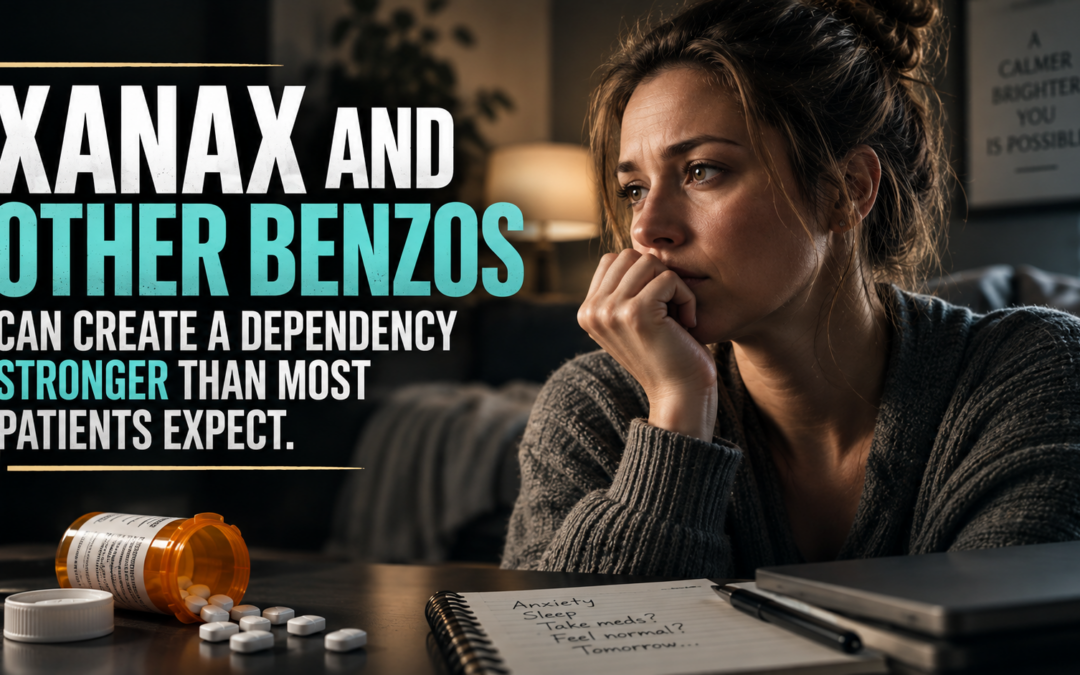
Xanax and other benzos prescribed for anxiety create a physical dependency that most patients are never fully warned about, even when they take the medication exactly as directed. The prescription feels safe, the doctor is trusted, and yet the body can quietly grow reliant in a matter of weeks.
If you or someone you love started a benzodiazepine to calm anxiety and now feels trapped by it, you are not weak and you are not alone. This is one of the most common and least discussed paths into dependence.
The hopeful truth is that this is treatable, and recovery is within reach with the right support. Understanding how dependence develops, and why the risk is so easy to miss, is a gentle first step toward steadier days ahead.
How Do Xanax and Other Benzos Prescribed for Anxiety Create Physical Dependency?
Xanax and other benzos prescribed for anxiety create physical dependency by changing how the brain manages calm and stress over time. The body adapts to the medication and begins to rely on it just to feel steady.
Benzodiazepines are a class of medications that includes Xanax, Ativan, Klonopin, and Valium. They ease anxiety by slowing an overactive nervous system, which brings real and welcome relief.
Think of it like leaning on a supportive railing every day. At first it simply helps. Over time, your body forgets how to stand steady without it, and letting go starts to feel impossible.
How Fast Can Dependence Develop?
Dependence can develop within just a few weeks of regular use, even at prescribed doses. This surprises many people, because the timeline is much shorter than they expect.
Benzodiazepines are often intended for short-term relief. When use continues past that window, the brain begins to adjust in ways that make stopping difficult.
This is not a sign of misuse or a lack of discipline. It is a predictable response of the body to a powerful medication.
Why Is the Physical Dependency Risk So Often Underestimated?
The physical dependency risk is so often underestimated because a prescription carries a sense of safety that street drugs do not. When a doctor writes the order and a pharmacy fills it, the medication feels approved and protected.
That trust is understandable, and it is also where much of the risk hides. The label does not change the chemistry of what these medications do to the brain.
Why Does a Prescription Feel So Safe?
A prescription feels safe because it comes from a professional who wants to help, not from a risky or illegal source. The bottle has your name on it and clear instructions to follow.
Many people reasonably assume that following directions removes the danger. They take the medication as told and never imagine dependence could follow.
The difficulty is that the body responds to a benzodiazepine the same way regardless of the source. Careful, directed use can still lead to physical dependence.
Why Are Patients Not Always Warned Enough?
Patients are not always warned enough because conversations about dependence can be brief, rushed, or focused mainly on immediate relief. In a short appointment, the long-term risks may get little attention.
Anxiety can feel urgent and overwhelming, so the focus often lands on easing it quickly. The slower question of what happens after weeks or months can slip by.
This gap leaves many people blindsided later. Understanding the real risk, without shame, is what helps a person make informed and confident choices about their care.
How Is Physical Dependence Different From Addiction?
Physical dependence means the body has adapted to a benzodiazepine, while addiction involves continued use despite clear harm. The two often overlap, but they are not the same thing.
A person can be physically dependent on a medication taken exactly as directed. Addiction adds a loss of control, where use continues even when it damages health, relationships, or daily life.
Trusting your instinct matters here. If the medication has begun to feel like something that controls a person rather than something they choose, that is worth exploring with a caring professional.
What Warning Signs Should Families Watch For?
Families should watch for a pattern of changes in behavior, mood, and medication use rather than a single dramatic moment. Benzodiazepine dependence tends to build gradually, so the overall pattern matters most.
You do not need proof of a crisis to start a caring conversation. Noticing a shift is reason enough to pay closer attention.
Common warning signs worth noticing include:
- Needing higher doses to feel the same calm the medication once provided
- Running out of a prescription early, or asking for refills sooner than expected
- Feeling anxious, shaky, or unwell when a dose is late or missed
- Seeking the medication from more than one doctor or unusual sources
- Withdrawing from family, work, or activities that once brought joy
Noticing one sign now and then is part of life. Noticing several together, especially over weeks, is a strong signal to reach out for guidance.
What Does Benzodiazepine Withdrawal Feel Like?
Benzodiazepine withdrawal feels like a return of intense anxiety along with physical symptoms that can be frightening. It often appears when a dose is missed or reduced too quickly.
Common withdrawal symptoms include:
- Surging anxiety, restlessness, or panic
- Trouble sleeping and racing thoughts
- Shakiness, sweating, or a racing heart
- Sensitivity to light, sound, or touch
To avoid this distress, many people keep using, and the cycle tightens. This is not a moral failing. It is the body reacting to a genuine physical change.
Why Do Tapering and Medical Supervision Matter So Much?
Tapering and medical supervision matter so much because stopping a benzodiazepine suddenly can be dangerous and, in some cases, life-threatening. This is one of the few substances where quitting cold turkey carries serious medical risk.
A gradual, guided reduction gives the brain time to adjust safely. Trying to power through alone is where many hopeful attempts fall apart.
Why Is Quitting Cold Turkey So Risky?
Quitting cold turkey is so risky because abrupt withdrawal can trigger seizures and severe complications. The nervous system, which the medication has been calming, can rebound violently without warning.
Picture slowly easing pressure off a tightly wound spring versus letting it snap all at once. A careful release protects the whole system, while a sudden one can cause real harm.
This is exactly why professional guidance matters. A supervised approach keeps a person safe during a genuinely delicate process.
How Does Medical Detox Support a Safe Taper?
Medical detox supports a safe taper by providing a structured, closely monitored plan that reduces the medication at a pace the body can handle. Trained staff adjust the process based on how a person feels each day.
For many people, medical detox offers a safe, compassionate foundation where this careful reduction can begin. Staff watch for warning signs, ease discomfort, and offer steady reassurance.
Detox on its own is rarely enough, though. It creates a stable starting point so the deeper work of recovery can follow with a supported, steady beginning.
What Does Treatment for Benzodiazepine Dependence Involve?
Treatment for benzodiazepine dependence usually combines a careful taper, therapy, and steady support that addresses both the body and the anxiety underneath. Care is personalized, never one-size-fits-all.
Because these medications are so often tied to anxiety, effective treatment looks at the whole person. A strong plan meets someone where they are and adjusts as they grow stronger.
How Does Treatment Address the Anxiety Underneath?
Treatment addresses the anxiety underneath by helping a person build healthier, lasting ways to manage worry and stress. The goal is not simply to remove the medication but to replace what it was doing.
Our mental health treatment programs are designed to care for the whole person, so substance use and anxiety receive attention side by side rather than in isolation.
When both are treated together, recovery gains a far stronger foundation. A person learns to feel calmer and steadier without relying on an escalating dose.
What Does Ongoing Treatment Include?
Ongoing treatment includes a blend of therapy, skill-building, and steady support tailored to each person. Together, these address both the dependence and the feelings beneath it.
Most plans blend several proven approaches:
- Individual therapy to explore personal triggers and develop coping skills
- Group sessions that offer connection, understanding, and encouragement
- Cognitive Behavioral Therapy, which helps a person reshape the thought patterns that fuel anxiety
- Grounding and relaxation skills that calm the body without medication
- Attention to sleep, stress, and healthy daily routines
Each piece works toward the same goal. The aim is to help a person feel steadier, calmer, and more in control of their own life.
What Levels of Care Are Available?
Levels of care range from immersive residential support to flexible outpatient options, depending on how much structure a person needs right now. The right choice depends on the severity of dependence and a person’s daily life.
At the Robert Alexander Center for Recovery®, options include residential inpatient treatment for those who need a safe, focused environment during a careful taper, along with continued care that supports the return to everyday responsibilities.
As a person grows steadier, care can shift with them. Support is meant to meet each individual exactly where they are.
How Do You Decide When to Seek Help?
You decide to seek help when benzodiazepine use feels hard to control, or when it starts affecting your health, relationships, or peace of mind. You never have to wait for a rock-bottom moment to deserve care.
Consider reaching out if any of these feel true:
- You have tried to stop or cut back but the anxiety or symptoms pull you right back
- You need higher doses than before to feel the same relief
- Withdrawal symptoms appear when you go without the medication
- The medication is affecting your work, relationships, or daily responsibilities
- A loved one has gently expressed concern about your use
If any of these resonate, that is reason enough to start a conversation with a caring professional. An honest assessment can bring clarity and help you understand which kind of support fits best.
Common Questions Families Often Ask
Can someone become dependent on Xanax even with a prescription?
Yes. Dependence can develop even with careful, directed use, because the body adapts to the medication over time. This is common, and it is nothing to feel ashamed of.
Is it dangerous to stop benzodiazepines suddenly?
It can be. Stopping abruptly can trigger seizures and other serious complications, which is why a gradual, medically supervised taper is so important for safety.
What if the anxiety comes back without the medication?
That is a real and important concern, and a caring team can help. Treatment includes healthier ways to manage anxiety, so a person does not have to choose between calm and recovery.
How soon can care begin?
Support can start soon after you reach out. Our admissions team is available to answer your questions, verify insurance, and guide you toward the next step with patience and care.
You Do Not Have to Face This Alone
Xanax and other benzos prescribed for anxiety create a physical dependency that most patients are not warned about at the level it deserves, which means this can quietly affect people who did everything right. The way it begins says nothing about a person’s worth or willpower. It reflects how powerful these medications truly are.
Recovery is possible, and reaching out is a brave, hopeful step. With a careful taper, therapy, and steady guidance, the hold of these medications can loosen and steadier days can return.
If you or someone you love is struggling with benzodiazepines, please reach out to the Robert Alexander Center for Recovery today. Our caring team is ready to listen, answer your questions, and help you take the next step toward steadier, more hopeful days ahead. You are not alone, and help is here whenever you are ready.