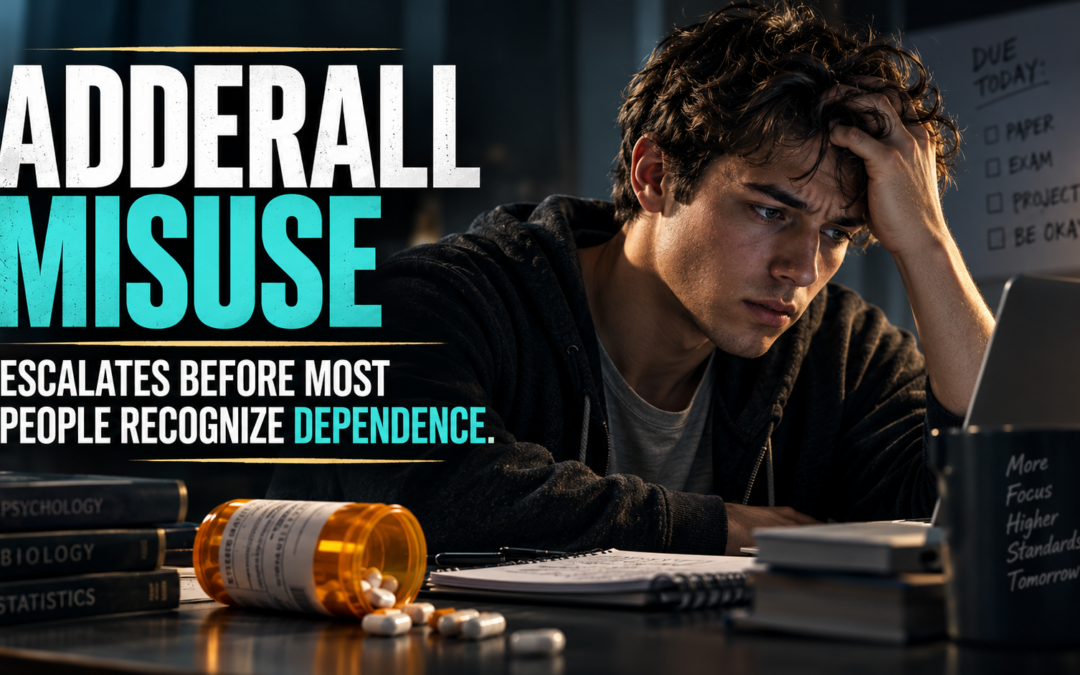
Adderall misuse follows a pattern of escalating use that most people living inside it do not recognize as dependence until the medication suddenly stops working the way it once did. The shift happens so gradually that it can feel like nothing changed at all, right up until something clearly has.
If you or someone you love has leaned on Adderall to keep up and now feels caught in something bigger, you are not weak and you are not alone. This is a common path, and it can happen to almost anyone.
The hopeful truth is that this is treatable, and recovery is well within reach with the right support. Understanding how the pattern builds, and why it hides so well, is a gentle first step toward steadier days ahead.
What Is Adderall Misuse and Why Does the Escalating Pattern Go Unnoticed?
Adderall misuse is the use of this prescription stimulant in ways other than a doctor intended, and the escalating pattern goes unnoticed because each small increase feels reasonable in the moment. There is rarely a single dramatic turning point, only a slow creep that blends into everyday life.
Adderall is a stimulant prescribed to treat conditions like ADHD. It sharpens focus, boosts energy, and helps many people function well when used as directed.
Think of it like slowly turning up the volume on a speaker. Each small adjustment seems minor, so you barely notice. Then one day you realize how loud it has become, and how much you have come to rely on it.
How Does Use Start to Escalate?
Use starts to escalate when the original dose stops producing the same effect, so a person takes a little more to feel the way they used to. This shift is called tolerance, and it happens naturally with regular stimulant use.
At first, someone might take an extra dose before a big deadline or a long shift. That choice feels practical, especially when the pressure is real.
Over time, those exceptions become the routine. The amount needed keeps climbing, and the body quietly adjusts to expect it.
Why Is Adderall Dependence So Hard to Recognize From the Inside?
Adderall dependence is hard to recognize from the inside because the medication is tied to being productive, capable, and in control. When something helps you perform, it rarely feels like a problem.
Many people first take Adderall to meet real demands at work, school, or home. The results feel positive, which makes the growing reliance easy to justify.
Why Does Productivity Mask the Problem?
Productivity masks the problem because dependence on a substance usually looks like struggle, not success. When Adderall helps a person achieve more, the warning signs blend into a story of hard work.
Imagine a tool that helps you build faster and better. You would not question needing it, because it seems to make everything work.
That is exactly how Adderall can hide its grip. The very thing that looks like an advantage can quietly become something a person cannot function without.
What Happens When the Medication Stops Working?
When the medication stops working as expected, the illusion of control often breaks, and many people finally sense that something is wrong. The focus fades, the energy dips, and the same dose no longer delivers.
This moment can feel confusing and frightening. Tasks that once felt manageable suddenly feel overwhelming without more of the medication.
For many, this is the turning point that leads them to seek help. Recognizing it is not a failure. It is an honest, courageous first step.
How Is Physical Dependence Different From Misuse?
Physical dependence means the body has adapted to Adderall, while misuse involves using it in ways that were not prescribed. The two often overlap, but they are not identical.
A person can become physically dependent even while trying to follow directions closely. Misuse adds patterns like taking higher doses, using it to stay awake, or relying on it to cope with stress.
Understanding this difference removes shame. What can look like a lack of willpower is often a predictable response to a powerful stimulant.
What Warning Signs Should Families Watch For?
Families should watch for a pattern of changes in behavior, mood, and medication use rather than a single moment. Adderall misuse tends to build gradually, so the shape of the pattern matters most.
You do not need proof of a crisis to start a caring conversation. Noticing a shift is reason enough to pay closer attention.
Common warning signs worth noticing include:
- Running out of a prescription earlier than expected, or asking for refills often
- Taking higher doses than prescribed, or using the medication to stay awake or work longer
- Seeking Adderall from friends, online sources, or more than one doctor
- Growing irritability, anxiety, or mood swings, especially as a dose wears off
- Trouble sleeping, changes in appetite, or noticeable weight loss
- Feeling unable to focus, function, or feel normal without it
Noticing one sign now and then is part of life. Noticing several together, especially over weeks, is a strong signal to reach out for guidance.
What Does a Crash Look Like?
A crash looks like a sudden drop in energy, mood, and focus once the stimulant leaves the body. A person may feel exhausted, low, and irritable, almost the opposite of how the medication makes them feel.
These crashes can drive the cycle forward. To avoid feeling drained or down, a person may take more, which deepens the dependence.
Recognizing this rhythm of highs and crashes can help families understand what a loved one is experiencing. It is a physical pattern, not a character flaw.
How Does Treatment Address Adderall Misuse and Underlying Mental Health?
Treatment addresses Adderall misuse by supporting the body through change while also caring for the reasons the medication became so important. Care is personalized, never one-size-fits-all.
Because stimulant misuse often connects to focus struggles, stress, or emotional pain, effective treatment looks at the whole person. A strong plan meets someone where they are and adjusts as they grow stronger.
Why Might Stabilization Come First?
Stabilization often comes first because stopping stimulant use can bring fatigue, low mood, and strong cravings that are hard to face alone. Early support helps a person move through this stretch safely and with reassurance.
For some people, a supervised setting like medical detox offers a steady, caring foundation during those first difficult days. Trained staff monitor how a person feels and offer comfort through the hardest hours.
This early stability is not the whole journey. It clears the path so the deeper work of recovery can begin on solid ground.
How Does Treatment Support Underlying Mental Health?
Treatment supports underlying mental health by exploring what the Adderall was helping a person manage in the first place. Often, stimulant misuse is tangled up with attention struggles, anxiety, or the pressure to keep performing.
Our mental health treatment programs are designed to care for the whole person, so substance use and mental health receive attention side by side rather than in isolation.
When both are addressed together, recovery gains a far stronger foundation. A person learns healthier ways to focus, cope, and function without relying on escalating doses.
What Does Ongoing Treatment Include?
Ongoing treatment includes a blend of therapy, skill-building, and steady support tailored to each person. Together, these address both the substance use and the feelings beneath it.
Most plans blend several proven approaches:
- Individual therapy to explore personal triggers and build practical coping skills
- Group sessions that offer connection, understanding, and encouragement
- Cognitive Behavioral Therapy, which helps a person reshape the thought patterns driving stimulant use
- Support for focus, stress, and healthy daily routines
- Attention to any mental health struggles that appear alongside substance use
Each piece works toward the same goal. The aim is to help a person feel steadier, clearer, and more in control of their own life.
What Levels of Care Are Available?
Levels of care range from immersive residential support to flexible outpatient options, depending on how much structure a person needs right now. The right choice depends on the severity of use and a person’s daily life.
At the Robert Alexander Center for Recovery, options include residential inpatient treatment for those who need a safe, focused environment away from daily triggers, along with continued care that supports the return to work, school, and everyday responsibilities.
As a person grows steadier, care can shift with them. Support is meant to meet each individual exactly where they are.
How Do You Decide When to Seek Help?
You decide to seek help when Adderall use feels hard to control, or when it starts affecting your health, focus, relationships, or peace of mind. You never have to wait for a rock-bottom moment to deserve care.
Consider reaching out if any of these feel true:
- You have tried to cut back on Adderall but keep returning to it
- You need higher doses than before to feel the same focus or energy
- You feel unable to function, work, or feel normal without it
- Sleep, appetite, or mood have shifted in ways that worry you
- A loved one has gently expressed concern about your use
If any of these resonate, that is reason enough to start a conversation with a caring professional. An honest assessment can bring clarity and help you understand which kind of support fits best.
Common Questions Families Often Ask
Can someone become dependent on Adderall even with a prescription?
Yes. Dependence can develop even with careful, directed use, because the body adapts to the stimulant over time. This is common, and it is nothing to feel ashamed of.
Is stopping Adderall dangerous?
Withdrawal is rarely life-threatening, but it can bring deep fatigue, low mood, and strong cravings that are hard to face alone. Supportive care helps a person move through this stage safely and with compassion.
What if the focus problems come back without it?
That is a real and important concern, and a caring team can help. Treatment often includes healthier ways to manage attention and stress, so a person does not have to choose between focus and recovery.
How soon can care begin?
Support can start soon after you reach out. Our admissions team is available to answer your questions, verify insurance, and guide you toward the next step with patience and care.
You Do Not Have to Face This Alone
Adderall misuse follows a pattern of escalating use that most people inside it do not recognize as dependence until the medication stops working, which means it can quietly touch people who never saw it coming. The way it begins says nothing about a person’s worth or willpower. It reflects how powerful this medication truly is.
Recovery is possible, and reaching out is a brave, hopeful step. With compassionate support, therapy, and steady guidance, the hold of Adderall can loosen and steadier days can return.
If you or someone you love is struggling with Adderall, please reach out to the Robert Alexander Center for Recovery today. Our caring team is ready to listen, answer your questions, and help you take the next step toward steadier, more hopeful days ahead. You are not alone, and help is here whenever you are ready.