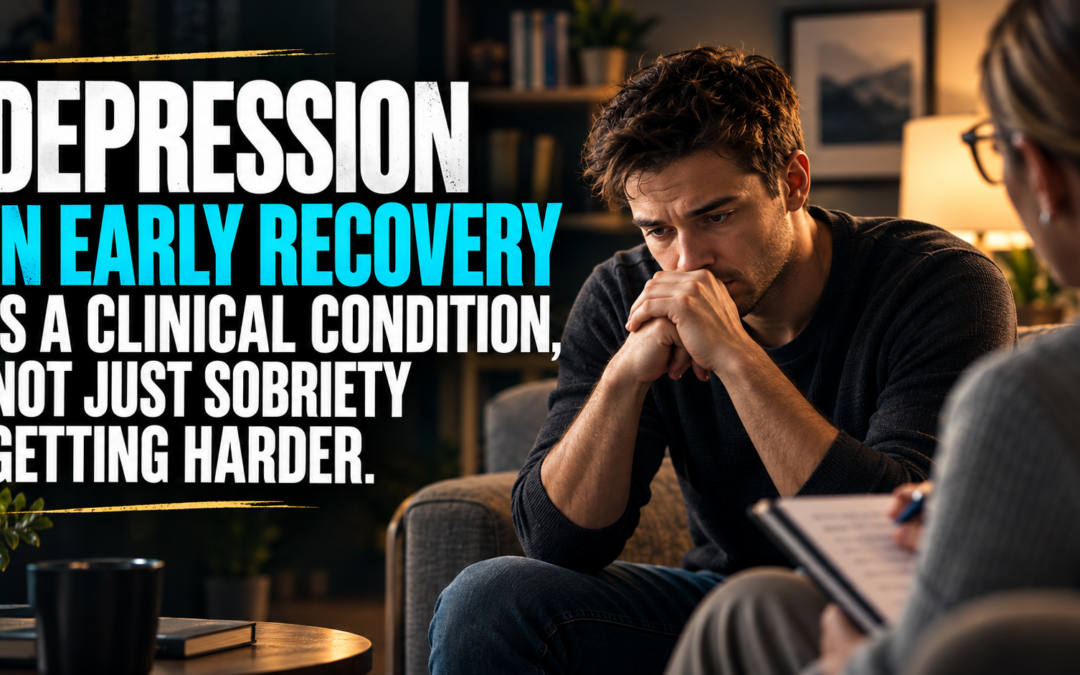
Depression in early recovery is often brushed aside as part of the adjustment to sobriety, but it deserves to be treated as a real clinical condition. Many people expect the first months without alcohol or drugs to feel lighter. Instead, some feel heavy, flat or hopeless and wonder why getting sober feels so much worse than they imagined.
If this is happening to you or someone you love, please know you are not failing at recovery. You are not weak, ungrateful or doing something wrong. The sadness you feel may have a clinical cause, and it can be treated.
Too often, people hear that this is simply “how early sobriety feels” and that it will pass on its own. Sometimes it does ease. Other times it settles in and quietly pulls a person back toward the substance that once numbed the pain. You deserve care that takes your mood as seriously as your sobriety.
What Is Depression in Early Recovery?
Depression in early recovery is a persistent low mood, loss of interest and emotional heaviness that appears or deepens during the first weeks and months after a person stops using substances. It goes beyond a bad day or a hard week. It affects how a person thinks, sleeps, eats and sees their future.
Some people had depression long before substance use began. For them, the substance may have hidden symptoms that come back into view once use stops. Others develop depression as the brain and body adjust to life without alcohol or drugs.
Both experiences are real. Both call for professional attention rather than a wait-and-see approach.
How Does It Show Up in the First Months?
It often shows up as a quiet, steady heaviness rather than a dramatic crisis. A person may still attend meetings and appointments while feeling empty inside.
Common ways depression in early recovery can appear include:
- Feeling numb or unable to enjoy things that used to bring joy
- Sleeping far more or far less than usual
- Low energy that makes simple tasks feel exhausting
- Thoughts like “I gave up everything and I still feel terrible”
- Pulling away from support groups, friends or family
- Trouble concentrating or making decisions
Why Does It Happen?
It happens because substance use changes the brain’s reward and mood systems, and those systems need time and support to heal. Alcohol and many drugs affect dopamine and serotonin, two chemicals tied to pleasure, motivation and emotional balance.
Think of it like a muscle that has been in a cast. When the cast comes off, the muscle is weak and sore before it grows strong again. The brain often needs similar care to rebuild its natural sense of well-being.
Life stress plays a role too. Early sobriety can bring grief over lost time, damaged relationships and painful memories that substances once kept at a distance.
Why Is Depression in Early Recovery a Clinical Condition and Not Just Adjustment?
Depression in early recovery is a clinical condition because it involves lasting changes in mood, thinking and daily functioning that meet the same criteria as other forms of depression. Calling it “just adjustment” can delay care that a person genuinely needs.
Clinicians recognize several forms. One is a substance-induced depressive disorder, which is linked to use or withdrawal. Another is major depressive disorder, which can exist on its own alongside a substance use disorder. A careful assessment helps tell them apart.
What Is the Difference Between Adjustment and Depression?
The difference is that adjustment usually brings ups and downs that slowly improve, while depression tends to stay steady or grow heavier over time. Adjustment can feel uncomfortable. Depression can feel like a fog that will not lift.
A person adjusting to sobriety may feel irritable one day and hopeful the next. A person living with depression in early recovery may feel hopeless most days for two weeks or longer, with little relief.
Some people also experience post-acute withdrawal syndrome (PAWS), a stretch of lingering mood and sleep symptoms after detox. PAWS can overlap with depression, which is one more reason a professional evaluation matters.
Why Does Dismissing It Put Recovery at Risk?
Dismissing it puts recovery at risk because untreated depression is a common trigger for returning to substance use. When someone feels empty for weeks, the memory of temporary relief can become very loud.
Picture trying to climb a hill while carrying a heavy backpack no one has noticed. You may keep going for a while, but the weight eventually wears you down. Treating depression in early recovery removes that hidden weight.
There is also a safety concern. Depression can bring thoughts of hopelessness or self-harm, and those thoughts always deserve prompt, compassionate care.
What Warning Signs Should Families Notice?
Families should notice a pattern of low mood and withdrawal that lasts for weeks rather than days. Your loved one may look like they are “doing everything right” while struggling deeply inside.
Signs worth paying attention to include:
- Ongoing sadness, emptiness or irritability
- Losing interest in hobbies, people or plans they once valued
- Skipping meetings, therapy or check-ins they used to attend
- Major changes in sleep, appetite or energy
- Saying things like “What’s the point?” or “Nothing is getting better”
- Talking about feeling like a burden to others
- Cravings that seem to rise alongside low moods
One sign may simply reflect a hard week. Several signs over time are a strong reason to reach out for professional guidance.
How Can You Start a Caring Conversation?
You can start by choosing a calm moment and sharing what you have noticed with warmth rather than worry or blame. Keep the focus on how they are feeling, not on their sobriety.
You might say, “You seem really weighed down lately, and I care about how you’re doing.” Then listen without rushing to fix anything. Letting them know that depression is treatable, and that it is not a failure, can ease a great deal of shame.
What Does Integrated Treatment for Depression and Substance Use Include?
Integrated treatment includes care for depression and substance use within one coordinated plan, guided by one team. Neither condition is treated as an afterthought, because progress in one supports progress in the other.
Our mental health treatment programs are designed to care for these connected struggles side by side. When one team understands the whole picture, the plan can adjust as your needs change.
Most integrated plans blend several approaches:
- A thorough assessment to understand when symptoms began and how they connect to substance use
- Individual therapy to explore grief, guilt and the emotions that surface in sobriety
- Cognitive Behavioral Therapy (CBT), which helps you notice and reshape hopeless thought patterns
- Medication support when appropriate, guided by a prescriber who monitors how you feel
- Group therapy that connects you with peers who understand early recovery
- Healthy routines for sleep, movement and nutrition that support brain healing
- Family involvement so loved ones can learn how to help
Care is personalized, never one-size-fits-all. A good plan treats depression in early recovery as a core part of healing, not a side issue.
What Levels of Care Are Available?
Levels of care range from around-the-clock residential support to flexible outpatient options. The right fit depends on the severity of symptoms, safety and support at home.
At the Robert Alexander Center for Recovery in Mount Washington, Kentucky, residential inpatient care offers a calm, structured setting with support day and night. This can help when depression feels overwhelming or home holds strong triggers.
For people who feel stable enough to live at home, outpatient care provides ongoing therapy and mood support that fits around work and family. As you grow steadier, care can shift with you.
When Should You Seek Immediate Help?
You should seek immediate help when depression brings thoughts of suicide, self-harm or feeling unable to stay safe. These moments cannot wait for a scheduled appointment.
Treat it as an emergency if you or a loved one:
- Talks about wanting to die or having a plan to end their life
- Has access to means and expresses hopelessness
- Has started taking steps toward self-harm
- Combines deep despair with a return to heavy substance use
- Says they cannot keep themselves safe right now
In these moments, call or text 988, call 911 or go to the nearest emergency room. If it is safe, stay with the person until help arrives.
How Do You Know When It Is Time to Reach Out?
It is time to reach out when low mood lasts for weeks and starts affecting your recovery, relationships or daily life. You never have to wait for a crisis to deserve support.
Consider contacting a treatment team if any of these feel true:
- You have felt sad, empty or numb most days for two weeks or longer.
- You expected sobriety to feel better, but it keeps feeling worse.
- Your cravings seem strongest when your mood is lowest.
- You have pulled away from meetings, therapy or people who support you.
- You had depression before substance use, and it has returned.
- A loved one has gently shared concern about how you seem.
If any of these resonate, an honest assessment can bring clarity. It can also help you understand whether you are facing depression in early recovery and which kind of care fits best.
What Families Often Ask
Will depression in early recovery go away on its own?
Sometimes symptoms ease as the brain heals, but waiting can be risky. A professional assessment helps you know whether you need treatment, and early care often makes recovery feel more manageable.
Does feeling depressed mean sobriety isn’t working?
No. Depression in early recovery is a health condition, not a sign of failure. Treating it often strengthens sobriety rather than threatening it.
Is antidepressant medication safe during recovery?
Many people use antidepressants safely during recovery with medical guidance. A prescriber reviews your history and monitors how you respond.
How soon can care begin?
Support can begin soon after you reach out. Our admissions team can answer your questions, verify insurance and guide you toward the next step with patience and care.
Your Mood Deserves the Same Care as Your Sobriety
Depression in early recovery is a clinical condition, not a side effect of sobriety getting harder. Naming it clearly opens the door to treatment that can lift the weight you have been carrying.
Recovery is possible, and feeling better is possible too. With compassionate, coordinated care, hope can return alongside your sobriety.
If you or someone you love is struggling with depression after getting sober, please reach out to the Robert Alexander Center for Recovery today. Our caring team is ready to listen, answer your questions and help you take the next step. You are not alone, and help is here whenever you are ready.
If you are in crisis right now, please call or text 988 to reach the Suicide and Crisis Lifeline, available any time of day or night. You can also call 911 or go to the nearest emergency room. Your life matters, and support is always within reach.