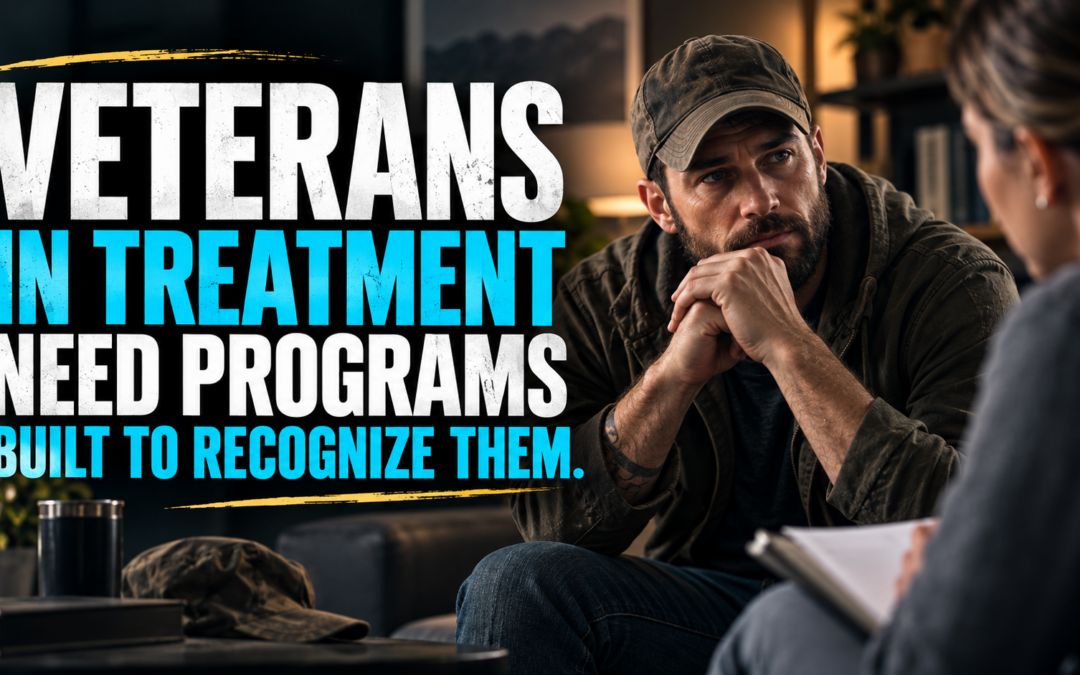
Veterans in treatment often bring experiences into the room that a standard addiction program was never designed to understand. Some served in combat. Others never deployed but still carried long shifts, constant moves, physical strain or the weight of responsibility for other people’s lives.
If you are a veteran, or you love someone who served, you may feel that past treatment did not quite fit. Maybe the questions missed the point. Maybe sharing felt impossible in a group of people who could not relate. That experience is common, and it is not a sign that you are beyond help.
Recovery is possible, and care can meet you where you are. When a treatment team understands military culture and the stress patterns that can follow service, healing has a much better chance to take hold. You deserve support that respects where you have been.
What Do Veterans in Treatment Carry That Others May Not?
Veterans in treatment may carry service-related stress, injuries, losses and habits that shape how substance use and mental health struggles develop. These experiences vary widely, and no two people who served have the same story.
Some veterans carry trauma from combat or training accidents. Others carry military sexual trauma (MST), the term the U.S. Department of Veterans Affairs (VA) uses for sexual assault or harassment during service. Many carry grief for friends they lost.
Not every veteran has post-traumatic stress disorder (PTSD), and not every veteran struggles after service. The point is not to assume. It is to ask the right questions and listen closely to the answers.
How Can Military Stress Patterns Affect Substance Use?
Military stress patterns can affect substance use because the body and mind may stay on high alert long after service ends. Alcohol or drugs can feel like the fastest way to quiet that alert state.
Common patterns include:
- Hypervigilance, a constant sense of scanning for danger
- Disrupted sleep from years of irregular schedules or nightmares
- Chronic pain from injuries, which sometimes leads to opioid prescriptions
- Difficulty with civilian life, including a loss of purpose, structure or community
- A heavy drinking culture that was normal in some units
Think of it like a car engine that ran at high speed for years. Even after it parks, the engine stays hot for a long time. Substances can seem to cool it down, but they usually add new strain.
What Is Moral Injury?
Moral injury is the deep distress that can follow actions, or failures to act, that go against a person’s own values. It often shows up as guilt, shame or a sense of betrayal rather than fear.
A veteran may feel haunted by a decision made under orders or by something they witnessed and could not stop. These feelings can be harder to name than fear or anxiety.
Moral injury is not the same as PTSD, though they can overlap. When it goes unrecognized, substance use may become the main way a person copes with feelings they cannot put into words.
Why Do General Programs Miss What Veterans in Treatment Bring?
General programs can miss what veterans in treatment bring because their intake questions, group settings and therapy goals were not built around military life. A standard assessment may record how much someone drinks without ever asking about service history.
This is not a failure of caring staff. It is simply a gap in design.
Why Does Military Culture Matter in Treatment?
Military culture matters because it shapes how a person handles pain, asks for help and relates to others. Many service members learned to push through, rely on the team and avoid showing weakness.
Those values protected people during service. In treatment, they can make it hard to admit struggle, especially to someone who has never served.
A veteran-informed clinician respects that culture rather than fighting it. They may frame recovery as a mission, honor the value of teamwork and build trust before asking a person to open up.
What Can Get Overlooked in a Standard Assessment?
Several key issues can get overlooked when a program does not ask about service. These include:
- Traumatic brain injury (TBI), which can affect memory, mood and impulse control
- Military sexual trauma, which many veterans have never disclosed
- Pain conditions linked to service injuries
- Grief and survivor’s guilt after losing fellow service members
- The stress of transitioning to civilian work and family life
When these stay hidden, treatment may focus on symptoms while missing the source. That gap can make relapse more likely.
Who May Benefit From Veteran-Informed Care?
Veterans in treatment who may benefit most from veteran-informed care include those who felt misunderstood in past programs, those living with trauma or chronic pain and those whose substance use grew after leaving service. The right fit always depends on the individual.
This approach can also support family members. Spouses, partners and children often carry their own stress from deployments, moves and the changes they saw in someone they love.
Veteran-informed care may be worth exploring if:
- Past treatment never asked about your military experience.
- You feel more comfortable around people who understand service.
- Your drinking or drug use increased after a deployment or discharge.
- You live with pain, poor sleep or memories that substances help you avoid.
- You struggle with guilt or loss connected to your service.
How Does Veteran-Informed Care Fit With Structured Clinical Treatment?
Veteran-informed care fits within structured clinical treatment as a lens that shapes how proven therapies are delivered, not as a replacement for them. Evidence-based care, medical oversight and a personalized plan remain the foundation.
Our mental health treatment programs address trauma, depression and anxiety side by side with substance use. For veterans in treatment, that coordinated approach helps ensure no part of the story is left behind.
What Does Treatment Usually Include?
Treatment usually blends several approaches tailored to each person’s history and goals. Common elements include:
- Trauma-informed individual therapy that builds safety before exploring painful memories
- Cognitive Behavioral Therapy (CBT), which helps reshape thought patterns that fuel guilt, fear and cravings
- Group therapy, where shared understanding can ease isolation
- Pain management planning that reduces reliance on addictive medications
- Sleep and stress skills to calm a nervous system stuck on high alert
- Family involvement to rebuild trust and communication at home
Care is personalized, never one-size-fits-all. Progress moves at a pace that feels manageable.
What Levels of Care Are Available?
Levels of care range from around-the-clock residential support to flexible outpatient options. The right choice depends on safety, the severity of substance use and the support available at home.
At the Robert Alexander Center for Recovery in Mount Washington, Kentucky, residential inpatient care offers a calm, structured setting with support day and night. Many veterans in treatment find that steady routine familiar and grounding.
For those ready to live at home, outpatient care provides ongoing therapy that fits around work and family. As you grow steadier, care can shift with you.
Can Veterans Use Their Benefits for Treatment?
Some veterans may be able to use VA benefits, TRICARE or private insurance for treatment, depending on eligibility. The VA Community Care program can sometimes connect eligible veterans with providers outside VA facilities.
Coverage rules vary from person to person. A quick call with an admissions team can help you understand your options clearly before you make any decisions.
How Do You Know When It Is Time to Seek Help?
It is time to seek help when substance use or emotional struggles feel hard to manage on your own, or when past care never reached what you carry from service. You never have to wait for a crisis to deserve support.
Consider reaching out if any of these feel true:
- You use alcohol or drugs to sleep, relax or quiet memories.
- Your substance use has grown since leaving the military.
- You feel on edge, numb or disconnected from the people you love.
- Earlier treatment helped some but never addressed your service history.
- Guilt, grief or anger from your time in service still weighs on you daily.
- A loved one has gently shared concern about your well-being.
If any of these resonate, a confidential conversation with a caring professional can bring clarity. If you or someone you love is having thoughts of suicide, call 988 and press 1 to reach the Veterans Crisis Line, or call 911 right away.
What Families Often Ask
Does my loved one need to have seen combat to benefit from veteran-informed care?
No. Service brings many kinds of stress, including training injuries, long separations, military sexual trauma and transition challenges. Veteran-informed care respects every type of service experience.
Will my loved one have to talk about painful memories right away?
No. Good care builds trust and coping skills first. Difficult memories are explored gradually, at a pace the person can manage.
Can families be part of treatment?
Yes. Family sessions can help everyone understand how service and substance use connect. They also help rebuild communication at home.
How soon can care begin?
Support can begin soon after you reach out. Our admissions team can answer your questions, review your coverage and guide you toward the next step with patience and care.
Your Service Deserves Care That Understands It
Veterans in treatment carry experiences that general programs were not built to recognize, but that does not mean healing is out of reach. With care that honors your history and treats the whole person, steadier days can return.
You served others. Now you deserve support that serves you. If you or someone you love is a veteran struggling with substance use or mental health, please reach out to the Robert Alexander Center for Recovery today. Our caring team is ready to listen, answer your questions and help you take the next step. You are not alone, and help is here whenever you are ready.