Trauma and addiction often show up together. Once they meet, each one starts feeding the other in a cycle that can feel impossible to escape. A painful memory brings a surge of fear. A drink or a pill quiets it for a while. Then the fear returns, often louder than before.
If you or someone you love is caught in this cycle, it is not a sign of weakness or poor character. It is an understandable response to pain that never had a safe place to go. Many people reach for substances because nothing else seemed to bring relief.
This loop can be interrupted. When care reaches both the trauma and the substance use, healing has room to take hold. You deserve support that sees the whole story, not just the part that is easiest to name.
How Do Trauma and Addiction Reinforce Each Other?
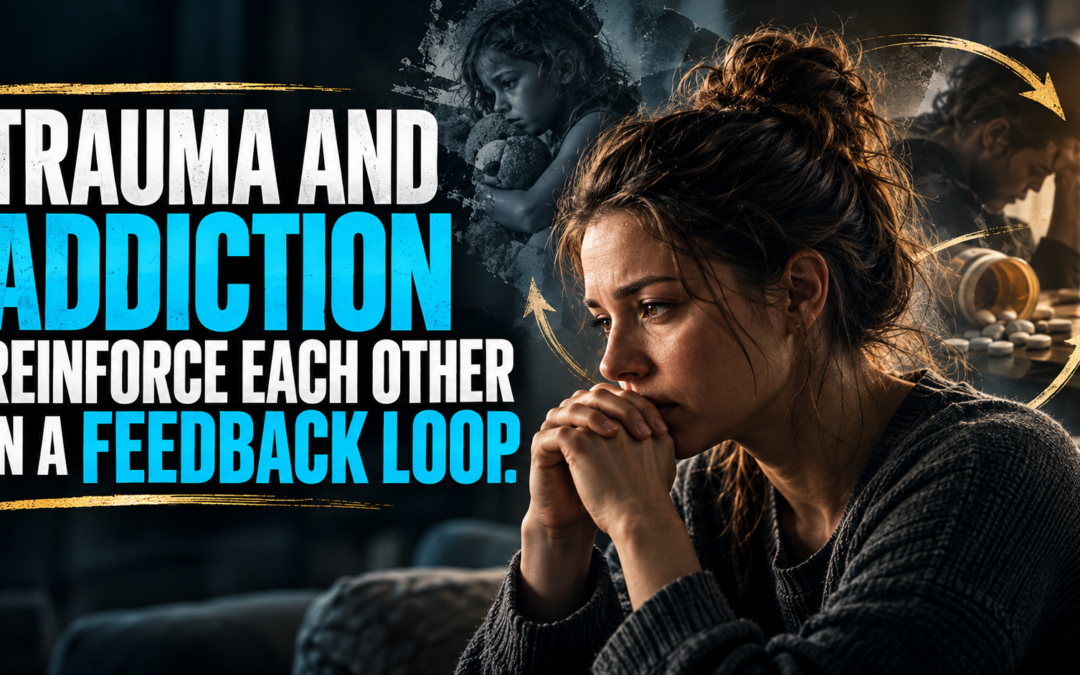
Trauma and addiction reinforce each other through a feedback loop. Trauma symptoms drive substance use, and substance use deepens trauma symptoms. Each condition keeps the other going.
Trauma is a lasting response to an overwhelming experience, such as abuse, violence, an accident, combat, a sudden loss or a childhood spent in fear. Its effects can appear long after the event. They often show up in sleep, mood, relationships and the body.
A feedback loop works like a microphone placed too close to a speaker. Sound enters the microphone, comes out of the speaker louder and feeds back in again. The noise builds until it becomes overwhelming. Trauma and addiction can build on each other in a similar way.
How Does Trauma Drive Substance Use?
Trauma drives substance use because substances can briefly quiet the fear, tension and painful memories trauma leaves behind. When a person’s nervous system stays on high alert, that relief can feel like the only rest available.
Alcohol may soften nightmares. Opioids or benzodiazepines may numb emotional pain. Stimulants may lift the heaviness and exhaustion that often follow trauma.
This pattern is sometimes called self-medication. It is an attempt to cope, not a choice to cause harm.
How Does Substance Use Deepen Trauma?
Substance use deepens trauma by disrupting sleep, raising anxiety during withdrawal and making painful memories harder to process. The relief is real, but it fades. What follows is often worse.
Substance use can also lead to new frightening experiences. Risky situations, conflict at home, legal trouble or an overdose can add fresh layers of pain.
Each new layer gives a person more reason to reach for relief. That is how the loop tightens.
Why Do Both Conditions Depend on the Loop?
Both conditions depend on the loop because each one keeps the other from healing. Trauma supplies the pain that makes substance use feel necessary. Substance use blocks the healing that would ease the trauma.
What Keeps the Loop Running?
Several patterns keep trauma and addiction locked together:
- Avoidance: Substances help a person avoid memories, feelings and reminders, but avoidance keeps trauma frozen in place.
- Rebound distress: When a substance wears off, anxiety, irritability and low mood often rise and intensify trauma symptoms.
- Disrupted sleep: Poor sleep makes the nervous system more reactive, so triggers feel stronger.
- Shame: Both conditions can carry shame, and shame pushes people toward isolation and secrecy.
- New harm: Substance use can create new painful experiences that add to the original trauma.
Recognizing these patterns is not about blame. It shows where the loop can be broken.
Why Does the Body Play Such a Big Role?
The body plays a big role because trauma changes how the nervous system responds to stress and safety. After trauma, the body’s alarm system can stay switched on long after danger has passed.
Substances act on that same alarm system. They turn the volume down for a few hours, which teaches the brain to reach for them whenever the alarm sounds. Over time, the brain starts treating the substance as part of how it stays calm.
Why Does Treating Only One Leave the Loop Intact?
Treating only one condition leaves the loop intact because the untreated condition keeps pulling the person back. Trauma and addiction are tied together so closely that progress on one side rarely holds while the other goes unaddressed.
What Happens When Only the Substance Use Is Treated?
When only substance use is treated, trauma symptoms often surge once the substance is gone. Memories, nightmares and panic that were muffled for years can return with full force.
Without tools to manage that distress, using again can feel like the only way to survive it. Many relapses happen here. They come from pain that was never addressed, not from a lack of commitment.
What Happens When Only the Trauma Is Treated?
When only trauma is treated, ongoing substance use can block the healing process. Trauma therapy asks a person to feel and work through difficult emotions. Substances keep those emotions at a distance.
A person may attend every session and still feel stuck. Active substance use can also make it unsafe to explore painful memories, especially when cravings or withdrawal are intense.
What Warning Signs Should Families Notice?
Families should notice a pattern where trauma symptoms and substance use rise and fall together. One sign alone may reflect a hard season. Several signs over weeks deserve a gentle conversation.
Signs worth noticing include:
- Drinking or using drugs more after reminders of a painful event
- Nightmares, flashbacks or trouble sleeping without a substance
- Being easily startled, tense or on edge most of the time
- Avoiding certain places, people or conversations
- Sudden anger, emotional numbness or shutting down
- Pulling away from family and friends
- Past treatment that helped with substance use but not the deeper pain
How Can You Start a Caring Conversation?
Start by sharing what you have noticed with warmth and without pressure to talk about the trauma itself. A person does not need to tell their whole story to accept help.
You might say, “You seem to be carrying something heavy, and I want you to have support.” Then listen more than you speak. Let them know that trauma and addiction are both treatable and that reaching out takes courage.
What Does Integrated Treatment for Trauma and Addiction Include?
Integrated treatment for trauma and addiction is coordinated care that addresses both conditions at the same time, through one team and one plan. This approach is often called trauma-informed care. Every part of treatment is built around safety, choice and respect.
Our mental health treatment programs care for trauma and substance use side by side. When one team sees the full picture, the plan can target what is actually driving the loop.
What Approaches Are Commonly Used?
Most integrated plans for trauma and addiction blend several approaches:
- Individual therapy that moves at a pace you can handle, building safety before working through painful memories
- Cognitive Behavioral Therapy (CBT), which helps you notice and reshape thought patterns that fuel fear, shame and cravings
- Grounding and body-based skills that calm the nervous system without substances
- Group therapy with peers who understand both trauma and recovery
- Medication support when appropriate, guided by a prescriber familiar with both conditions
- Family involvement to rebuild trust and create a safer home
Healing usually begins with stabilization. Processing trauma comes later, once a person has steady tools to lean on. Care is personalized, never one-size-fits-all.
What Levels of Care Are Available?
Levels of care range from around-the-clock residential support to flexible outpatient options. The right fit depends on safety, the severity of substance use and support at home.
At the Robert Alexander Center for Recovery in Mount Washington, Kentucky, residential inpatient care offers a calm, structured setting away from daily triggers. For many people living with trauma and addiction, that sense of safety is where healing begins.
Others may do well with outpatient care that fits around work and family life. As you grow steadier, care can shift with you.
How Do You Know When It Is Time to Seek Help?
It is time to seek help when both issues feel tangled together in ways that are hard to manage alone. You never have to wait for a crisis to deserve care.
Consider reaching out if any of these feel true:
- You use alcohol or drugs to quiet memories, nightmares or fear.
- Your substance use increases after reminders of a painful experience.
- You have tried to stop, but distress rushes back and pulls you toward using.
- Earlier treatment addressed one struggle but never the other.
- Your sleep, relationships or work keep slipping despite real effort.
- A loved one has gently shared concern about your well-being.
If any of these resonate, an honest conversation with a caring professional can bring clarity. If you or someone you love is having thoughts of suicide, call or text 988 to reach the Suicide and Crisis Lifeline, or call 911 right away.
What Families Often Ask
Does my loved one have to talk about their feelings right away?
No. Good care builds safety and coping skills first. Painful memories are explored gradually, at a pace the person can manage.
Can trauma and addiction really improve together?
Yes. Many people find lasting relief when both conditions receive coordinated care. Progress in one area often supports progress in the other.
Which should be treated first?
Both should be addressed at the same time. Treating trauma and addiction together keeps one condition from undoing progress on the other.
How soon can care begin?
Support can begin soon after you reach out. Our admissions team can answer your questions, verify insurance and guide you toward the next step with patience and care.
The Loop Can Be Broken
Trauma and addiction reinforce each other through a feedback loop both conditions depend on. That also means caring for both can loosen the loop from each side at once. Your pain is real, and so is your capacity to heal.
With trauma-informed support, therapy and steady guidance, the cycle that once felt endless can begin to quiet. Recovery is a journey, and you do not have to walk it alone.
If you or someone you love is struggling with the effects of trauma alongside substance use, please reach out to the Robert Alexander Center for Recovery today. Our caring team is ready to listen, answer your questions and help you take the next step. Help is here whenever you are ready.