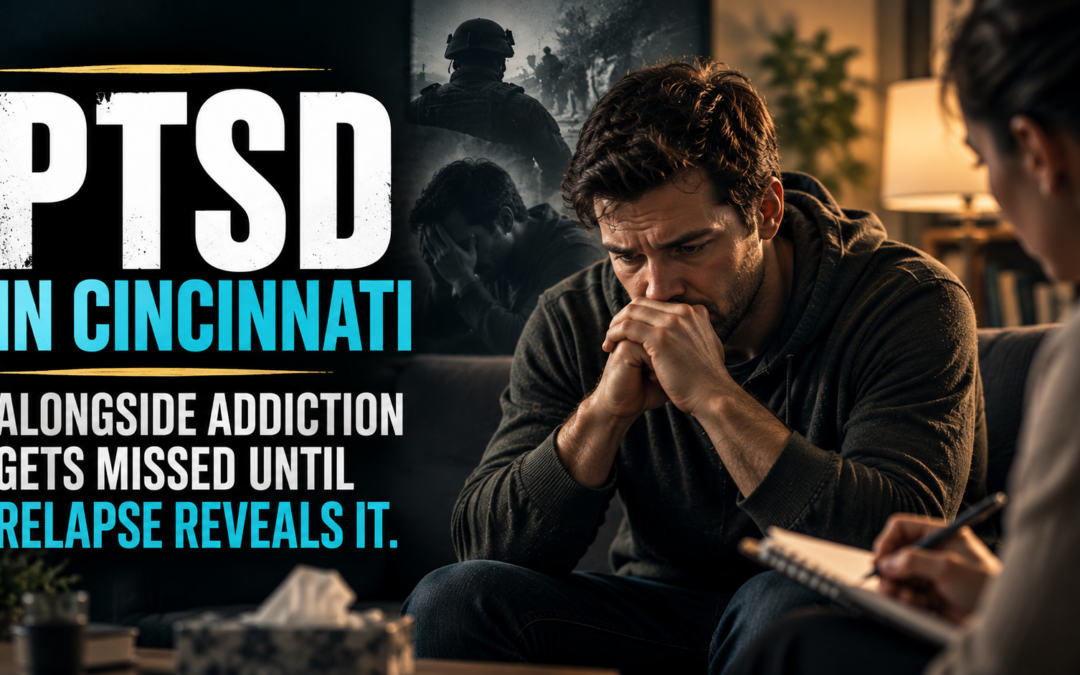
PTSD in Cincinnati alongside addiction often goes unnoticed in treatment until a relapse brings it into view. A person completes detox, attends therapy and works hard to stay sober. Then the nightmares, panic or constant sense of danger return, and the substance use returns with them.
If this has happened to you or someone you love, please know that relapse does not mean you failed. It may mean part of your story was never given the care it needed. Post-traumatic stress disorder (PTSD) can hide beneath substance use for years and quietly drive it the whole time.
The hopeful truth is that recovery becomes more stable once both conditions are named and treated together. Understanding how they connect can help you find care that fits what you are actually carrying.
What Does PTSD in Cincinnati Alongside Addiction Look Like?
PTSD in Cincinnati alongside addiction looks like a cycle where trauma symptoms drive substance use and substance use keeps trauma from healing. The two conditions become so linked that it can be hard to tell where one ends and the other begins.
PTSD can develop after a frightening or overwhelming experience. This might include an accident, assault, combat, childhood abuse, sudden loss or witnessing violence. Symptoms can include flashbacks, nightmares, being easily startled, avoiding reminders and feeling numb or on edge.
Many people do not connect these symptoms to a past event. They simply know that a drink, a pill or another substance makes the feelings quieter for a while.
How Do PTSD and Addiction Reinforce Each Other?
PTSD and addiction reinforce each other because substances offer short-term relief from trauma symptoms while making those symptoms worse over time. Each condition gives the other a reason to continue.
Alcohol may help a person fall asleep without nightmares. Opioids or benzodiazepines may dull panic and painful memories. In the moment, that relief feels real.
As the substance wears off, anxiety, irritability and sleep problems often return stronger. Withdrawal can even feel like a trauma response, with a racing heart, sweating and fear. This pushes a person back toward using, and the loop tightens.
Why Does Treatment Often Miss PTSD in Cincinnati Alongside Addiction?
Treatment often misses PTSD in Cincinnati alongside addiction because substance use is the most visible problem, so it gets addressed first and sometimes only. Trauma symptoms can look like withdrawal, stress or simply a hard adjustment to sobriety.
This is not about anyone doing a poor job. It reflects how easily these conditions blend together.
Why Is PTSD So Easy to Overlook?
PTSD is easy to overlook because many people avoid talking about their trauma, even with professionals. Avoidance is one of the core symptoms of PTSD itself.
A person may answer intake questions honestly about drinking or drug use while saying little about what happened to them. Some do not see their experience as “trauma” at all. Others feel shame or fear about bringing it up.
During active substance use, trauma symptoms are also partly hidden. The substance is doing the work of numbing them, so they do not fully surface until it is gone.
How Does Relapse Reveal the Underlying Condition?
Relapse reveals the underlying condition because once the substance is removed, the trauma symptoms it was covering come back into the open. Without new tools to manage them, using again can feel like the only way to cope.
Think of substance use like a heavy coat worn in a cold room. Take the coat off without turning on the heat, and the person will reach for it again. The cold was always there.
A relapse after treatment can be a turning point. It often prompts a deeper look at what has been driving the substance use all along.
What Symptoms Should Families Notice?
Families should notice trauma symptoms that seem to rise and fall with substance use, especially when they continue or grow stronger after a loved one stops using. One sign alone may reflect a stressful season. Several together deserve a caring conversation.
Signs worth watching for include:
- Nightmares, trouble sleeping or using substances specifically to sleep
- Jumpiness, being easily startled or always seeming on guard
- Avoiding certain places, people, dates or conversations
- Sudden anger, irritability or emotional shutdown
- Flashbacks or moments when they seem far away or not present
- Cravings that spike around reminders of a past event
- Relapse soon after finishing a treatment program
You do not need to know what happened to your loved one to express concern. Noticing a pattern is enough.
How Is PTSD Different From Everyday Stress?
PTSD differs from everyday stress because the symptoms persist for weeks or longer and interfere with daily life, even when no danger is present. Ordinary stress usually eases once a situation passes.
With PTSD, the body and mind stay ready for a threat that is no longer there. That ongoing alarm can make sobriety feel almost impossible to maintain without trauma-focused care.
What Does Integrated Treatment Include?
Integrated treatment includes care for PTSD and addiction at the same time, guided by one coordinated team and one plan. Neither condition is set aside while the other is treated.
Care is personalized and moves at a pace that feels safe. A skilled team builds stability first, then helps a person gently process difficult experiences.
Integrated plans often include:
- Individual therapy to explore how trauma and substance use connect in a person’s life
- Cognitive Behavioral Therapy (CBT), which helps a person notice and reshape thought patterns tied to fear and cravings
- Trauma-focused therapies that help the mind process painful memories safely
- Grounding and coping skills to calm the body when trauma symptoms rise
- Medication support when appropriate, guided by a prescriber who understands both conditions
- Group and family support to reduce isolation and rebuild trust
Our mental health treatment programs are built to care for trauma and substance use side by side. When one team sees the full picture, important details are less likely to be missed.
Will Treatment Force Someone to Relive Their Trauma?
Treatment will not force anyone to relive their trauma before they are ready. Good trauma care puts safety and trust first and lets each person set the pace.
Early work often focuses on coping skills and stability. Deeper processing comes later, only when a person feels prepared and supported.
What Levels of Care Are Available Near Cincinnati?
Levels of care range from immersive residential treatment to flexible outpatient support. The right fit depends on a person’s symptoms, safety and home environment.
The Robert Alexander Center for Recovery, within reach of the greater Cincinnati area, offers residential inpatient care for those who need a calm, structured setting with support around the clock. This can help when trauma reminders at home make early recovery especially hard.
For people who are more stable, outpatient care allows trauma and substance use treatment to continue alongside work and family life. As healing grows, care can shift to meet each person where they are.
How Do You Know When It Is Time to Seek Help?
It is time to seek help when trauma symptoms and substance use seem tied together, or when sobriety keeps slipping despite real effort. You never have to wait for a crisis to deserve care.
Consider reaching out if any of these feel true:
- You or your loved one has relapsed after completing addiction treatment.
- Nightmares, panic or flashbacks grow stronger when substance use stops.
- Substances are being used mainly to sleep, calm down or forget.
- Past treatment focused only on substance use and never addressed trauma.
- A painful experience still affects daily life, relationships or work.
- A loved one has gently shared concern about mood or substance use.
If any of these resonate, an honest assessment can bring clarity. A caring professional can help you understand what is happening and which level of care fits best.
If you or someone you love is having thoughts of suicide, please call or text 988 to reach the Suicide and Crisis Lifeline, or call 911 right away.
What Families Often Ask
Why did my loved one relapse after finishing treatment?
Relapse can happen when an underlying condition like PTSD was never treated. Once substances are removed, trauma symptoms often return, and using again can feel like the only relief. Integrated care addresses that hidden driver.
Should PTSD or addiction be treated first?
Both should be treated together. Progress in one area supports progress in the other, and treating them separately often leaves a gap where relapse can grow.
Can someone have PTSD without knowing it?
Yes. Many people do not link their symptoms to a past experience, especially if substances have been numbing those symptoms. A careful assessment can help bring the full picture into focus.
How soon can care begin?
Support can begin soon after you reach out. Our admissions team can answer your questions, verify insurance and guide you toward the next step with patience and care.
Healing Becomes Possible When the Whole Story Is Seen
PTSD in Cincinnati alongside addiction does not have to stay hidden until another relapse brings it forward. When trauma and substance use are named and treated together, recovery gains a steadier foundation to stand on.
What happened to you matters, and so does the courage it takes to keep trying. With compassionate, integrated care, the weight you have carried can begin to ease.
If you or someone you love is struggling with trauma and substance use, please reach out to the Robert Alexander Center for Recovery today. Our caring team is ready to listen, answer your questions and help you take the next step forward. You are not alone, and help is here whenever you are ready.