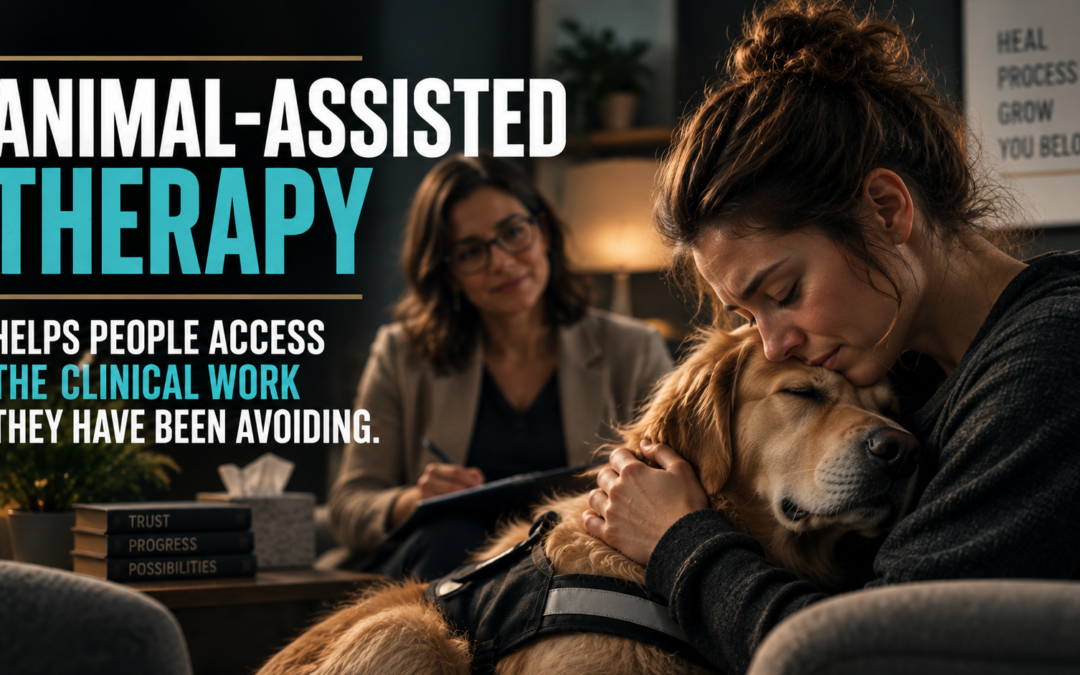
Animal-assisted therapy builds the kind of relational safety that helps people finally reach clinical work they have been avoiding, often for years. When words feel too hard and defenses run high, the calm presence of an animal can open a door that talking alone could not.
If you or someone you love has started therapy before and felt too guarded to go deep, you are not failing. That protective instinct makes sense, especially when the pain runs deep.
The hopeful truth is that healing does not always begin with words. Understanding how this approach works, and why safety comes first, is a gentle first step toward steadier days ahead.
What Is Animal-Assisted Therapy in Addiction and Mental Health Recovery?
Animal-assisted therapy in addiction and mental health recovery is a structured approach that brings trained animals into the therapeutic process to support healing. It works alongside licensed clinicians, not in place of them, adding a layer of comfort and connection to proven care.
This is not simply visiting with a friendly dog. The animal becomes part of a guided plan, helping a person feel calm enough to engage in real clinical work.
Think of it like a warm room on a cold day. The room does not do the healing itself, but it creates the conditions where healing becomes possible. The animal helps set that steady, welcoming tone.
How Is This Different From Just Spending Time With a Pet?
The difference is that animal-assisted therapy follows a clear clinical purpose guided by a trained professional. A pet offers love, while this approach uses that connection to support specific therapeutic goals.
A therapist may notice how a person relaxes around the animal, then gently use that calm to explore a difficult topic. Each interaction has intention behind it.
The comfort is real and genuine. The structure is what turns that comfort into meaningful progress.
Why Does Relational Safety Matter So Much in Animal-Assisted Therapy?
Relational safety matters so much because people cannot do deep clinical work when they feel threatened, judged, or exposed. The nervous system stays braced for danger, and honest reflection becomes nearly impossible.
For many people, past experiences taught them that opening up leads to hurt. That lesson does not fade just because they walk into a treatment room.
What Does Relational Safety Actually Mean?
Relational safety means feeling secure enough with another presence to lower your guard and be honest. It is the sense that you will not be criticized, rushed, or shamed for what you share.
Without it, therapy can feel like an interrogation. With it, therapy becomes a place where real change can begin.
Animals offer this safety naturally. They do not judge a person’s past, ask probing questions, or expect anything in return, which helps a guarded person begin to relax.
Why Do Animals Help People Feel Safe So Quickly?
Animals help people feel safe quickly because they offer acceptance without conditions or expectations. A dog resting its head on your knee does not care about your history or your mistakes.
This unconditional presence can be deeply disarming. Many people find they soften around an animal in ways they cannot around another person yet.
Picture holding a warm cup of tea when you feel anxious. Something about that steady comfort settles you. A calm animal can offer a similar grounding effect during a hard moment.
How Does This Approach Support Deeper Clinical Work?
This approach supports deeper clinical work by helping a person feel calm and connected enough to face what they have been avoiding. Once safety is present, the harder conversations become possible.
Deep healing often requires touching painful memories, fears, or shame. Most people naturally resist that, and the resistance is a form of self-protection.
How Does Calm Open the Door to Harder Topics?
Calm opens the door because a settled nervous system can tolerate difficult emotions that an anxious one cannot. When the body feels safe, the mind can explore more freely.
A person petting a calm animal may find their breathing slows and their shoulders drop. In that steadier state, a therapist can gently guide them toward a topic they usually avoid.
The animal becomes a kind of anchor. When emotions rise, that steady presence helps a person stay grounded instead of shutting down.
How Does It Lower the Walls People Bring to Therapy?
It lowers walls by giving a person something safe to focus on while difficult feelings surface. Instead of feeling put on the spot, they can connect with the animal as they talk.
This shift eases the pressure. Eye contact, long silences, and direct questions can feel less intense with an animal nearby.
Over time, the trust built with the animal often extends to the therapist. The relational safety spreads, making the whole process feel less threatening.
Who Might Animal-Assisted Therapy Help?
Animal-assisted therapy might help people who feel guarded, anxious, or stuck in traditional talk-based treatment. It can reach those who struggle to open up or who have felt disconnected from earlier care.
This approach is not right for everyone, and that is completely okay. The best care fits the person, not the other way around.
Who Tends to Benefit From This Approach?
People who tend to benefit include those carrying trauma, deep anxiety, or a long history of feeling unsafe with others. It can also help people who simply connect more easily with animals than with words.
Animal-assisted therapy may be worth exploring if any of these feel true:
- You or a loved one has felt too guarded to open up in traditional therapy.
- Anxiety or past hurt makes trusting a new provider difficult.
- Talking about painful experiences feels overwhelming or shutting-down.
- You respond warmly to animals and feel calmer in their presence.
- You are seeking an approach that complements clinical care, not replaces it.
If several of these resonate, that is a meaningful sign this approach could add value. A caring assessment can help you understand what fits best.
Is It a Replacement for Clinical Treatment?
Animal-assisted therapy is not a replacement for clinical treatment, and it works best as one part of a broader plan. Addiction and mental health conditions are complex, and lasting recovery usually calls for more than a single approach.
The connection with an animal can open doors and build trust, but it does not address every layer of healing on its own. Therapy, medical support, and structure remain essential.
The strongest results tend to come when this approach supports proven clinical care. Each piece reaches something the other may miss.
How Does Animal-Assisted Therapy Fit With Structured Treatment?
Animal-assisted therapy fits with structured treatment as a complement that deepens the work done in more traditional settings. It adds relational safety to the foundation of professional care.
A thoughtful recovery plan often blends several approaches, choosing what fits each person at each stage. This kind of therapy can strengthen that plan rather than compete with it.
How Do the Two Approaches Strengthen Each Other?
The two approaches strengthen each other by pairing comfort with clinical depth. The animal helps a person feel safe, while skilled therapy guides them through real healing.
For example, a person might feel calm enough during a session with an animal to finally name a fear they have carried for years. The clinician can then help them work through it.
Our mental health treatment programs are built to care for the whole person, so different approaches can work together. When substance use and mental health receive attention side by side, recovery gains a stronger foundation.
What Clinical Foundations Still Matter Most?
The clinical foundations that matter most include evidence-based therapy, medical support, and steady structure that keep recovery safe and grounded. These pieces protect a person through every stage.
For many people, residential inpatient care provides the immersive, supportive environment early recovery often needs. It offers around-the-clock care and a break from daily triggers.
Approaches like animal-assisted therapy can enrich that care, but they rest on this clinical base. Together, they offer both warmth and real depth.
How Do You Decide When to Seek Help?
You decide to seek help when substance use or emotional struggles feel hard to manage on your own, or when earlier care never quite reached you. You never have to wait for a crisis to deserve support.
Consider reaching out if any of these feel true:
- Substance use or mental health symptoms are affecting your daily life.
- Traditional treatment has helped some, but you still feel guarded or stuck.
- You or a loved one connects more easily with animals than with words.
- You want a recovery plan shaped around how you actually feel safe and heal.
- A loved one has gently expressed concern about your well-being.
If any of these resonate, that is reason enough to start a conversation with a caring professional. An honest assessment can help you understand what is happening and which approach fits best.
Common Questions Families Often Ask
Is animal-assisted therapy backed by real clinical care?
Yes. When offered responsibly, it is guided by trained professionals and used alongside proven treatment. The animal supports the process, while licensed clinicians lead the actual therapeutic work.
Can this approach work on its own?
It works best as part of a fuller treatment plan, not as a standalone solution. Lasting recovery usually combines therapy, medical care, structure, and supportive approaches like this one, so each element reinforces the others.
How do I know if this approach fits my loved one?
Consider how they connect and feel safe. People who relax around animals or struggle to open up in talk-based settings often find this approach meaningful. A caring assessment can help clarify whether it belongs in their plan.
How soon can care begin?
Support can start soon after you reach out. Our admissions team is available to answer your questions, verify insurance, and guide you toward the next step with patience and care.
You Do Not Have to Find the Right Path Alone
Animal-assisted therapy builds the kind of relational safety that helps people access clinical work they have been avoiding, offering comfort, connection, and a gentler way into healing. It is not a magic fix or a replacement for proven care. It is one meaningful piece of a fuller, more personal approach.
Recovery is a journey, and you were never meant to walk it alone. With compassionate support and a plan shaped around who you are, steadier days are within reach.
If you or someone you love is looking for an approach to recovery that feels safe, please reach out to the Robert Alexander Center for Recovery today. Our caring team is ready to listen, answer your questions, and help you take the next step toward steadier, more hopeful days ahead. You are not alone, and help is here whenever you are ready.