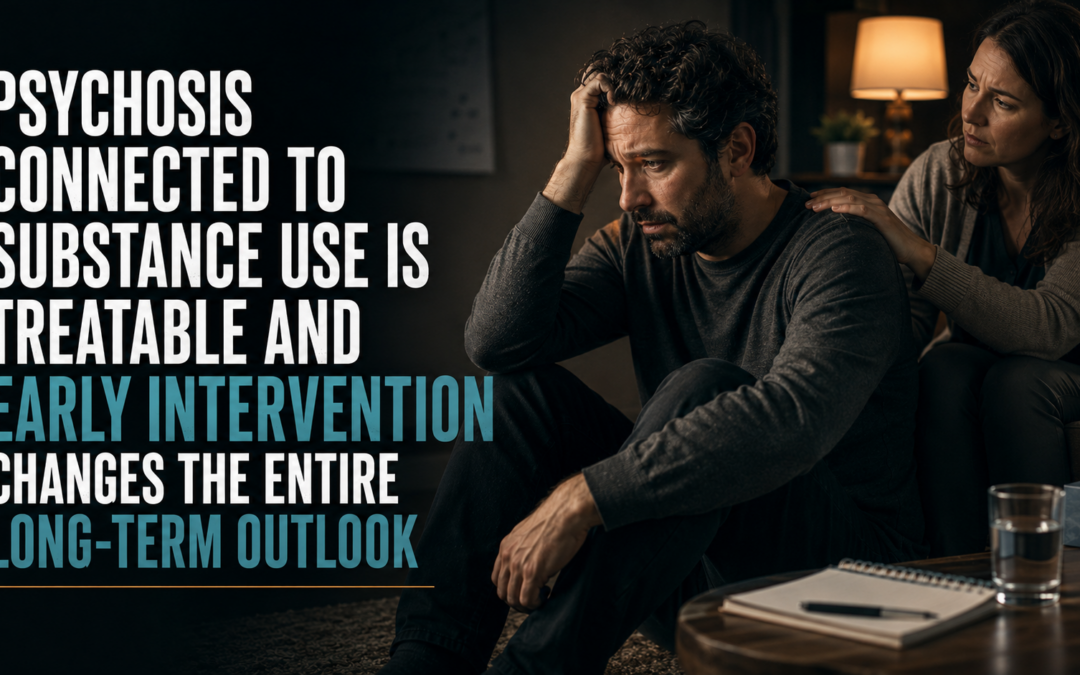
Psychosis connected to substance use is treatable, and reaching out early can change the entire long-term outlook for a person and the people who love them. When these two struggles overlap, they can feel frightening and impossible to untangle. They are not.
If you have watched someone you care about lose touch with reality while also using drugs or alcohol, you may feel scared and unsure where to turn. That fear is understandable, and you are not alone in it.
The hopeful truth is that recovery is possible, especially when help arrives sooner rather than later. Understanding how these conditions connect, and why early action matters so much, is a gentle first step toward steadier days ahead.
What Does Psychosis Connected to Substance Use Actually Mean?
Psychosis connected to substance use means a person is experiencing a loss of touch with reality while also living with drug or alcohol use, and the two are influencing each other. These experiences can include hallucinations, delusions, or thoughts that feel scattered and hard to follow.
Psychosis is not a character flaw or a sign of weakness. It is a health condition, one that responds to compassionate, skilled care.
Think of it like two currents flowing into the same river. Each one adds force to the other, which is why treating them together tends to work far better than treating either one alone.
How Do Substances and Psychosis Influence Each Other?
Substances and psychosis influence each other in a cycle where each can trigger or worsen the other. Certain drugs can spark a psychotic episode directly, while for other people, substance use begins as a way to quiet frightening experiences.
Some substances overstimulate the brain systems that help a person stay grounded in reality. This can bring on paranoia, hallucinations, or racing thoughts.
Over time the cycle tightens. More distress leads to more use, and more use leads to more distress, which is exactly why breaking that loop calls for care that addresses both sides at once.
Why Does Early Intervention Change the Long-Term Outlook?
Early intervention changes the long-term outlook because the sooner a person receives care, the more likely they are to regain stability and protect their brain health over time. Acting early can mean shorter episodes, fewer setbacks, and a gentler path to recovery.
When psychosis and substance use go untreated, they tend to deepen. Each episode can make the next one more likely, and the effects can ripple through relationships, work, and daily life.
What Happens When Care Is Delayed?
When care is delayed, symptoms often become more entrenched and harder to reverse. Untreated psychosis can grow more frequent, and ongoing substance use can wear down the body and mind.
Delays also carry a personal cost. Jobs, friendships, and trust can suffer while the underlying condition goes unaddressed.
None of this means recovery becomes impossible later. It simply means the road can be steeper, which is why reaching out sooner is such a caring choice.
How Does Early Support Protect the Future?
Early support protects the future by giving a person tools, stability, and understanding before symptoms take deeper root. It creates space for the brain to heal and for healthier patterns to form.
Picture tending a small crack in a foundation. Addressed early, it is a straightforward repair. Left alone, it can spread and threaten the whole structure.
Early care works the same way. It steadies the ground beneath a person so they can rebuild with confidence.
What Warning Signs Should Families Watch For?
Families should watch for a pattern of changes in thinking, behavior, and substance use rather than a single dramatic moment. These signs usually build gradually, so the overall picture matters more than any one day.
You do not need proof of a crisis to start a caring conversation. Noticing a shift is reason enough to pay closer attention.
Common warning signs worth noticing include:
- Expressing unusual beliefs, suspicions, or fears that seem out of character
- Hearing, seeing, or sensing things that others do not
- Withdrawing from family, friends, or activities they once enjoyed
- Increasing use of alcohol or drugs, especially to cope with distress
- Confused speech, scattered thinking, or trouble following conversations
Noticing one sign now and then is part of life. Noticing several together, especially over weeks, is a strong signal to reach out for guidance.
How Is This Different From Ordinary Stress or Moodiness?
The difference is that these symptoms persist, deepen, and begin interfering with daily life. Ordinary stress tends to ease once a situation settles.
Psychosis connected to substance use usually grows rather than fades. When unusual thoughts, withdrawal, or substance use keep building over time, that is more than a rough patch.
Trusting your instinct matters here. If the changes feel lasting and worrying, a caring conversation and a professional assessment can bring clarity and peace of mind.
What Does Integrated Treatment Involve?
Integrated treatment involves caring for psychosis and substance use together, within one coordinated plan and one supportive team. Nothing gets set aside or treated as less important than the other.
This approach looks at the whole person, not just a list of symptoms. It considers your history, your daily life, and the goals that matter most to you.
Why Does Detox Often Come First?
Detox often comes first because clearing substances from the body safely creates a stable starting point for the rest of recovery. Trying to manage withdrawal alone can be overwhelming and, with some substances, unsafe.
For many people, medical detox provides a safe, supervised foundation where healing can begin. Trained staff monitor symptoms, ease discomfort, and offer steady reassurance through the hardest hours.
Detox on its own is rarely enough, though. It clears the path so the deeper work of recovery can begin with a steadier start.
What Happens During Treatment?
During treatment, a caring team helps a person stabilize, understand their experiences, and build practical tools for lasting change. Care is personalized, never one-size-fits-all.
Most integrated plans blend several proven approaches:
- Medication management, guided by a caring prescriber who monitors how a person feels and adjusts as needed
- Individual therapy to explore experiences, triggers, and coping skills
- Cognitive Behavioral Therapy, which helps a person gently examine and reshape distressing thought patterns
- Substance use support that addresses cravings, triggers, and healthier ways to cope
- Family education so loved ones understand what is happening and can offer steady, informed help
Each piece works toward the same goal. The aim is to help a person feel safer, clearer, and more in control of their own life.
How Does Care Address the Whole Person?
Care addresses the whole person by treating mental health and substance use as connected rather than separate. Your team shares information and adjusts your plan as you grow.
Our mental health treatment programs are built around this idea. Rather than sending a person to one place for psychosis and another for substance use, care stays coordinated under one roof.
That coordination reduces confusion and helps a person feel understood as a full human being, not a diagnosis.
What Levels of Care Are Available?
Levels of care range from around-the-clock support to flexible outpatient options, depending on how much structure a person needs right now. The right choice depends on current symptoms and safety.
At the Robert Alexander Center for Recovery, options include residential inpatient treatment for those who need a safe, immersive environment with continuous support, along with partial hospitalization and outpatient services for people building skills alongside daily life.
As stability grows, care can shift with the person. Support is meant to meet each individual exactly where they are.
How Do You Decide When to Seek Help?
You decide to seek help when changes in thinking, mood, or substance use feel persistent, frightening, or hard to manage on your own. You never have to wait for a crisis to deserve care.
Consider reaching out if any of these feel true:
- Unusual thoughts, perceptions, or fears are becoming more frequent or intense
- Substance use has increased, especially alongside confusing or distressing experiences
- You or a loved one has withdrawn from people, activities, or responsibilities
- Sleep, focus, or daily functioning has become difficult to maintain
- A loved one has expressed worry about safety, thinking, or substance use
If any of these resonate, that is reason enough to start a conversation with a caring professional. An honest assessment can help you understand what is happening and which kind of support fits best.
Common Questions Families Often Ask
Can substance use really cause psychosis?
Yes. Some substances can trigger psychotic episodes, and others can worsen symptoms in a person already vulnerable to them. A careful assessment helps sort out what is driving the experiences and what kind of care fits best.
Is psychosis connected to substance use permanent?
Not usually. With early, integrated treatment, many people see their symptoms ease significantly over time. The brain has a real capacity to heal when a person receives the right support.
Should we treat the substance use or the psychosis first?
Both, at the same time. Integrated treatment addresses mental health and substance use together, because progress in one area supports progress in the other.
How soon can care begin?
Support can start soon after you reach out. Our admissions team is available to answer your questions, verify insurance, and guide you toward the next step with patience and care.
You Do Not Have to Face This Alone
Psychosis connected to substance use is treatable, and early intervention truly can change the entire long-term outlook for the better. Reaching out sooner is not about fear. It is about giving yourself or your loved one the best possible chance at steadiness, clarity, and hope.
Recovery is a journey, and no one should have to walk it alone. With integrated support and compassionate care, the confusion and fear can ease, and steadier days can return.
If you or someone you love is struggling with psychosis alongside substance use, please reach out to the Robert Alexander Center for Recovery today. Our caring team is ready to listen, answer your questions, and help you take the next step toward steadier, more hopeful days ahead. You are not alone, and help is here whenever you are ready.