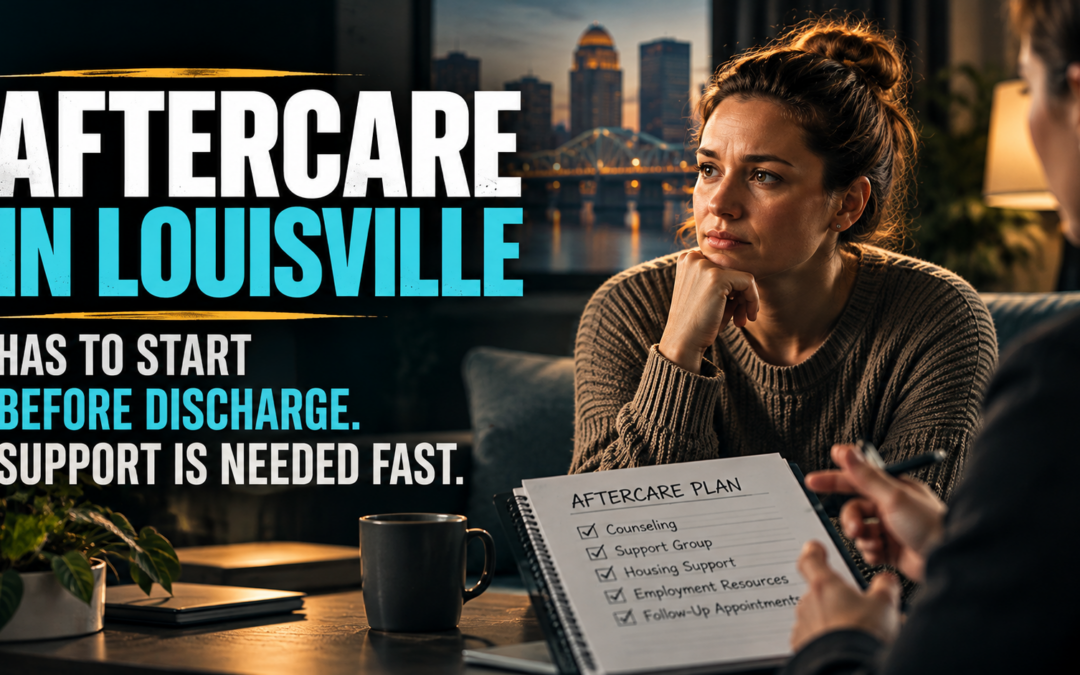
Aftercare in Louisville has to start before discharge, because the days right after treatment ends are often when support feels the thinnest. One week, a person has a care team, a full schedule and peers who understand. The next week, they may be home alone with a list of phone numbers and a lot of quiet.
If you or someone you love is nearing the end of a program, you may feel proud, hopeful and a little afraid all at once. That mix is normal. Leaving a structured setting is a big change, even when it is a good one.
The encouraging news is that this gap can be planned for. When aftercare is built while a person is still in treatment, the return home feels prepared rather than sudden. You don’t have to wait until discharge day to protect the progress you have made.
What Is Aftercare in Louisville and Why Does It Matter?
Aftercare in Louisville is the ongoing support that continues after a formal treatment program ends, helping a person carry new skills into daily life. It matters because recovery doesn’t stop at discharge. It keeps unfolding in ordinary routines, relationships and stressful moments.
Aftercare can include continued therapy, step-down care, support groups, medication follow-up and a written plan for handling cravings or hard days. Each piece keeps a person connected to help.
Think of treatment like a cast that protects a healing bone. When the cast comes off, the bone still needs physical therapy to grow strong. Aftercare is that next stage of strengthening.
How Is Aftercare Different From Treatment?
Aftercare is different from treatment because it focuses on maintaining and building on progress rather than starting the healing process. Treatment stabilizes and teaches. Aftercare helps those lessons hold up in real life.
In residential or partial hospitalization care, support is close by every day. In aftercare, support becomes more flexible so a person can return to work, family and community.
The goal is not less care. The goal is care that fits the stage a person is in right now.
Why Does Aftercare in Louisville Have to Start Before Discharge?
Aftercare in Louisville has to start before discharge because waiting until treatment ends leaves a gap at the exact moment a person is most vulnerable. Planning ahead means the next appointment, the next group and the next point of contact are already in place on day one at home.
A plan built during treatment also benefits from the care team’s insight. Clinicians who have worked closely with a person understand their triggers, strengths and needs. That knowledge shapes a stronger plan.
What Goes Wrong When Planning Waits Until the Last Day?
When planning waits until the last day, important steps often get rushed or missed. A person may leave without a scheduled therapy session, a clear medication plan or a group to attend that week.
Then life fills the space quickly. Work calls, family needs and old routines return before new supports are set up.
Small delays can add up. A week without an appointment can turn into a month, and the structure that helped so much slowly fades.
How Does Early Planning Ease the Transition?
Early planning eases the transition by turning a big, uncertain leap into a series of small, known steps. A person knows exactly where to go and who to call before they ever walk out the door.
Many people also practice parts of their plan while still in treatment. They might attend a support group, meet an outpatient therapist or work through a relapse prevention plan with their counselor.
By discharge, the plan doesn’t feel like homework. It feels like a path they have already started walking.
Why Is Support Often Weakest Right After Treatment Ends?
Support is often weakest right after treatment ends because daily structure drops away suddenly while new habits are still fragile. A person goes from constant care to much more independence in a single day.
This doesn’t mean a person did anything wrong. It is simply what happens when any intensive program finishes.
What Changes the Moment a Person Gets Home?
The moment a person gets home, they face familiar places, people and pressures that may be tied to past substance use. Triggers that were absent in treatment can show up again all at once.
There is also more unstructured time. Evenings and weekends that were once filled with sessions and groups may suddenly feel empty.
Families often feel unsure too. They want to help but may not know what to say, what to watch for or when to step back.
Why Do Feelings of Confidence Sometimes Fade?
Feelings of confidence sometimes fade because real life tests new skills in ways a treatment setting cannot fully copy. A person may leave feeling strong, then feel shaken after a stressful day or a difficult conversation.
That dip is common and doesn’t mean recovery is failing. It means support should stay close during this stretch.
Strong aftercare catches these moments early. Instead of facing a rough week alone, a person has a session already booked and people ready to listen.
What Does an Effective Aftercare Plan Include?
An effective aftercare plan includes a personalized mix of clinical care, peer support and practical daily steps that match a person’s needs and life. There is no single formula, because every recovery looks a little different.
A thoughtful aftercare plan is developed with the care team before discharge. It spells out where to turn, who to call and what to do when challenges come up.
Most strong plans include several of these pieces:
- Step-down care, such as partial hospitalization or intensive outpatient treatment, to ease the drop in structure
- Ongoing therapy to keep working through triggers, stress and emotions
- Support groups that offer connection and accountability each week
- A relapse prevention plan that names warning signs and specific coping steps
- Medication follow-up when appropriate, so care continues without gaps
- Family involvement to help loved ones understand how to support recovery
- Healthy routines for sleep, meals, movement and rest
Each piece supports the others. Together, they create a safety net that is strongest right when it is needed most.
How Does Outpatient Care Fit Into Aftercare?
Outpatient care fits into aftercare by providing continued professional support while a person lives at home and rebuilds daily routines. It keeps clinical guidance close without requiring a full-time program.
For many people near Louisville, outpatient care is a natural next step after residential treatment or partial hospitalization. Sessions can fit around work, school and family life.
This steady contact helps a person practice new skills in real situations, then talk through what happened with a trusted clinician.
Why Should Mental Health Care Continue After Discharge?
Mental health care should continue after discharge because anxiety, depression and trauma often sit beneath substance use. If these struggles go unaddressed, they can quietly pull a person back toward old patterns.
Our mental health treatment programs care for emotional health and substance use together. Keeping both in view after treatment gives recovery a more complete foundation.
How Does Being Near Louisville Help?
Being near Louisville helps because continued care stays within reach after discharge. The Robert Alexander Center for Recovery® is located in Mount Washington, a short drive from the city.
That closeness makes it easier to attend follow-up sessions, family meetings and step-down programs. People who complete residential inpatient care can often move into the next level of support without starting over somewhere new.
Local connection also matters. Support groups meet across the Louisville area, making it simpler to find a regular meeting close to home or work.
How Can Families Support Aftercare at Home?
Families can support aftercare by staying involved, learning what the plan includes and offering encouragement without taking control. Your role is to walk alongside your loved one, not to carry their recovery for them.
Helpful steps for families include:
- Asking to review the aftercare plan together before discharge
- Learning the warning signs your loved one and their care team have named
- Offering rides or reminders for appointments when it is welcome
- Keeping the home calm and free of substances when possible
- Seeking your own support through family sessions or groups like Al-Anon
Caring for yourself matters too. A rested, supported family member can offer steadier help over the long run.
How Do You Know When It Is Time to Seek More Help?
You know it is time to seek more help when recovery starts to feel harder to manage than your current support can handle. Reaching out early is a sign of strength, not failure.
Consider stepping up support if any of these feel true:
- Cravings or thoughts of using have become stronger or more frequent.
- You have started skipping appointments, groups or healthy routines.
- Your mood, anxiety or sleep has noticeably worsened since leaving treatment.
- Old people, places or stressors feel overwhelming to face on your own.
- You have returned to substance use, even briefly.
- A loved one has gently shared concern about how you are doing.
If any of these sound familiar, it may be time to adjust your plan. Care can increase for a while, then step back down once things feel steady again.
If you or someone you love is having thoughts of suicide, please call or text 988 to reach the Suicide and Crisis Lifeline, or call 911 right away.
What Families Often Ask
When should aftercare planning begin?
Aftercare planning should begin well before discharge, ideally early in treatment. Starting early gives time to schedule appointments, connect with groups and practice the plan before going home.
How long does aftercare usually last?
Aftercare often continues for months and sometimes longer, depending on each person’s needs. Support usually becomes lighter as a person grows more confident and stable.
What if a relapse happens during aftercare?
A relapse is a signal to adjust care, not a reason for shame. A care team can review what happened and help a person return to a level of support that fits.
How soon can care begin?
Support can begin soon after you reach out. Our admissions team can answer your questions, verify insurance and help you plan the next step with patience and care.
Recovery Is Built in the Weeks After Treatment
Aftercare in Louisville has to start before discharge because support is most absent right after treatment ends, and planning ahead is how that gap gets closed. Finishing a program is a real achievement. A strong plan helps make sure that achievement keeps growing.
Recovery is a journey, and you were never meant to walk it alone. With early planning, steady connection and compassionate guidance, the return home can feel hopeful instead of uncertain.
If you or someone you love is preparing to leave treatment, please reach out to the Robert Alexander Center for Recovery today. Our caring team is ready to listen, answer your questions and help you build a plan for the road ahead. You are not alone, and help is here whenever you are ready.