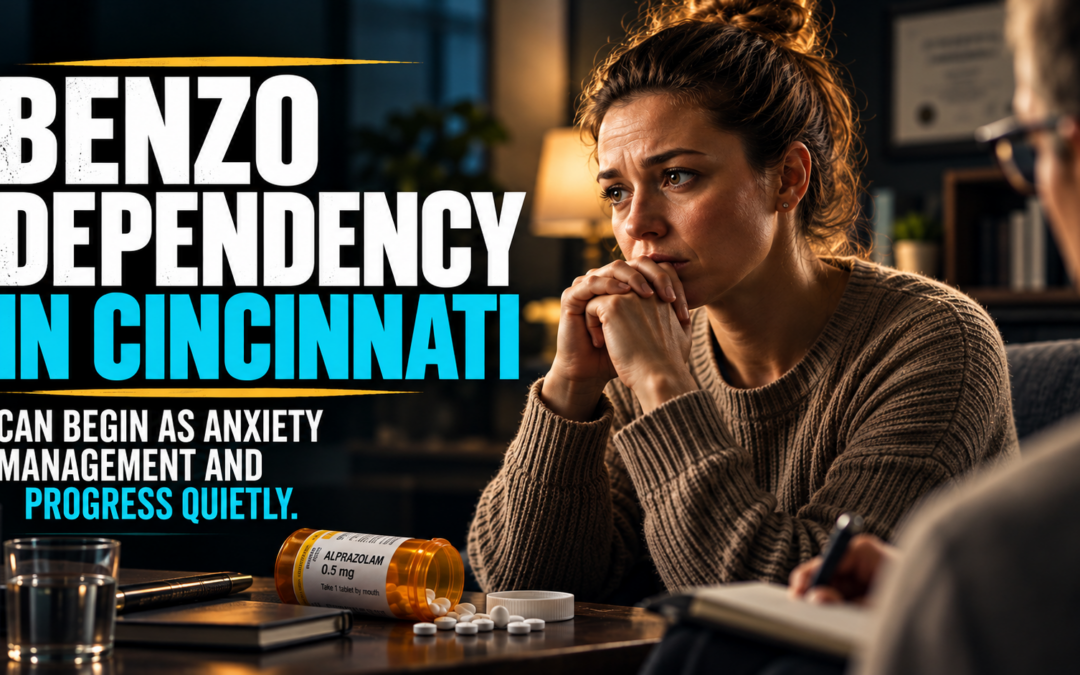
Benzo dependency in Cincinnati rarely starts with someone looking for a high. It usually starts in an exam room, with a person describing panic attacks, sleepless nights or a racing mind that will not settle. A doctor prescribes Xanax, Ativan or Klonopin, and for the first time in months, relief arrives.
If you or someone you love began taking a benzodiazepine for anxiety and now feels unable to stop, you did nothing wrong. You trusted your provider and followed directions. Somewhere along the way, a short-term solution quietly became a long-term need.
That shift happened during a window of time that patients, families and even prescribers often miss. The hopeful truth is that dependence is treatable, and a safe path forward exists. Understanding how that window works can help you see your situation clearly and without shame.
What Is Benzo Dependency in Cincinnati and How Does It Begin?
Benzo dependency in Cincinnati is a condition where the body and brain adapt to a benzodiazepine so fully that a person feels unwell without it. It most often begins with a legitimate prescription for anxiety, panic or insomnia.
Benzodiazepines, often called benzos, calm the nervous system by boosting a brain chemical called gamma-aminobutyric acid (GABA). GABA acts like a natural brake on stress signals. Benzos press that brake harder, which is why they ease anxiety so quickly.
That fast relief is real and valuable. It is also why the brain adjusts so quickly.
Why Do Doctors Prescribe Benzos for Anxiety?
Doctors prescribe benzos for anxiety because they work fast during moments of intense distress. A person in the middle of a panic attack may feel calmer within an hour.
These medications are generally intended for short-term or occasional use. In 2020, the U.S. Food and Drug Administration (FDA) strengthened its warning labels on benzodiazepines to highlight the risks of dependence and withdrawal.
Still, a prescription meant for a few weeks can stretch into months or years. Refills feel routine, and the anxiety underneath often never receives other treatment.
What Is the Window Everyone Missed?
The window everyone missed is the stretch of time when a benzo shifts from treating anxiety to preventing withdrawal. It often opens within a few weeks of daily use, and it rarely comes with an obvious warning.
During this window, a person still feels the medication is helping. In reality, the brain has started relying on it just to stay level.
Think of a garden hose that has been watering a plant every day. After a while, the plant’s roots stop reaching deeper for water. Take the hose away suddenly, and the plant wilts, not because it is weak, but because it adapted.
Why Does Dependence Develop So Quietly?
Dependence develops quietly because its early signs look exactly like the anxiety the medication was meant to treat. When a dose wears off and nerves rise, it feels like the original problem returning.
Clinicians call this rebound anxiety. Some people also notice interdose withdrawal, which means feeling shaky or tense between scheduled doses.
Both experiences make the medication seem more necessary, not less. That is how benzo dependency in Cincinnati can grow while everyone believes treatment is working.
Who Usually Misses the Window?
Almost everyone involved can miss the window, including the patient, the family and the prescriber. No one is ignoring the problem. The signs are simply easy to misread.
A busy appointment may focus on whether anxiety feels better. A family may see a loved one finally sleeping. The person taking the medication may feel grateful for any relief at all.
Ohio’s prescription tracking system, the Ohio Automated Rx Reporting System (OARRS), helps prescribers spot overlapping or early refills. Yet benzo dependency in Cincinnati can develop on a perfectly normal, on-schedule prescription that never raises a flag.
What Warning Signs Should Families Notice?
Families should notice a pattern where the medication seems to control more of daily life over time. With benzo dependency in Cincinnati, small changes often add up before anyone names them.
Signs worth paying attention to include:
- Needing a higher dose to get the same calming effect
- Feeling anxious, irritable or shaky as a dose wears off
- Running out of the prescription early or worrying about refills
- Taking the medication “just in case” before ordinary situations
- Memory lapses, drowsiness or slowed thinking
- Combining benzos with alcohol, sleep aids or opioids
- Becoming defensive or distressed when the medication is questioned
One sign alone may simply reflect a stressful season. Several together deserve a gentle, caring conversation.
Why Is Mixing Benzos With Other Substances So Risky?
Mixing benzos with alcohol or opioids is risky because each one slows breathing, and together they can slow it to a dangerous level. This combination is a leading concern among medical providers.
Pills bought outside a pharmacy add another danger. Counterfeit pills made to look like Xanax may contain fentanyl, a powerful synthetic opioid.
If someone becomes unresponsive or struggles to breathe, call 911 right away. Give naloxone (often sold as Narcan) if you have it, since it can reverse the opioid portion of an overdose.
Why Do Tapering and Medical Supervision Matter So Much?
Tapering and medical supervision matter because stopping a benzo suddenly can cause severe withdrawal, including seizures. Benzos are one of the few substances where quitting cold turkey can be life-threatening.
Many people try to stop on their own once they realize what has happened. That instinct comes from courage, yet it can put their safety at risk.
What Does a Safe Taper Look Like?
A safe taper lowers the dose slowly over time, giving the brain a chance to rebuild its own calming system. The pace is personal and adjusted based on how a person feels.
Some tapers move over weeks, while others take longer. A good care team watches closely and slows down when symptoms rise.
For people facing benzo dependency in Cincinnati, medical detox offers a supervised setting for the first and often hardest stage of this process. Trained staff monitor vital signs, ease discomfort and step in quickly if anything changes.
What Can Withdrawal Feel Like?
Withdrawal can feel like anxiety turned up to its highest setting, along with physical symptoms that may be frightening. Knowing what to expect can make it feel less overwhelming.
Common symptoms include surging anxiety, poor sleep, sweating, tremors, a racing heart and sensitivity to light or sound. Medical support helps keep these symptoms manageable and safe.
What Does Treatment for Benzo Dependency in Cincinnati Include?
Treatment for benzo dependency in Cincinnati includes a supervised taper, therapy for the anxiety underneath and steady support as the brain heals. Removing the medication without addressing the anxiety rarely lasts.
Care is personalized, never one-size-fits-all. A strong plan respects why the prescription started and builds new ways to feel calm.
How Does Treatment Address the Original Anxiety?
Treatment addresses the original anxiety by teaching skills that work without medication. The goal is not to leave a person unprotected. It is to replace what the benzo was doing with lasting tools.
Most plans blend several proven approaches:
- Individual therapy to explore the roots of anxiety and panic
- Cognitive Behavioral Therapy (CBT), which helps reshape anxious thought patterns
- Grounding and breathing skills that calm the body in the moment
- Non-addictive medication options when appropriate, guided by a prescriber
- Sleep support and healthy routines that steady the nervous system
Our mental health treatment programs care for anxiety and substance use side by side. When one team sees the full picture, the plan can treat the cause and not only the medication.
What Levels of Care Are Available Near Cincinnati?
Levels of care range from around-the-clock residential support to flexible outpatient options. The right choice depends on dose, length of use, other substances involved and support at home.
The Robert Alexander Center for Recovery in Mount Washington, Kentucky, is within driving distance for many families across the greater Cincinnati area. For people who need a calm, focused setting during a careful taper, residential inpatient care offers steady support day and night.
As a person grows steadier, care can step down gradually. Support shifts to meet each person where they are.
How Do You Know When It Is Time to Seek Help?
It is time to seek help when a benzo feels harder to control than it should, or when stopping feels frightening or impossible. You do not need to wait for a crisis to deserve care.
Consider reaching out if any of these feel true:
- You need more of the medication to feel the same calm you once did.
- Your anxiety spikes as each dose wears off.
- You have tried to cut back and felt shaky, panicked or unwell.
- You worry about running out or plan your day around your next dose.
- You sometimes combine your benzo with alcohol or other substances.
- A loved one has gently shared concern about your medication use.
If any of these resonate, a confidential conversation with a caring professional can bring clarity. An honest assessment can help you understand which level of support fits best.
What Families Often Ask
Can someone become dependent on a benzo even with a prescription?
Yes. Dependence can develop with careful, prescribed use because the brain adapts to the medication. This is common and nothing to feel ashamed of.
Should my loved one stop taking it right away?
No. Stopping suddenly can cause severe withdrawal, including seizures. A medically supervised taper is the safest way forward.
What if the anxiety comes back during treatment?
That concern is valid, and a care team plans for it. Therapy, skills training and non-addictive options help manage anxiety as the dose comes down.
How soon can care begin?
Support can begin soon after you reach out. Our admissions team can answer your questions, verify insurance and guide you toward the next step with patience and care.
The Window Can Close, and Healing Can Begin
Benzo dependency in Cincinnati begins as anxiety management and progresses through a window everyone missed, but missing that window does not mean missing your chance to heal. The way it started says nothing about your strength or your worth.
Recovery is possible. With a careful taper, compassionate care and new tools for anxiety, calm can return without relying on a prescription that stopped serving you.
If you or someone you love is struggling with benzodiazepines, please reach out to the Robert Alexander Center for Recovery today. Our caring team is ready to listen, answer your questions and help you take the next step. You are not alone, and help is here whenever you are ready.