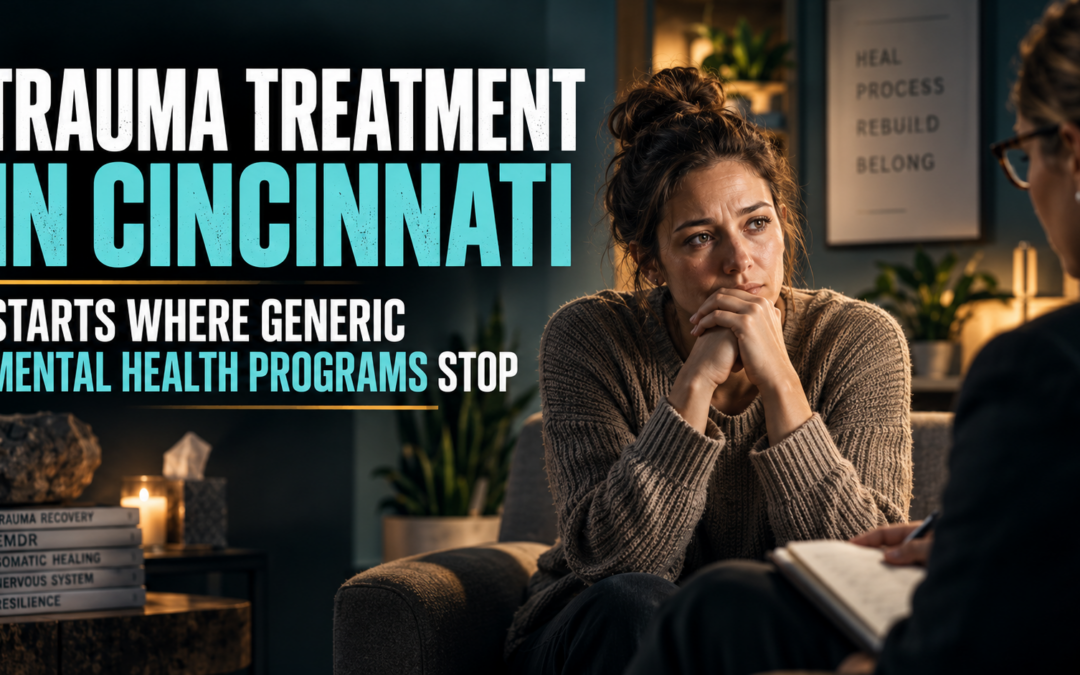
Trauma treatment in Cincinnati at Robert Alexander Center begins in the exact place many generic mental health programs run out of room. It looks at trauma and substance use together, as one connected experience, rather than treating them as two separate problems handed off to two different providers.
If you or someone you love has worked hard in a general counseling program and still felt stuck, you are not failing. Something important may have been left out of the picture.
The hopeful truth is that trauma responds to care built for the whole person. Understanding what sets integrated trauma care apart is a gentle first step toward steadier days ahead.
What Is Trauma Treatment in Cincinnati at Robert Alexander Center?
Trauma treatment in Cincinnati at Robert Alexander Center is integrated care that addresses trauma alongside any substance use and mental health struggles present, within one coordinated plan. It recognizes that trauma rarely stands alone, and neither should its treatment.
Trauma is a response to overwhelming experiences that keep affecting how you feel, sleep, and cope long after the event has passed. It lives in both the mind and the body.
Think of it like tending a garden with tangled roots. Pulling at one plant without understanding what it is connected to rarely solves the problem. Integrated care follows the roots and treats the whole system.
How Is This Different From a Generic Mental Health Program?
The difference is that many generic mental health programs treat trauma as a standalone issue, separate from substance use, while integrated care treats them together. When these struggles are linked, splitting them apart leaves a gap.
A general program might offer talk therapy for trauma while sending someone elsewhere for substance use. That split can leave each provider seeing only half the story.
At Robert Alexander Center, our mental health treatment programs keep care coordinated under one roof. Your team shares information, so nothing important slips through the cracks.
Why Does Trauma Treatment in Cincinnati Need an Integrated Approach?
Trauma treatment in Cincinnati needs an integrated approach because trauma and substance use so often feed each other, and healing one without the other leaves a person exposed. Care that addresses both at once gives recovery a much stronger foundation.
For many people, substance use began as a way to quiet the effects of trauma. Treating the substance use while ignoring the trauma often leaves the deeper pain untouched.
How Does Trauma Connect to Substance Use?
Trauma connects to substance use because people often reach for relief when the body will not settle on its own. Alcohol or drugs can numb painful feelings or quiet a racing mind, at least for a while.
This is not a weakness or a moral failing. It is an understandable attempt to feel calm when nothing else seems to help.
The trouble is that this relief rarely lasts. As substances wear off, distress often returns even stronger, which can pull a person back toward using and tighten the cycle.
How Does Trauma Affect the Nervous System?
Trauma affects the nervous system by keeping the body’s alarm on high alert long after the danger has passed. This is why healing has to reach the body, not only the story.
When something overwhelming happens, the body prepares to fight, flee, or freeze. For many people, that alarm never fully switches off.
Picture a smoke detector that keeps sounding after the fire is out. The alarm is not lying. It has simply learned to stay on guard, which is why people notice tension, panic, or a racing heart that seems to come from nowhere.
Why Do Talk-Only Programs Sometimes Fall Short?
Talk-only programs sometimes fall short because understanding your trauma does not automatically calm a nervous system stuck in survival mode. You can know exactly why you feel anxious and still feel your body brace against a threat that is no longer there.
Talking helps you make sense of your experience, and that has real value. Yet the physical imprint of trauma often needs its own kind of care.
What Does the Body Need That Talking Cannot Provide?
The body needs to learn that it is safe again, and that lesson often comes through experience rather than words alone. Talking reaches the thinking brain, but the alarm system responds to steadiness and sensation.
Imagine trying to calm a frightened child with a lecture. Comfort comes from a safe, steady presence, not an explanation.
Trauma care works the same way. Grounding techniques, breathing practices, and body-aware support help the nervous system settle, so the mind can finally process the past.
Does This Mean Talk Therapy Does Not Matter?
Talk therapy absolutely matters, and it remains a vital part of trauma care. The goal is not to replace it but to pair it with approaches that also reach the body.
When words and physical calming work together, healing tends to go deeper. You process the memory while your body slowly learns it no longer has to stand guard.
This combination is what makes integrated trauma care feel steadier and more complete for so many people.
What Does Trauma Treatment Include at Robert Alexander Center?
Trauma treatment at Robert Alexander Center includes a blend of therapies that calm the body, process painful experiences, and rebuild a sense of safety over time. Care is personalized, never one-size-fits-all.
A strong plan looks at the whole person, including sleep, relationships, physical health, and any substance use present. Each piece supports the others.
Most trauma-focused plans blend several proven approaches:
- Individual therapy to gently process experiences at a pace that respects your comfort
- Cognitive Behavioral Therapy, which helps you notice and reshape the thought patterns that fuel distress
- Grounding and body-aware techniques that teach the nervous system how to feel safe again
- Group support that reminds you others understand and you are not alone
- Attention to routine and rest, since steady daily rhythms help calm an overactive alarm system
Each part works toward the same goal. The aim is to help you feel safe, steady, and more like yourself.
How Does Care Respect Your Pace?
Care respects your pace by never forcing you to relive the trauma before you feel ready. A skilled team builds safety first, then moves gently into processing the memory.
This matters deeply. Rushing can overwhelm the nervous system and make healing harder rather than easier.
Instead, a caring team follows your lead, using grounding tools to keep you steady. Processing happens gradually and safely, one manageable step at a time.
What Levels of Care Are Available Near Cincinnati?
Levels of care range from immersive residential support to flexible outpatient options, depending on how much structure you need right now. The right choice depends on your symptoms and your safety.
Within reach of the greater Cincinnati area, Robert Alexander Center offers residential inpatient care for those who need a safe, focused environment, along with partial hospitalization and outpatient support for people building recovery alongside daily life.
As you grow steadier, care can shift with you. Support is meant to meet you exactly where you are.
How Do You Decide When to Seek Help?
You decide to seek help when trauma symptoms feel persistent, distressing, or hard to manage on your own. You never have to wait for a crisis to deserve care.
Consider reaching out if any of these feel true:
- Painful memories, nightmares, or flashbacks keep returning and disrupting your days.
- Your body often feels tense, jumpy, or on edge for no clear reason.
- You are using alcohol or drugs to quiet anxiety or numb difficult feelings.
- Earlier counseling helped some, but the deeper distress never fully eased.
- A loved one has gently expressed concern about your mood or your patterns.
If any of these resonate, that is reason enough to start a conversation with a caring professional. An honest assessment can bring clarity and help you understand which kind of support fits best.
Common Questions Families Often Ask
Why did general counseling not fully help my loved one?
General counseling can be valuable, but it may treat trauma separately from substance use. When the two are connected, integrated care that addresses both together often reaches what a single-focus program cannot.
Is trauma really stored in the body?
Yes. Trauma shapes how the nervous system responds to stress and safety, which is why people often feel physical symptoms like tension or panic. Body-aware care helps address that physical side directly.
Will treatment force my loved one to relive the worst moments?
No. A skilled team moves at each person’s pace and builds safety first. Grounding tools help them stay steady, and processing happens gradually rather than all at once.
How soon can care begin?
Support can start soon after you reach out. Our admissions team is available to answer your questions, verify insurance, and guide you toward the next step with patience and care.
You Do Not Have to Heal This Alone
Trauma treatment in Cincinnati at Robert Alexander Center starts where generic mental health programs stop, treating trauma, substance use, and the nervous system as one connected experience rather than separate pieces. Understanding your pain matters, and so does giving your body the care it needs to finally settle.
Healing takes time, and it takes courage. With compassionate support and approaches built for the whole person, the weight you have carried can begin to ease.
If you or someone you love is struggling with the effects of trauma, please reach out to the Robert Alexander Center for Recovery® today. Our caring team is ready to listen, answer your questions, and help you take the next step toward steadier, more hopeful days ahead. You are not alone, and help is here whenever you are ready.