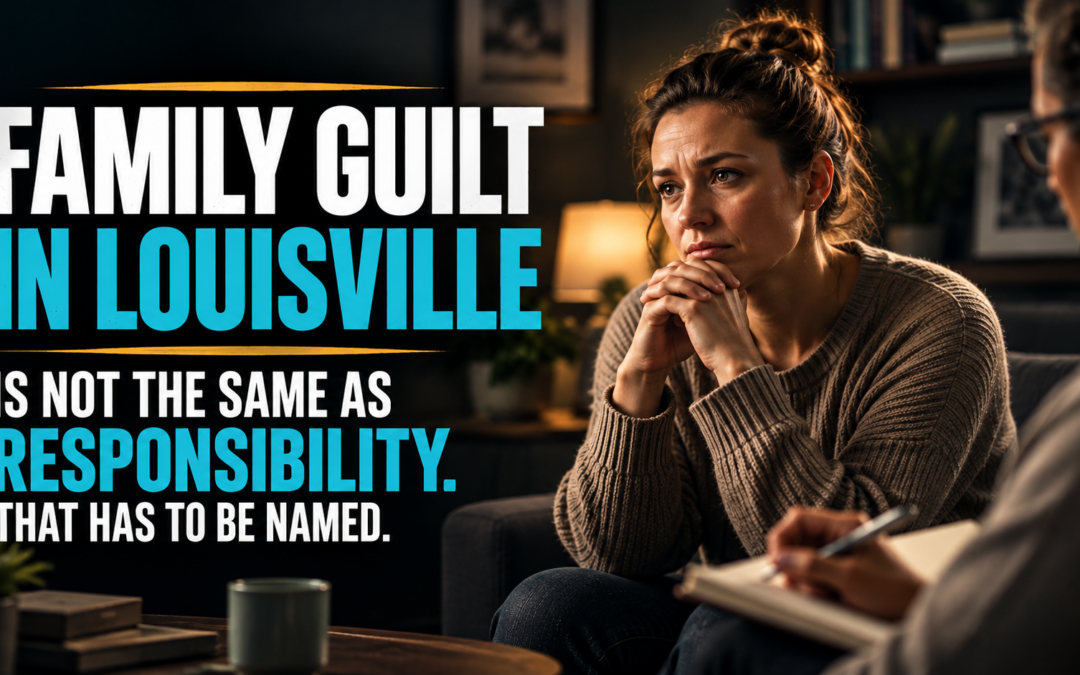
The guilt Louisville families carry about addiction is real, heavy and often silent. Parents replay old decisions. Spouses wonder what they missed. Siblings question whether they could have said something sooner.
If you are carrying this weight right now, please know that feeling guilty does not mean you caused your loved one’s substance use. Guilt is a feeling. Responsibility is something different, and the two are easy to confuse when you love someone who is struggling.
Naming that difference can change how your family heals. It can ease the pressure you have been living under and help you show up for your loved one in steadier, healthier ways. You deserve that clarity, and so does the person you are trying to help.
What Is the Difference Between Guilt and Responsibility for Families?
Guilt is the painful feeling that you did something wrong, while responsibility is the set of choices and actions that actually belong to you. A family member can feel deep guilt about a loved one’s addiction without being responsible for causing it.
Addiction is a complex health condition. It is shaped by genetics, brain chemistry, trauma, mental health, stress and environment. No single parent, partner or sibling creates it alone.
Think of it like a storm that hits a house. You can wish you had built stronger walls, but you did not create the weather. Your role now is to help repair and protect, not to blame yourself for the storm.
Why Does Guilt Feel So Much Like Responsibility?
Guilt feels like responsibility because love makes us want to find a reason and a solution. When someone we care about is hurting, blaming ourselves can feel easier than accepting that some things were outside our control.
Self-blame also gives a false sense of power. If it was your fault, then maybe you can fix it by trying harder.
The problem is that this belief often leads to exhaustion, resentment and burnout. It keeps families stuck in a cycle that helps no one, including the person in recovery.
What Are Families Actually Responsible For?
Families are responsible for their own actions, boundaries and willingness to seek support. You are not responsible for another adult’s substance use or the choices they make within it.
Your responsibilities might include:
- Speaking honestly and with care
- Setting clear, loving boundaries
- Taking care of your own health
- Learning about addiction and recovery
- Seeking help for yourself and your family
These are things you can actually influence. Focusing on them brings relief because it replaces impossible expectations with achievable steps.
Why Does the Guilt Louisville Families Carry About Addiction Need to Be Named?
The guilt Louisville families carry about addiction needs to be named because unspoken guilt quietly shapes every interaction in the home. When it stays hidden, it can fuel enabling, conflict and isolation.
Naming it out loud takes away some of its power. It allows families to look at the feeling clearly instead of letting it drive decisions in the background.
How Does Unnamed Guilt Affect Treatment?
Unnamed guilt can affect treatment by pulling family members into rescuing, covering for or controlling their loved one. These responses usually come from love, yet they can make recovery harder.
A parent who feels responsible may pay off debts or make excuses to protect their child. A spouse may hide the problem from friends to avoid judgment.
Over time, these patterns can shield a person from the natural consequences that often motivate change. Naming guilt helps families step back and choose responses that truly support recovery.
Why Does Separating Guilt From Responsibility Bring Relief?
Separating guilt from responsibility brings relief because it frees families to focus on what helps rather than what hurts. You can let go of carrying a burden that was never yours to hold.
This does not mean you stop caring. It means your care becomes healthier and more sustainable.
Many Louisville families describe this shift as finally being able to breathe again. That breathing room is often where real healing begins for everyone.
How Does Addiction Affect the Whole Family System?
Addiction affects the whole family system by changing roles, communication and emotional balance in the home. When one person struggles, everyone around them adjusts, often without realizing it.
A family works a bit like a mobile hanging over a crib. When one piece moves, every other piece shifts to stay balanced.
What Roles Do Family Members Often Take On?
Family members often take on roles that help them cope with the stress of addiction. These roles can feel protective at first but may become draining over time.
Common patterns include:
- The caretaker, who manages crises and tries to hold everything together
- The peacekeeper, who avoids conflict at all costs
- The achiever, who tries to make the family look fine from the outside
- The withdrawn one, who pulls away to protect themselves
None of these roles are wrong. They are understandable responses to a painful situation. Recognizing them is a gentle first step toward healthier connection.
How Does Guilt Keep These Patterns in Place?
Guilt keeps these patterns in place by convincing family members that stepping back would be selfish or unloving. The caretaker keeps rescuing because stopping feels like abandonment.
In truth, stepping back from unhealthy roles is often one of the most loving things you can do. It gives your loved one space to take ownership of their recovery.
It also gives you space to heal. You matter in this story too.
How Can Families Support Recovery Without Taking Ownership of Someone Else’s Choices?
Families can support recovery by offering love, honesty and steady boundaries while allowing their loved one to own their choices. Support and ownership are not the same thing.
You can walk beside someone without carrying them. That balance protects both of you.
What Does Healthy Support Look Like?
Healthy support looks like encouragement without control and compassion without rescuing. It means staying connected while respecting that recovery belongs to the person living it.
Practical ways to offer healthy support include:
- Expressing love and concern without blame or shame
- Encouraging professional treatment rather than trying to fix things alone
- Setting boundaries around money, safety and household expectations
- Celebrating progress without taking credit or responsibility for setbacks
- Making time for your own rest, friendships and support
These steps help you stay present without losing yourself.
Why Does Family Involvement in Treatment Matter?
Family involvement in treatment matters because healing tends to go deeper when the whole system receives care. Your loved one is not recovering in a vacuum, and you are not either.
Family sessions can help everyone understand addiction, rebuild trust and practice healthier communication. They also offer a safe place to talk about guilt with professional guidance.
Our mental health treatment programs recognize that substance use and emotional struggles often affect the entire household. When families are supported alongside their loved one, recovery gains a stronger foundation.
How Can You Care for Yourself Along the Way?
You can care for yourself by treating your own well-being as part of the recovery process, not a distraction from it. A drained caregiver cannot offer steady support for long.
Consider individual counseling, peer groups like Al-Anon or Nar-Anon that meet across the Louisville area or simply protected time to rest. Talking with others who understand can ease the isolation guilt creates.
Caring for yourself is not selfish. It is how you stay strong enough to keep loving well.
What Levels of Care Are Available Near Louisville?
Levels of care range from immersive residential treatment to flexible outpatient options, depending on what your loved one needs right now. The right choice depends on the severity of substance use, safety and home environment.
The Robert Alexander Center for Recovery sits a short drive from Louisville in Mount Washington. That closeness lets families stay involved while their loved one heals in a focused setting.
For many people, residential inpatient care provides around-the-clock support and a break from daily triggers. Others may do well with outpatient care that fits around work and family life. As progress grows, care can shift to meet each person where they are.
How Do You Know When It Is Time to Seek Help?
It is time to seek help when addiction is affecting your loved one’s health and your family’s well-being in ways that feel hard to manage alone. You never have to wait for a crisis to reach out.
Consider contacting a treatment team if any of these feel true:
- Your loved one’s substance use is affecting their health, work or relationships.
- You feel constant guilt, worry or exhaustion about their choices.
- Family conversations often turn into conflict, silence or avoidance.
- You have been covering for, rescuing or protecting them from consequences.
- You are unsure how to help without making things worse.
If any of these resonate, that is reason enough to start a conversation. A caring professional can help your family understand the options and choose a next step that fits.
What Families Often Ask
Did I cause my loved one’s addiction?
No single person causes addiction. It develops through a mix of biology, mental health, experiences and environment. You can acknowledge regrets without carrying blame for a complex health condition.
Is setting boundaries the same as giving up?
Not at all. Boundaries protect your well-being and create space for your loved one to take ownership of recovery. They are an act of love, not abandonment.
Can our family be involved in treatment?
Yes. Many programs include family sessions, education and communication support. Involvement helps rebuild trust and gives everyone tools for the road ahead.
How soon can care begin?
Support can begin soon after you reach out. Our admissions team can answer your questions, verify insurance and guide your family toward the next step with patience and care.
You Can Let Go of What Was Never Yours to Carry
The guilt Louisville families carry about addiction is a sign of how deeply you love, but it is not proof that you are responsible. Naming the difference allows you to release blame and focus on support that truly helps.
Healing is possible for your loved one and for your whole family. With honest conversations, healthy boundaries and compassionate guidance, steadier days can return.
If someone you love is struggling with addiction, please reach out to the Robert Alexander Center for Recovery today. Our caring team is ready to listen, answer your questions and help your family take the next step forward together. You are not alone, and help is here whenever you are ready.