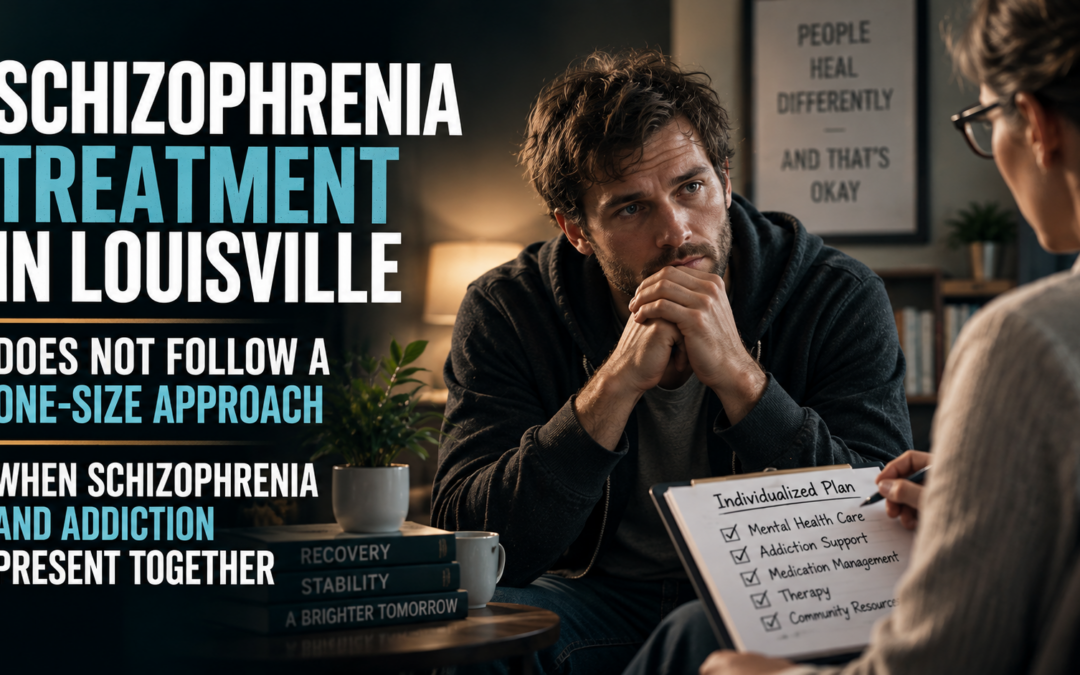
Schizophrenia treatment in Louisville cannot follow a single, rigid formula, because schizophrenia paired with substance use rarely looks the same from one person to the next. Every person carries a different mix of symptoms, history, and needs, and effective care has to reflect that.
If you or someone you love is living with schizophrenia and substance use at the same time, you may feel overwhelmed and unsure where to turn. That fear is understandable, and you are not alone in it.
The hopeful truth is that recovery is possible, especially when care is shaped around the individual rather than a template. Understanding why personalized treatment matters is a gentle first step toward steadier days ahead.
What Is Schizophrenia Treatment in Louisville and Why Must It Be Individualized?
Schizophrenia treatment in Louisville is specialized care that helps a person manage symptoms like hallucinations, delusions, or disorganized thinking, while also addressing any substance use present alongside them. It must be individualized because these two conditions shape each other differently in every person.
Schizophrenia affects how a person thinks, feels, and perceives the world. When substance use enters the picture, it can change how those symptoms appear and how a person responds to care.
Think of it like a lock and key. A key cut for one lock will not open another. Treatment has to be shaped to fit the person, not forced to match a general design.
Why Does a One-Size Approach Fall Short?
A one-size approach falls short because it ignores how much each person’s experience differs. Two people with the same diagnosis can face very different symptoms, triggers, and daily challenges.
Imagine giving everyone the same pair of shoes regardless of size. Some would manage, but many would struggle and give up.
Care that overlooks these differences often misses what a person truly needs. Personalized treatment closes that gap by meeting each person where they actually are.
How Do Schizophrenia and Substance Use Interact?
Schizophrenia and substance use interact in a cycle where each one can intensify the other, making both harder to manage alone. This connection is common and well understood by clinical teams.
Some people begin using substances to quiet frightening or confusing experiences. For others, certain substances can trigger or worsen the symptoms of schizophrenia.
How Can Substance Use Change the Symptoms?
Substance use can change symptoms by making them more intense, more frequent, or harder to predict. What might have been a manageable experience can become far more distressing.
Certain substances overstimulate the brain systems that help a person stay grounded in reality. This can deepen paranoia, hallucinations, or scattered thinking.
These effects are not a reflection of a person’s character. They are signs that the brain is under real strain and needs care.
Why Does This Overlap Make Care More Complex?
This overlap makes care more complex because treating one condition without the other leaves a gap where progress can slip away. Each struggle can quietly undo the gains made in the other.
Picture trying to fill a bucket with a hole still in the bottom. No matter how much effort goes in, the water keeps draining out.
This is why integrated care matters so much. When both conditions receive attention together, healing finally has room to hold.
Why Do Symptoms Vary So Much From Person to Person?
Symptoms vary so much because schizophrenia expresses itself differently depending on a person’s brain, history, and circumstances. Add substance use, and that variation grows even wider.
No two people walk the same path. Understanding this helps families let go of comparison and focus on the care that fits their loved one.
What Kinds of Differences Show Up?
The differences that show up can include the type of symptoms, their intensity, and how a person copes with them day to day. Some people experience strong hallucinations, while others struggle more with disorganized thinking or withdrawal.
Consider how these factors can differ from person to person:
- The specific symptoms present, such as delusions, hallucinations, or emotional flatness
- Which substances are involved and how they affect the person
- How long both conditions have been present
- The support, stability, and safety a person has around them
- Any other health or life challenges layered on top
Because these pieces combine in countless ways, care has to be built for the individual. A thoughtful plan reflects the whole picture, not just a label.
What Does Individualized Treatment Involve?
Individualized treatment involves caring for schizophrenia and substance use together, within one coordinated plan shaped around the person. Nothing gets set aside or treated as less important.
This approach looks at the whole person, not just a list of symptoms. It considers your history, your daily life, and the goals that matter most to you.
What Approaches Are Commonly Used?
The approaches commonly used blend medical care, therapy, and steady support tailored to each person’s needs. Together, they help a person stabilize and build practical tools for lasting change.
Most personalized plans include several proven elements:
- Medication management, guided by a caring prescriber who monitors how a person feels and adjusts as needed
- Individual therapy to explore experiences, triggers, and coping skills at a comfortable pace
- Cognitive Behavioral Therapy, which helps a person gently examine and reshape distressing thought patterns
- Substance use support that addresses cravings, triggers, and healthier ways to cope
- Family education so loved ones understand what is happening and can offer steady, informed help
Each piece works toward the same goal. The aim is to help a person feel safer, clearer, and more in control of their own life.
How Does Care Stay Coordinated?
Care stays coordinated by keeping mental health and substance use treatment under one connected plan. Your team shares information and adjusts your care as you grow.
Our mental health treatment programs are built around this idea. Rather than sending a person to one place for schizophrenia and another for substance use, care stays connected and consistent.
That coordination reduces confusion and helps a person feel understood as a full human being, not a diagnosis.
What Levels of Care Are Available Near Louisville?
Levels of care range from around-the-clock support to flexible outpatient options, depending on how much structure a person needs right now. The right choice depends on current symptoms and safety.
At the Robert Alexander Center for Recovery®, located a short drive from Louisville in Mount Washington, options include residential inpatient treatment for those who need a safe, immersive environment with continuous support, along with partial hospitalization and outpatient services for people building skills alongside daily life.
As stability grows, care can shift with the person. Support is meant to meet each individual exactly where they are.
How Do You Decide When to Seek Help?
You decide to seek help when changes in thinking, mood, or substance use feel persistent, frightening, or hard to manage on your own. You never have to wait for a crisis to deserve care.
Consider reaching out if any of these feel true:
- Unusual thoughts, perceptions, or fears are becoming more frequent or intense
- Substance use has increased, especially alongside confusing or distressing experiences
- You or a loved one has withdrawn from people, activities, or responsibilities
- Sleep, focus, or daily functioning has become difficult to maintain
- A loved one has expressed worry about safety, thinking, or substance use
If any of these resonate, that is reason enough to start a conversation with a caring professional. An honest assessment can help you understand what is happening and which kind of support fits best.
Common Questions Families Often Ask
Can schizophrenia and substance use really be treated together?
Yes. Integrated treatment addresses both conditions within one coordinated plan, because progress in one area supports progress in the other. Treating them together tends to work far better than treating either one alone.
Why does my loved one’s experience look so different from someone else’s?
Schizophrenia expresses itself differently in every person, and substance use adds even more variation. This is exactly why care needs to be shaped around the individual rather than a fixed formula.
Is recovery possible with both conditions present?
Yes. Many people find real stability when both conditions receive personalized, coordinated care. Recovery is a journey, and the right support makes it far more achievable.
How soon can care begin?
Support can start soon after you reach out. Our admissions team is available to answer your questions, verify insurance, and guide you toward the next step with patience and care.
You Do Not Have to Face This Alone
Schizophrenia treatment in Louisville does not follow a one-size approach because schizophrenia alongside addiction simply does not present that way, and honoring that difference is what makes healing possible. Care shaped around the person, rather than a template, gives your loved one the best chance at real, lasting stability.
Recovery is a journey, and no one should have to walk it alone. With integrated, personalized support, the confusion and fear can ease, and steadier days can return.
If you or someone you love is struggling with schizophrenia alongside substance use, please reach out to the Robert Alexander Center for Recovery today. Our caring team is ready to listen, answer your questions, and help you take the next step toward steadier, more hopeful days ahead. You are not alone, and help is here whenever you are ready.