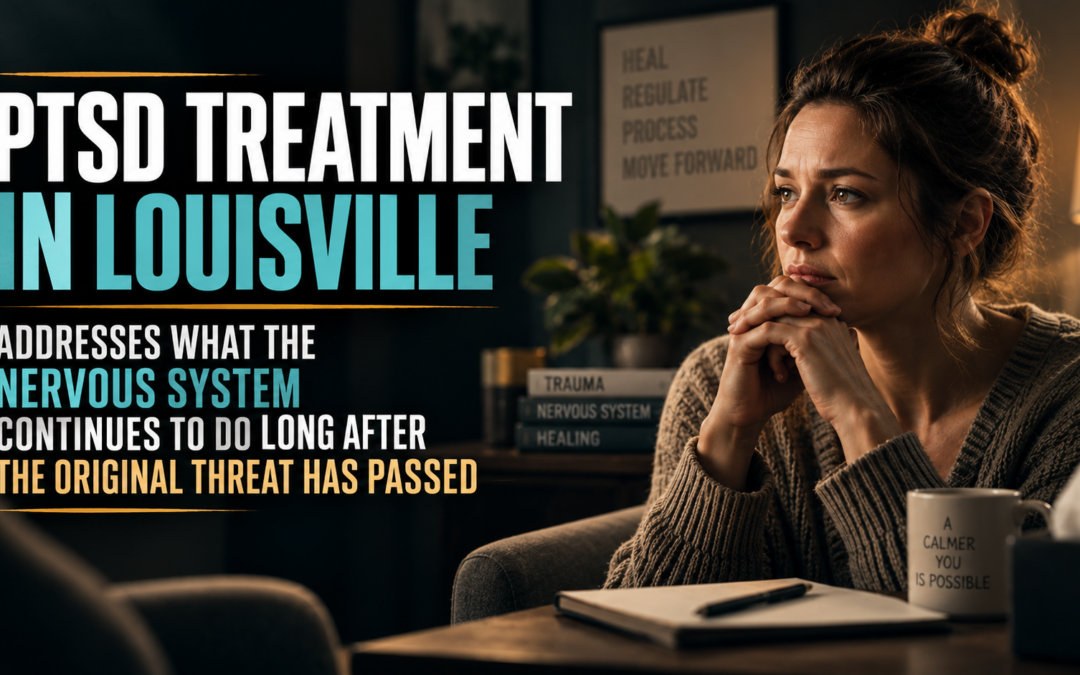
PTSD treatment in Louisville focuses on something many people overlook, which is what the nervous system keeps doing long after the danger itself is gone. Trauma does not simply live in your memories. It settles into your body, shaping how you sleep, react, and feel safe.
If you or someone you love has survived something painful and still feels on edge, you are not broken and you are not alone. That constant sense of alert is not a weakness. It is your body still trying to protect you.
The hopeful truth is that healing is possible, and it starts with understanding why the body reacts the way it does. Learning what PTSD really is can be a gentle first step toward steadier, calmer days.
What Is PTSD Treatment in Louisville and Why Does the Nervous System Matter?
PTSD treatment in Louisville is compassionate, evidence-based care that helps a person heal from a traumatic experience by calming the body and processing the memory together. The nervous system matters because trauma leaves a physical imprint, not just an emotional one.
When something overwhelming happens, your body’s alarm system takes over. It prepares you to fight, flee, or freeze, all without conscious thought.
For many people, that alarm never fully switches off. The body stays braced for danger even when life is calm, which is why real healing has to reach the nervous system and not only the story.
Why Does the Body Stay on High Alert?
The body stays on high alert because the nervous system has learned to treat the world as unsafe. It is doing exactly what it was designed to do, which is protect you from harm.
Think of it like a smoke detector that keeps sounding after the fire is out. The alarm is not lying. It has simply learned to stay ready for the next threat.
This is why people notice a racing heart, tense muscles, or sudden panic that seem to come from nowhere. The body is responding to danger the mind knows is already over.
What Does PTSD Actually Do to the Nervous System?
PTSD keeps the nervous system stuck in survival mode, cycling between overactivity and shutdown even when no threat is present. This is not a choice and it is not something a person can simply think their way out of.
These physical reactions are the body’s way of coping with something that once felt unbearable. Understanding them can bring relief and reduce the self-blame that so often comes with trauma.
How Does Hyperarousal Show Up in Daily Life?
Hyperarousal shows up as feeling constantly wired, jumpy, or unable to relax. The body stays flooded with stress signals, as if danger could arrive at any moment.
You might struggle to fall asleep, startle easily, or feel irritable without a clear reason. Small stressors can feel enormous because the nervous system is already overwhelmed.
These reactions can be exhausting to live with. They are also very treatable with the right kind of support.
Why Do Some People Feel Numb Instead?
Some people feel numb because the nervous system shifts into shutdown mode to protect itself from too much stress. Rather than staying on high alert, the body pulls back and disconnects.
This can look like feeling emotionally flat, detached from others, or strangely distant from your own life. It is not indifference. It is a form of protection.
Both hyperarousal and numbness come from the same place. They are the nervous system trying, in different ways, to keep you safe.
How Does PTSD Connect to Substance Use?
PTSD connects to substance use because people often reach for relief when the body will not settle on its own. Alcohol or drugs can quiet a racing mind or numb painful feelings, at least for a while.
This is not a weakness or a moral failing. It is an understandable attempt to find calm when nothing else seems to help.
Why Do Substances Feel Like They Help at First?
Substances feel like they help at first because they briefly quiet an overactive nervous system. For a moment, the constant alarm goes silent and relief feels within reach.
The trouble is that this relief rarely lasts. As substances wear off, anxiety and distress often return even stronger, which can pull a person back toward using.
Over time, the cycle tightens. The very thing meant to bring calm begins to deepen the pain underneath it.
Why Does Treating Both Together Matter?
Treating PTSD and substance use together matters because each one feeds the other, and healing just one leaves a gap. Care that addresses both gives a person a real chance at lasting relief.
When trauma stays untreated, the urge to numb it often remains. When substance use stays untreated, the nervous system rarely gets the chance to heal.
Our mental health treatment programs are designed to care for the whole person, so trauma and substance use receive attention side by side rather than in isolation.
What Does PTSD Treatment Involve?
PTSD treatment involves a blend of therapies that calm the body, process the memory, and rebuild a sense of safety over time. Care is personalized, never one-size-fits-all.
A strong plan looks at the whole person, including sleep, relationships, physical health, and any substance use present. Each piece supports the others.
Most trauma-focused plans blend several proven approaches:
- Individual therapy to gently process experiences at a pace that respects your comfort
- Cognitive Behavioral Therapy, which helps you notice and reshape the thought patterns that fuel distress
- Grounding and body-aware techniques that teach the nervous system how to feel safe again
- Group support that reminds you others understand and you are not alone
- Attention to routine and rest, since steady daily rhythms help calm an overactive alarm system
Each part works toward the same goal. The aim is to help you feel safe, steady, and more like yourself.
How Does Care Respect Your Pace?
Care respects your pace by never forcing you to relive the trauma before you feel ready. A skilled team builds safety first, then moves gently into processing the memory.
This matters deeply. Rushing can overwhelm the nervous system and make healing harder rather than easier.
Instead, a caring team follows your lead, using grounding tools to keep you steady. Processing happens gradually and safely, one manageable step at a time.
What Levels of Care Are Available in Louisville?
Levels of care range from immersive residential support to flexible outpatient options, depending on how much structure you need right now. The right choice depends on your symptoms and your daily life.
The Robert Alexander Center for Recovery®, located a short drive from Louisville in Mount Washington, offers residential inpatient care for those who need a safe, focused environment, along with partial hospitalization and outpatient support for people building recovery alongside daily responsibilities.
As you grow steadier, care can shift with you. Support is meant to meet you exactly where you are.
How Do You Decide When to Seek Help?
You decide to seek help when PTSD symptoms feel persistent, distressing, or hard to manage on your own. You never have to wait for a crisis to deserve care.
Consider reaching out if any of these feel true:
- Painful memories, nightmares, or flashbacks keep returning and disrupting your days
- Your body often feels tense, jumpy, or on edge for no clear reason
- You are using alcohol or drugs to quiet anxiety or numb difficult feelings
- Sleep, focus, or relationships are suffering because of what you are carrying
- A loved one has gently expressed concern about your mood or your patterns
If any of these resonate, that is reason enough to start a conversation with a caring professional. An honest assessment can bring clarity and help you understand which kind of support fits best.
Common Questions Families Often Ask
Why do I still feel unsafe when the danger is long gone?
Your nervous system has learned to stay on guard, even after the threat has passed. This is a normal trauma response, and care that calms the body can help you feel safe again over time.
Can PTSD be treated even if the trauma happened years ago?
Yes. The nervous system can hold trauma for a long time, and it can also heal long after the event. It is never too late to seek support and find steadier ground.
Will treatment force me to relive the worst moments?
No. A skilled team moves at your pace and builds safety first. Grounding tools help you stay steady, and processing happens gradually rather than all at once.
How soon can care begin?
Support can start soon after you reach out. Our admissions team is available to answer your questions, verify insurance, and guide you toward the next step with patience and care.
You Do Not Have to Heal This Alone
PTSD treatment in Louisville addresses what the nervous system continues to do long after the original threat has passed, helping your body learn safety while your mind processes the past. Understanding your reactions matters, and so does giving your body the care it needs to finally settle.
Healing takes time, and it takes courage. With compassionate support and approaches built for the whole person, the weight you have carried can begin to ease.
If you or someone you love is struggling with the effects of trauma, please reach out to the Robert Alexander Center for Recovery today. Our caring team is ready to listen, answer your questions, and help you take the next step toward steadier, more hopeful days ahead. You are not alone, and help is here whenever you are ready.