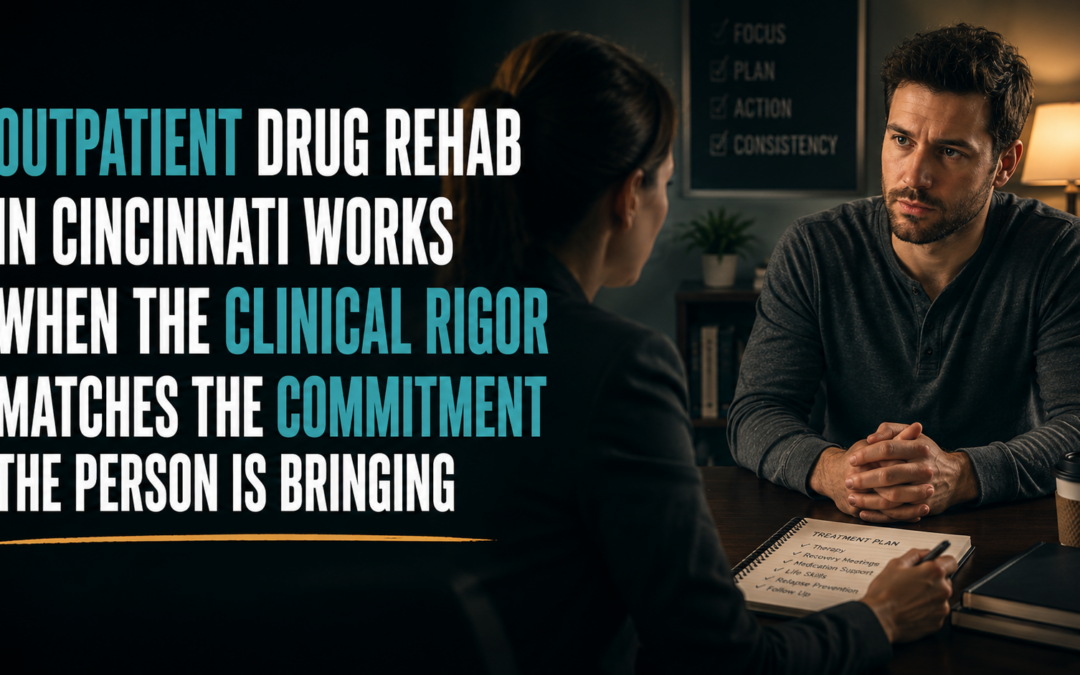
Outpatient drug rehab in Cincinnati works best when the quality of clinical care rises to meet the effort a person is ready to give. When both come together, recovery has real momentum. When one falls short, progress often stalls.
If you or someone you love is weighing outpatient care, you may wonder whether flexible treatment can truly be effective. That question is worth asking, and the honest answer is yes, when the care is genuinely rigorous.
The hopeful truth is that outpatient treatment can be powerful for the right person at the right time. Understanding how clinical quality and personal commitment work together is a gentle first step toward steadier days ahead.
What Is Outpatient Drug Rehab in Cincinnati and Why Does Clinical Rigor Matter?
Outpatient drug rehab in Cincinnati is a form of addiction treatment where a person attends structured therapy sessions while continuing to live at home. Clinical rigor matters because flexibility alone does not create recovery. Depth of care does.
In outpatient care, a person receives real treatment without staying overnight at a facility. Sessions happen on a set schedule, then a person returns to work, family, or daily routines.
Think of it like physical therapy after an injury. The appointments are structured and skilled, but the healing continues through the effort you put in between visits. Outpatient rehab works the same way.
What Does Clinical Rigor Actually Look Like?
Clinical rigor looks like evidence-based therapy, trained professionals, and a personalized plan that adapts as a person grows. It is the difference between simply attending sessions and receiving care that truly moves recovery forward.
Rigorous outpatient care includes proven approaches like Cognitive Behavioral Therapy, which helps a person reshape the thought patterns driving substance use. It also includes regular check-ins and clear goals.
Without that depth, outpatient care can feel like going through the motions. With it, each session builds on the last and creates lasting change.
Why Does Personal Commitment Matter So Much in Outpatient Care?
Personal commitment matters because outpatient care gives a person more freedom, which means more responsibility for their own recovery. The structure supports you, but the daily choices are yours.
Unlike residential care, outpatient treatment does not remove a person from triggers and temptations. That reality makes personal effort a central part of success.
How Do Rigor and Commitment Work Together?
Rigor and commitment work together like two halves of the same bridge, each meeting in the middle to carry a person across. Strong clinical care gives you the tools, and your commitment puts them to use.
Picture a coach and an athlete. The coach provides skilled guidance, but the athlete has to show up and practice. Neither succeeds without the other.
When both are present, outpatient rehab becomes genuinely effective. The care matches the effort, and recovery gains real traction.
What Happens When One Side Falls Short?
When one side falls short, progress tends to stall no matter how strong the other side is. Excellent care cannot replace personal effort, and deep commitment cannot make up for shallow treatment.
A person deeply committed to recovery deserves care rigorous enough to match that resolve. Anything less can leave them feeling stuck despite their best efforts.
This is why choosing quality care matters. Your commitment is precious, and it deserves treatment worthy of it.
Who Is Outpatient Drug Rehab For?
Outpatient drug rehab is for people who have a stable living situation and are ready to take an active role in their own recovery. It suits those who need real treatment while staying connected to work, school, or family.
You do not need to be in crisis to benefit from outpatient care. Needing structured, ongoing support is reason enough.
Who Benefits Most From This Level of Care?
People who benefit most are those with a supportive home environment and a genuine readiness to engage in treatment. The flexibility works best when a person has stability to return to each day.
Outpatient care may be a strong fit if any of these feel true:
- You have a safe, stable place to live that supports your recovery
- You need to keep working, studying, or caring for family while receiving treatment
- You are stepping down from a higher level of care and want to protect your progress
- You feel ready to take an active, daily role in your own healing
- Your substance use has not required round-the-clock medical supervision
If several of these resonate, that is a meaningful sign this path could help. A caring assessment can bring clarity about what fits best.
How Does Location Support Cincinnati Families?
Being within reach of Cincinnati helps a person stay connected to the relationships and routines that give recovery meaning. You heal within your own community rather than stepping fully away from it.
The Robert Alexander Center for Recovery serves people from the greater Cincinnati area, offering outpatient care that fits real life. That accessibility keeps loved ones close throughout the journey.
This closeness matters. Recovery feels more sustainable when it grows alongside the people and places you care about.
How Does Outpatient Rehab Support Recovery Alongside Daily Life?
Outpatient rehab supports recovery alongside daily life by letting a person apply new skills in real situations the same day they learn them. You practice a coping tool in a session, then use it that evening at home or work.
This constant practice is what makes the skills stick. Instead of learning in isolation, you build recovery where it actually matters.
What Does Treatment Usually Include?
Treatment usually includes a blend of individual therapy, group sessions, and evidence-based approaches tailored to each person. Together, these address both the substance use and the feelings underneath it.
Common parts of outpatient care include:
- Individual therapy to explore personal triggers and build practical coping skills
- Group sessions that offer connection, shared understanding, and encouragement
- Cognitive Behavioral Therapy, which helps you reshape the thought patterns driving substance use
- Relapse prevention planning that prepares you for real-life challenges
- Education about addiction and recovery in clear, approachable terms
Each piece works toward the same goal. The aim is to help you feel steadier, more supported, and better equipped for daily life.
How Does Applying Skills in Real Time Help?
Applying skills in real time helps because it turns lessons into lasting habits. Recovery is lived out in ordinary moments, not only in therapy appointments.
When you handle a stressful evening or a difficult conversation using tools from treatment, those tools grow stronger. Real progress happens where real life happens.
This is one of the quiet strengths of outpatient care. It builds recovery into the fabric of your daily world.
When Might a Higher Level of Care Be Needed?
A higher level of care may be needed when outpatient support is not enough to keep a person safe or steady. Outpatient rehab is powerful, but it is not the right starting point for everyone.
Recognizing this is not a setback. It is an honest, caring step toward the support a person truly needs.
Consider a higher level of care if any of these feel true:
- Your home environment is unstable, unsafe, or filled with triggers that make sobriety hard
- Withdrawal symptoms require medical supervision to manage safely
- Previous outpatient efforts have not held despite genuine commitment
- Substance use is severe or involves more than one substance
- You feel you need distance from daily life to focus fully on healing
If several of these resonate, a more immersive option may fit better. Many people begin with residential inpatient treatment and step down to outpatient care as they grow stronger.
Common Questions Families Often Ask
Can outpatient rehab really work for serious substance use?
Yes, for the right person with the right support. Outpatient care can be highly effective when a person has a stable home and access to rigorous clinical treatment. For more severe situations, it often works best after a higher level of care.
How is outpatient different from residential treatment?
Outpatient care lets a person live at home while attending scheduled therapy, while residential care involves staying at a facility full time. Outpatient offers flexibility, while residential offers immersion and around-the-clock support.
What if I am committed but keep struggling?
That may be a sign the level of care needs to change, not a sign of personal failure. A caring team can reassess your needs and help match you with support rigorous enough to meet your commitment.
How soon can care begin?
Support can start soon after you reach out. Our admissions team is available to answer your questions, verify insurance, and guide you toward the next step with patience and care.
You Do Not Have to Figure This Out Alone
Outpatient drug rehab in Cincinnati works when the clinical rigor matches the commitment the person is bringing, because real recovery grows where quality care and genuine effort meet. Your readiness to heal deserves treatment strong enough to honor it.
Recovery is a journey, and you were never meant to walk it alone. With compassionate, skilled support and a level of care matched to your needs, steadier and more hopeful days are within reach.
If you or someone you love is ready to build a recovery that fits real life, please reach out to the Robert Alexander Center for Recovery today. Our caring team is ready to listen, answer your questions, and help you take the next step toward steadier, more hopeful days ahead. You are not alone, and help is here whenever you are ready.