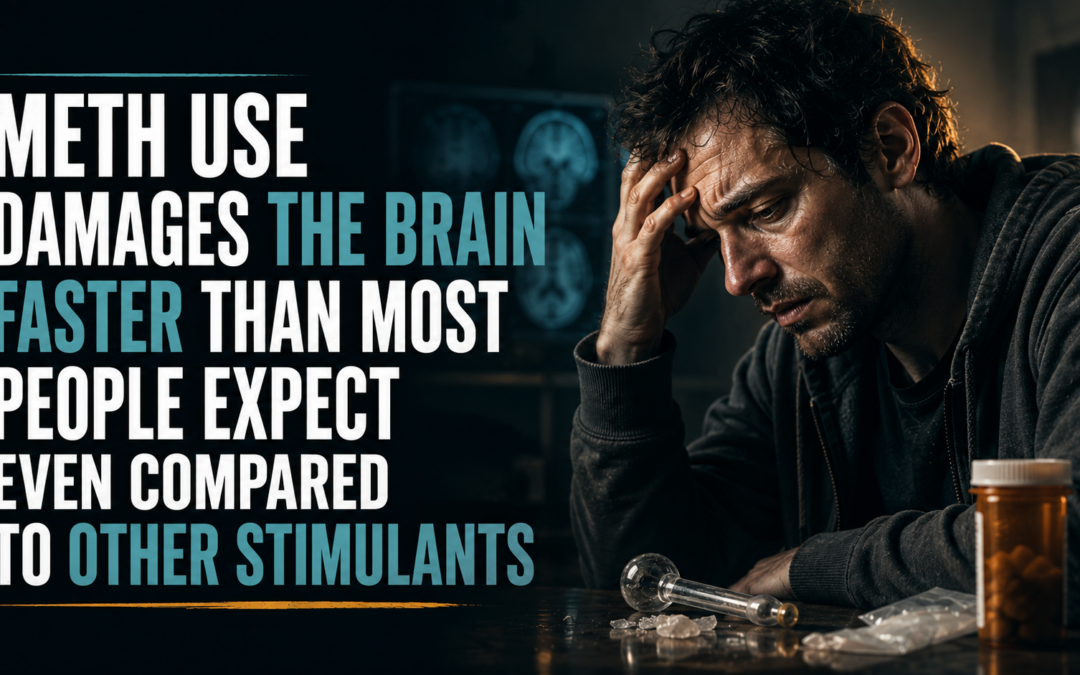
Meth use damages the brain faster than most people expect, often outpacing the harm seen with other stimulants in ways that surprise both individuals and their families. The changes can appear within months, touching memory, mood, judgment, and the ability to feel joy.
If you or someone you love is struggling with methamphetamine, you are not weak, and this is not a reflection of your character. Meth is a powerful substance that reshapes the brain in profound ways.
The hopeful truth is that recovery is possible, and the brain has a remarkable capacity to heal with the right support. Understanding how meth affects the brain, and why it moves so quickly, is a gentle first step toward getting help.
How Does Meth Use Damage the Brain So Quickly?
Meth use damages the brain quickly because it floods the brain with dopamine at levels far higher than the brain can safely produce or manage on its own. This intense surge overwhelms the systems that control mood, motivation, and reward.
Dopamine is the brain’s feel-good chemical, tied to pleasure and drive. Meth forces the brain to release enormous amounts of it all at once, then leaves the brain depleted afterward.
Think of it like flooring the gas pedal in a car that was never built to run that fast for that long. The engine may push forward for a while, but the strain wears it down far sooner than anyone expects.
Why Is Meth Harder on the Brain Than Other Stimulants?
Meth is harder on the brain than many other stimulants because it stays in the body longer and triggers a larger, more damaging release of dopamine. This means the brain absorbs more strain with each use.
Other stimulants can affect similar systems, but meth tends to hit harder and linger longer. The extended activity gives the brain less time to rest and recover between uses.
Over time, this deeper, longer strain accelerates the wear on brain cells. The result is often faster decline in memory, focus, and emotional balance.
What Happens Inside the Brain During Meth Use?
Meth use changes the brain’s chemistry, structure, and function, affecting how a person thinks, feels, and makes decisions. These changes are not signs of weakness. They are the predictable effects of a drug altering the brain.
Because meth touches so many systems at once, the effects can feel sweeping and confusing. Understanding them helps families see what is happening and why care matters.
How Does Meth Affect Dopamine and Pleasure?
Meth affects dopamine and pleasure by first overstimulating the brain, then leaving it unable to feel joy without the drug. This is one of the most painful parts of meth use.
At first, meth produces intense euphoria. As use continues, the brain reduces its own dopamine production to cope with the flood.
Over time, ordinary pleasures like food, connection, or a beautiful day can start to feel flat or empty. This condition can make recovery harder, but with time and care, the brain can slowly begin to heal.
How Does Meth Affect Memory and Thinking?
Meth affects memory and thinking by damaging the areas of the brain responsible for learning, focus, and decision-making. Many people notice these changes sooner than they expected.
A person may struggle to remember recent conversations, follow through on tasks, or think clearly. Judgment can also suffer, leading to choices that feel out of character.
These difficulties can be distressing to witness and to experience. They are signs the brain is under real strain and needs support to recover.
Why Do Behavioral and Emotional Changes Happen So Fast?
Behavioral and emotional changes happen fast with meth because the drug disrupts the brain systems that regulate mood, impulse, and reality. These shifts can appear within weeks or months, not years.
Loved ones often describe feeling like the person they knew has changed. That experience is real, and it reflects what meth does to the brain rather than a change in who someone truly is.
Why Does Meth Cause Anxiety and Paranoia?
Meth causes anxiety and paranoia because it overstimulates the brain and disrupts the systems that regulate fear and calm. Many people experience intense worry, suspicion, or beliefs that feel completely real to them.
These experiences can be frightening for the person and confusing for those around them. They are symptoms of the drug’s effect on the brain, not a reflection of a person’s true nature.
With time, rest, and treatment, these symptoms often ease. This is one reason compassionate, integrated care matters so much.
How Does Meth Connect to Mental Health Struggles?
Meth is closely connected to mental health struggles, and each one can deepen the other. Some people begin using to cope with depression or anxiety, while meth itself can create or worsen these conditions.
This overlap makes recovery more complex, but far from impossible. Treating both together gives a person the strongest foundation for lasting healing.
Our mental health treatment programs are designed to support the whole person, caring for substance use and mental health side by side rather than treating one and overlooking the other.
What Warning Signs Should Families Watch For?
Families should watch for a pattern of changes in behavior, thinking, and emotion rather than a single moment. Meth use often reveals itself through several shifts happening at once.
You do not need proof of a crisis to start a caring conversation. Noticing a change is reason enough to pay closer attention.
Common warning signs worth noticing include:
- Memory problems, confusion, or trouble concentrating on everyday tasks
- Increasing anxiety, suspicion, or unusual beliefs
- Dramatic mood swings or emotional flatness
- Staying awake for long stretches followed by heavy crashes
- Withdrawing from family, work, or activities once enjoyed
Noticing one sign now and then is part of life. Noticing several together, especially over a short time, is a strong signal to reach out for guidance.
How Is This Different From Ordinary Stress or Moodiness?
The difference is that meth-related changes tend to intensify over time and interfere with daily life. Ordinary stress usually eases once a situation settles.
Meth use often brings changes that grow rather than fade, affecting thinking, mood, and behavior in lasting ways. When these shifts keep building, that is more than a rough patch.
Trusting your instinct matters here. If the changes feel serious and persistent, a caring conversation and a professional assessment can bring clarity and peace of mind.
What Does Treatment for Meth Use Involve?
Treatment for meth use involves medical support, therapy, and steady structure that helps a person heal in both brain and body. Care is personalized, never one-size-fits-all.
Because meth affects the brain so deeply, effective treatment gives the mind time and support to recover. A strong plan meets a person where they are and adjusts as they grow stronger.
Why Does Detox Often Come First?
Detox often comes first because the brain and body need time to stabilize after meth use, and early withdrawal can be difficult to face alone. Exhaustion, depression, and strong cravings are common in these first days.
For many people, medical detox provides a safe, supportive foundation where healing begins. Caring staff monitor a person’s health, ease discomfort, and offer steady reassurance through the hardest stretch.
Detox alone is rarely enough, though. It clears the path so the deeper work of recovery can begin with a stable start.
What Happens During Ongoing Treatment?
During ongoing treatment, a caring team helps a person understand their relationship with meth and rebuild the skills and stability that use has worn down. Treatment addresses both the substance use and the feelings beneath it.
Most plans blend several proven approaches:
- Individual therapy to explore personal triggers and develop coping skills
- Group sessions that offer connection, understanding, and encouragement
- Cognitive Behavioral Therapy, which helps a person reshape the thought patterns driving meth use
- Support for memory, focus, and emotional healing as the brain recovers
- Attention to any mental health struggles that appear alongside substance use
Each piece works toward the same goal. The aim is to help a person feel steadier, clearer, and more in control of their own life.
What Levels of Care Are Available?
Levels of care range from immersive residential support to flexible outpatient options, depending on how much structure a person needs right now. The right choice depends on the severity of use and a person’s home life.
At the Robert Alexander Center for Recovery, options include residential inpatient treatment for those who need a safe, focused environment away from daily triggers, along with continued care that supports the transition back into everyday life.
As a person grows steadier, care can shift with them. Support is meant to meet each individual exactly where they are.
How Do You Decide When to Seek Help?
You decide to seek help when meth use feels hard to control, or when it starts affecting thinking, mood, relationships, or health. You never have to wait for a rock-bottom moment to deserve care.
Consider reaching out if any of these feel true:
- You have tried to stop using meth but keep returning to it
- Memory, focus, or clear thinking have become noticeably harder
- Anxiety, paranoia, or mood changes are growing more intense
- Meth use is affecting work, relationships, or daily responsibilities
- A loved one has gently expressed concern about your health or your use
If any of these resonate, that is reason enough to start a conversation with a caring professional. An honest assessment can bring clarity and help you understand which kind of support fits best.
Common Questions Families Often Ask
Can the brain really heal after meth use?
Yes. The brain has a real capacity to recover with time, rest, and support. Many people notice improvements in memory, mood, and focus once meth use stops and healing begins, though recovery is a gradual process.
Why does meth seem to change someone so fast?
Meth disrupts the brain systems that control mood, thinking, and behavior, and it does so more quickly than many other substances. The changes reflect what the drug does to the brain, not who a person truly is.
What if mental health problems appeared alongside meth use?
That is common, and it is nothing to feel ashamed of. Integrated treatment addresses both substance use and mental health together, giving a person a stronger foundation for lasting recovery.
How soon can care begin?
Support can start soon after you reach out. Our admissions team is available to answer your questions, verify insurance, and guide you toward the next step with patience and care.
You Do Not Have to Face This Alone
Meth use damages the brain faster than most people expect, even compared to other stimulants, yet the brain holds a real and hopeful capacity to heal. The changes can feel frightening, but they do not define a person’s future.
Recovery is possible, and reaching out is a brave, hopeful step. With medical support, therapy, and steady care, the mind can begin to recover and steadier days can return.
If you or someone you love is struggling with meth, please reach out to the Robert Alexander Center for Recovery today. Our caring team is ready to listen, answer your questions, and help you take the next step toward steadier, more hopeful days ahead. You are not alone, and help is here whenever you are ready.