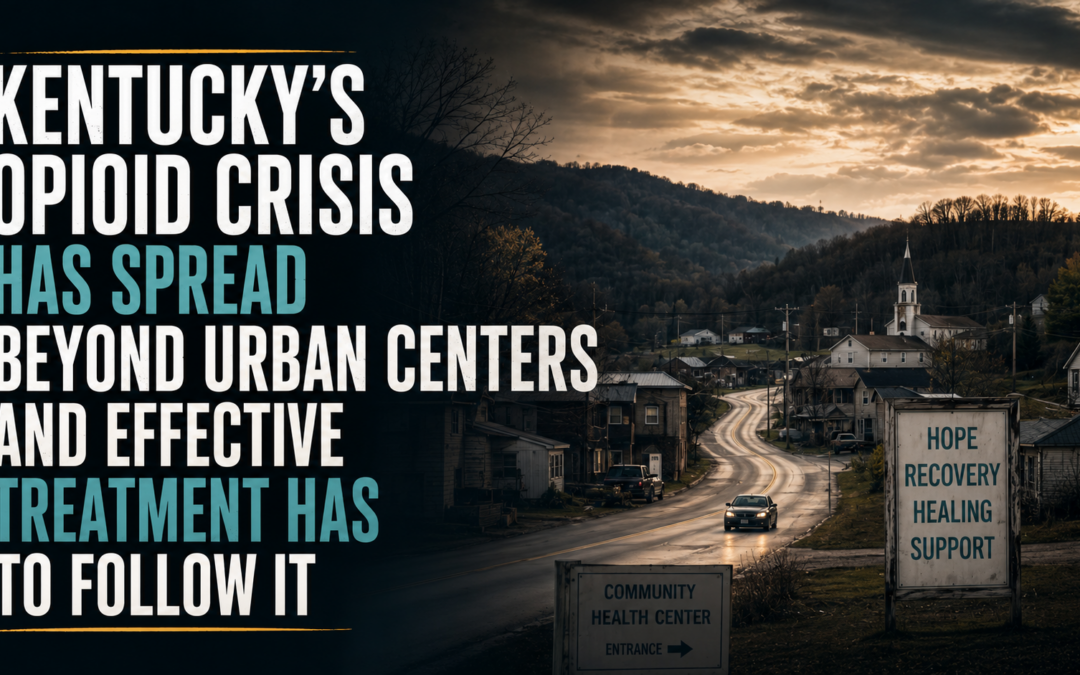
Kentucky’s opioid crisis has spread far beyond urban centers and into small towns, rural counties, and communities that once felt untouched by it. The struggle no longer sits in one place, and effective treatment has to reach the people wherever they live.
If you or someone you love is facing opioid use in a small community, you are not alone, and you are not forgotten. This is happening across the state, in places both large and quiet.
The hopeful truth is that recovery is possible, and help is becoming more reachable than many people realize. Understanding how the crisis has spread, and why care must follow it, is a gentle first step toward steadier days ahead.
How Has Kentucky’s Opioid Crisis Spread Beyond Urban Centers?
Kentucky’s opioid crisis has spread beyond urban centers by reaching rural towns, small counties, and tight-knit communities where resources are often stretched thin. What once seemed like a city problem now touches families in nearly every corner of the state.
Opioids do not follow city limits. Prescription painkillers, heroin, and synthetic opioids have moved into places where treatment options can be scarce and distances between help can be long.
Think of it like water finding every low spot in a field. The crisis has quietly settled into communities that never expected it, which is exactly why care can no longer stay concentrated in only a few locations.
Why Have Rural Communities Been Hit So Hard?
Rural communities have been hit hard because they often combine higher rates of chronic pain with fewer nearby resources for treatment. Physically demanding work and limited access to care create a difficult mix.
Many people in these areas first encountered opioids through legitimate prescriptions for injuries or long-term pain. Over time, that use could quietly turn into dependence.
When help feels far away, reaching out gets harder. Long drives, few local providers, and close community ties can all make it tougher to seek support without feeling exposed.
Why Must Treatment Access Follow the Spread?
Treatment access must follow the spread because people cannot recover from care they cannot reach. When help is only available hours away, too many people go without it entirely.
Distance is not a small barrier. For someone working a full-time job or raising children, a long drive to treatment can feel impossible to manage.
What Happens When Care Stays Only in Cities?
When care stays only in cities, people in smaller communities are left with fewer real options. The need is present, but the support is not close enough to use.
Picture needing a lifeline that sits just out of reach. The help exists, yet the gap between you and it keeps growing.
This is why accessible treatment matters so much. Recovery becomes possible when care meets people where they are, through nearby programs and flexible options that fit real life.
How Does Reaching People Closer to Home Help?
Reaching people closer to home helps by removing some of the biggest barriers to starting treatment. Shorter distances, familiar surroundings, and flexible scheduling all make care easier to begin and continue.
For many families across Kentucky, the Robert Alexander Center for Recovery in Mount Washington offers a reachable starting point. Being within range of home lets loved ones stay connected throughout the journey.
When treatment fits into a person’s life rather than pulling them far from it, they are more likely to stay engaged. That steady involvement is often what keeps recovery moving forward.
What Warning Signs Should Families Watch For?
Families should watch for a pattern of changes in behavior, health, and mood rather than waiting for a single dramatic moment. Opioid use often builds gradually, so the overall picture matters most.
You do not need proof of a crisis to start a caring conversation. Noticing a shift is reason enough to pay closer attention.
Common warning signs worth noticing include:
- Taking more of a medication than prescribed, or running out of prescriptions early
- Seeking painkillers from multiple doctors or unusual sources
- Withdrawing from family, friends, or activities they once enjoyed
- Sudden changes in mood, energy, sleep, or appearance
- Nausea, drowsiness, or flu-like symptoms when not using
Noticing one sign now and then is part of life. Noticing several together, especially over weeks, is a strong signal to reach out for guidance.
How Is Physical Dependence Different From Addiction?
Physical dependence means the body has adapted to a substance, while addiction involves continued use despite harmful consequences. The two often overlap, but they are not identical.
A person can be physically dependent on a medication taken exactly as directed. Addiction adds a loss of control, where use continues even when it damages health, relationships, or daily life.
Trusting your instinct matters here. If opioid use has begun to feel like something that controls a person rather than something they choose, that is worth exploring with a caring professional.
What Does Treatment for Opioid Use Involve?
Treatment for opioid use usually combines medical care, therapy, and steady structure that supports the whole person at every stage of recovery. Care is personalized, never one-size-fits-all.
Because opioid dependence affects both the body and the mind, effective treatment addresses both together. A strong plan meets a person where they are and adjusts as they heal.
Why Does Detox Often Come First?
Detox often comes first because opioid withdrawal can be intensely uncomfortable and difficult to manage alone. Trying to stop suddenly without support is where many attempts fall apart.
For many people, medical detox provides a safe, supervised foundation where healing begins. Trained staff monitor symptoms, ease discomfort, and offer steady reassurance through the hardest hours.
Detox on its own is rarely enough, though. It clears the path so the deeper work of recovery can begin with a stable, supported start.
What Happens During Ongoing Treatment?
During ongoing treatment, a caring team helps a person understand their relationship with opioids and build practical tools for lasting change. Treatment addresses both the substance use and the feelings underneath it.
Most plans blend several proven approaches:
- Individual therapy to explore personal triggers and develop coping skills
- Group sessions that offer connection, understanding, and encouragement
- Cognitive Behavioral Therapy, which helps a person reshape the thought patterns driving opioid use
- Medication support when appropriate, guided by a caring prescriber
- Attention to daily structure, including sleep, stress, and healthy routines
Each piece works toward the same goal. The aim is to help a person feel steadier, more supported, and more in control of their own life.
What Levels of Care Are Available?
Levels of care range from immersive residential support to flexible outpatient options, depending on how much structure a person needs right now. The right choice depends on the severity of use and a person’s home life.
At the Robert Alexander Center for Recovery, options include residential inpatient treatment for those who need a safe, focused environment away from daily triggers, along with outpatient care for people building recovery alongside work and family responsibilities.
As a person grows steadier, care can shift with them. Support is meant to meet each individual exactly where they are.
How Do You Decide When to Seek Help?
You decide to seek help when opioid use feels hard to control, or when it starts affecting health, relationships, or peace of mind. You never have to wait for a rock-bottom moment to deserve care.
Consider reaching out if any of these feel true:
- You have tried to stop or cut back on opioids but keep returning to them
- You need more of the substance to feel the same effect than you once did
- Withdrawal symptoms appear when you go without using
- Opioid use is affecting your work, relationships, or daily responsibilities
- A loved one has gently expressed concern about your use
If any of these resonate, that is reason enough to start a conversation with a caring professional. An honest assessment can bring clarity and help you understand which kind of support fits best.
Common Questions Families Often Ask
Is it really harder to find treatment in rural Kentucky?
It can be, because smaller communities often have fewer nearby providers and longer distances to care. That is exactly why accessible programs and flexible options matter so much for people living outside larger cities.
Can someone recover from opioid use?
Yes. Opioid use is treatable, and many people build lasting, meaningful recovery with the right support. Recovery is a journey, and steady care makes it far more achievable.
What if a prescription started the problem?
That is far more common than many people realize, and it is nothing to feel ashamed of. Dependence can develop even with careful, directed use, and treatment helps a person move forward without judgment.
How soon can care begin?
Support can start soon after you reach out. Our admissions team is available to answer your questions, verify insurance, and guide you toward the next step with patience and care.
You Do Not Have to Face This Alone
Kentucky’s opioid crisis has spread beyond urban centers, which means effective treatment has to follow it into every community that needs it. Where a person lives should never decide whether they can reach the care they deserve.
Recovery is possible, and reaching out is a brave, hopeful step. With medical support, therapy, and steady guidance, the grip of opioids can loosen and steadier days can return.
If you or someone you love is struggling with opioids, please reach out to the Robert Alexander Center for Recovery today. Our caring team is ready to listen, answer your questions, and help you take the next step toward steadier, more hopeful days ahead. You are not alone, and help is here whenever you are ready.