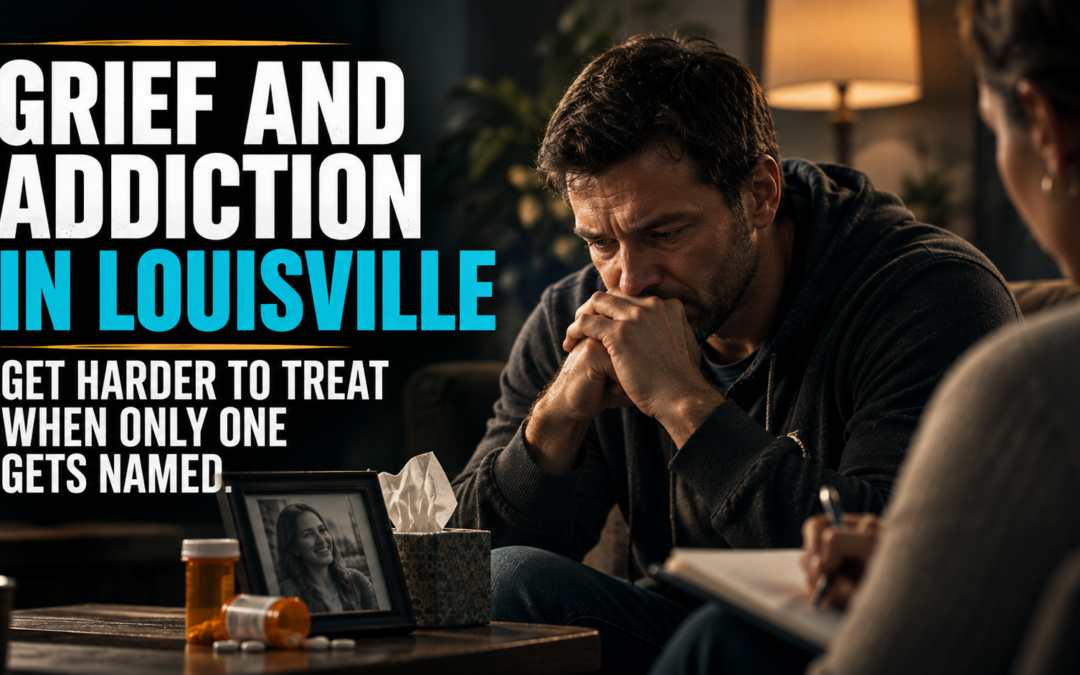
Grief and addiction in Louisville often arrive together, yet many people only ever get help for one of them. A parent loses a child and starts drinking to sleep. A spouse loses a partner and leans on pills to get through the day. The substance use gets noticed, while the loss underneath stays quiet.
If this sounds familiar, please know you are not weak and you are not failing. Loss changes how a person thinks, feels and copes. Reaching for relief after a deep loss is a very human response, even when that relief starts causing harm.
The hopeful truth is that healing is possible when both struggles receive care. Naming the grief alongside the substance use can change the entire direction of recovery. You deserve support that sees the whole picture, and so does the person you love.
What Does Grief and Addiction in Louisville Look Like When They Overlap?
Grief and addiction in Louisville overlap when a person uses alcohol or drugs to cope with the pain of a loss, and that substance use then makes the grief harder to process. Each struggle begins to shape the other until they feel impossible to separate.
Grief does not only follow a death. It can follow a divorce, a lost job, a miscarriage, a health diagnosis or the end of a friendship. Any loss that shakes a person’s sense of safety can open the door to unhealthy coping.
Think of grief like a wound and substance use like a bandage that hides it. The bandage may cover the pain for a while. Underneath, though, the wound never gets the care it needs to heal.
How Do Grief and Substance Use Reinforce Each Other?
Grief and substance use reinforce each other through a cycle of pain, numbing and returning pain. A substance quiets sorrow for a few hours, then the sorrow comes back stronger once the effect wears off.
That rebound often leads to more use. Over time, the body grows dependent, and the person loses the chance to move through their loss in a natural way.
Substance use can also create new losses. Relationships strain, jobs slip and health declines. Each new loss adds another layer of grief, and the cycle tightens.
Why Does Grief Make People More Vulnerable to Addiction?
Grief makes people more vulnerable because it brings intense emotional pain, poor sleep and a sense of isolation all at once. Those conditions make quick relief feel almost irresistible.
Many grieving people also feel pressure to “be strong” for others. They hide their pain at work or around family, then turn to a substance in private.
People who already live with depression, anxiety or a past substance use disorder may be especially at risk after a loss. Recognizing this vulnerability is not about blame. It is about offering care early.
Why Do Grief and Addiction in Louisville Get Harder to Treat When Only One Gets Named?
Grief and addiction in Louisville get harder to treat when only one gets named because the unnamed struggle keeps pulling the person backward. Progress in one area stalls when the other stays untouched.
Treatment works best when it matches what a person is actually carrying. When half the story is missing, even skilled care can only go so far.
What Happens When Only the Substance Use Is Treated?
When only the substance use is treated, the grief remains unresolved and often becomes the main trigger for relapse. A person may complete detox and therapy, then feel overwhelmed by sorrow they never had space to explore.
Picture draining water from a flooded basement without fixing the broken pipe. The floor dries for a moment, then the water slowly returns.
Without grief support, the emotional pain that started the substance use is still there. Using again can feel like the only way to survive it.
What Happens When Only the Grief Is Treated?
When only the grief is treated, ongoing substance use can block the healing process. Alcohol and drugs dull the very emotions a person needs to feel and work through.
Someone in grief counseling may attend every session yet stay stuck. The substance keeps sorrow at arm’s length, so meaningful progress rarely takes hold.
Untreated substance use can also bring physical risks, especially if dependence has developed. That side of recovery needs its own medical and clinical attention.
Why Is Naming Both So Important?
Naming both is important because it allows a care team to build a plan that addresses the full experience. It also helps the person feel understood rather than reduced to a single label.
Many people describe real relief when someone finally says, “You are grieving, and you are also struggling with substance use.” That honesty opens the door to deeper healing.
What Symptoms Should Families Notice?
Families should notice a pattern where signs of grief and signs of substance use appear together and seem to feed each other. One sign alone may simply reflect a hard season. Several together deserve gentle attention.
Grief has no set timeline, and every person mourns differently. Still, certain changes suggest that someone may need more support than time alone can offer.
Signs worth noticing include:
- Drinking or using drugs more often since the loss
- Using substances on anniversaries, holidays or other painful reminders
- Pulling away from family, friends and activities they once enjoyed
- Ongoing trouble sleeping, eating or caring for basic needs
- Talking about the loss with deep hopelessness or numbness
- Missing work, school or responsibilities more than before
- Saying they cannot cope without a drink or a pill
If you notice several of these, it is okay to start a caring conversation. You do not need certainty to express concern.
How Is Normal Grief Different From Grief Complicated by Addiction?
Normal grief usually softens slowly over time, even though painful waves still come. Grief complicated by addiction often stays frozen or grows heavier because substances interrupt the healing process.
A grieving person may cry, feel angry or long for what was lost. Those feelings are a natural part of mourning.
When substance use becomes the main way of coping, the person may avoid their feelings entirely. That avoidance can keep them stuck in the earliest, rawest stage of loss for months or even years.
What Does Integrated Treatment for Grief and Addiction Include?
Integrated treatment for grief and addiction includes coordinated care that addresses the loss and the substance use together, guided by one team and one plan. Neither struggle gets set aside or treated as less important.
This approach looks at the whole person. It considers their history, their relationships, their health and the meaning of what they lost.
Most integrated plans blend several proven approaches:
- Individual therapy to explore the loss, process difficult emotions and build healthy coping skills
- Cognitive Behavioral Therapy (CBT), which helps a person notice and reshape thought patterns that fuel both sorrow and substance use
- Grief-focused support that gives space to honor the person or experience that was lost
- Group therapy that connects people who understand loss and recovery firsthand
- Medication support when appropriate, guided by a caring prescriber
- Family involvement, so loved ones can grieve and heal alongside the person in treatment
Our mental health treatment programs are designed to care for emotional pain and substance use side by side. When one team sees the full picture, important details are less likely to slip through the cracks.
What Levels of Care Are Available Near Louisville?
Levels of care range from immersive residential treatment to flexible outpatient options, depending on what a person needs right now. The right choice depends on the severity of substance use, safety and support at home.
The Robert Alexander Center for Recovery sits a short drive from Louisville in Mount Washington. For people who need structure and a break from daily reminders of their loss, residential inpatient care offers steady support around the clock.
Others may do well with outpatient care that fits around work and family life. As a person grows steadier, care can shift to meet them where they are.
How Do You Know When It Is Time to Seek Help?
It is time to seek help when grief and substance use feel tangled together in ways that are hard to manage alone. You never have to wait for a crisis to deserve care.
Consider reaching out if any of these feel true:
- You or your loved one began drinking or using drugs more after a loss.
- Painful reminders of the loss often lead to substance use.
- Earlier counseling helped with one struggle but not the other.
- Daily life, health or relationships are slipping because of both struggles.
- You feel stuck in grief that never seems to soften.
- A loved one has gently shared concern about your mood or your use.
If any of these resonate, that is reason enough to start a conversation with a caring professional. An honest assessment can bring clarity and help you choose a next step that fits.
If you or someone you love is having thoughts of suicide, please call or text 988 to reach the Suicide and Crisis Lifeline, or call 911 right away.
What Families Often Ask
Is it normal to turn to substances after a loss?
Many people reach for relief during grief, and that response is understandable. When substance use becomes the main way of coping, though, it can block healing and lead to dependence. Support can help a person find healthier ways through.
Should grief or substance use be treated first?
Both should be treated at the same time. Integrated care addresses grief and substance use together because progress in one area supports progress in the other.
Can our family grieve together during treatment?
Yes. Family sessions can give everyone space to process the loss, rebuild trust and learn healthier ways to support each other.
How soon can care begin?
Support can begin soon after you reach out. Our admissions team can answer your questions, verify insurance and guide you toward the next step with patience and care.
Healing Begins When Both Struggles Are Seen
Grief and addiction in Louisville get harder to treat when only one gets named, but recovery becomes far more possible when both receive honest, compassionate care. Your loss matters. Your struggle with substances matters too. Neither one has to be carried alone.
Healing takes time, and it takes courage. With support built for the whole person, the weight of grief can begin to soften and steadier days can return.
If you or someone you love is grieving while struggling with substance use, please reach out to the Robert Alexander Center for Recovery today. Our caring team is ready to listen, answer your questions and help you take the next step forward. You are not alone, and help is here whenever you are ready.