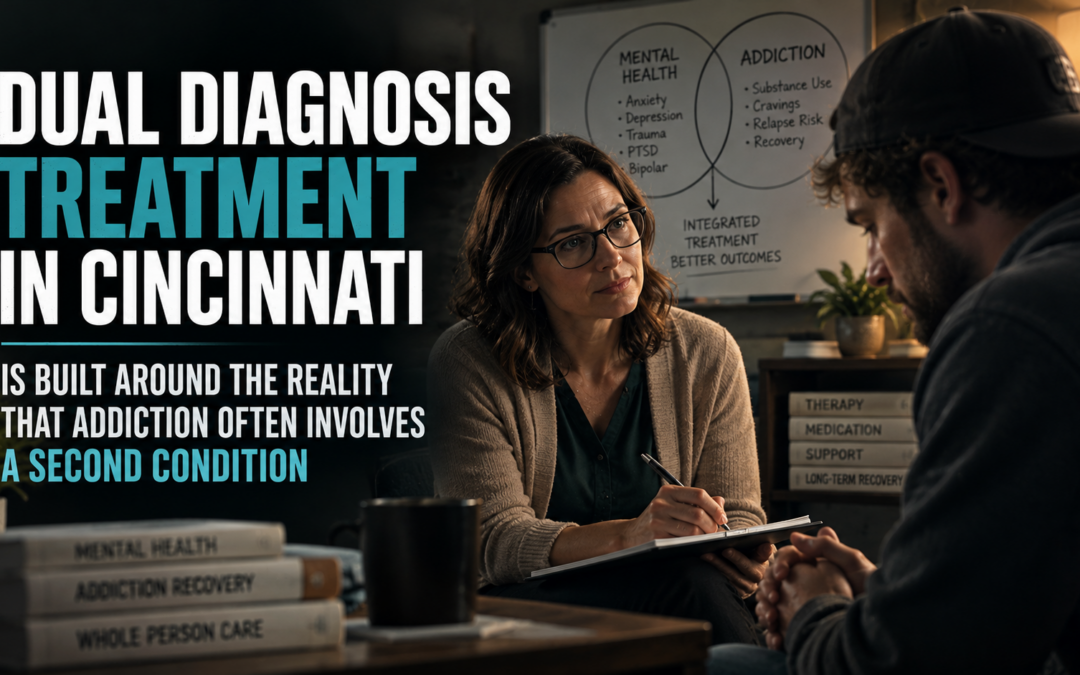
Dual diagnosis treatment in Cincinnati is built around a simple truth that changes everything about how recovery works. Most addiction cases in Ohio involve a second condition, usually a mental health struggle that has been quietly shaping the substance use all along.
If you or someone you love is facing both substance use and a mental health condition, you are not unusual, and you are not beyond help. This overlap is common, and it responds well to care designed to treat both at once.
The hopeful truth is that you no longer have to choose which struggle to treat first. Understanding how connected these conditions are is a gentle first step toward steadier days ahead.
What Is Dual Diagnosis Treatment in Cincinnati and Why Does It Matter?
Dual diagnosis treatment in Cincinnati is specialized care that addresses a substance use disorder and a mental health condition at the same time, within one coordinated plan. It matters because these two struggles so often feed each other, and treating only one tends to leave the other pulling a person back down.
Dual diagnosis is also called co-occurring disorders. The mental health side might include depression, anxiety, trauma, bipolar disorder, or another condition. The substance use side might involve alcohol, opioids, stimulants, or other substances.
Think of it like two threads tangled together. Pulling on just one rarely loosens the knot. Treating both at once is what finally allows real, lasting progress.
Why Does Substance Use So Often Come With a Second Condition?
Substance use so often comes with a second condition because mental health struggles and addiction share many of the same roots. Stress, trauma, genetics, and brain chemistry all play a role in both.
Many people begin using substances as a way to cope with painful feelings. Alcohol may quiet anxiety for a night, or a substance may ease the weight of depression for a while.
Over time, that coping strategy usually deepens the very pain it was meant to soothe. The mental health condition grows harder to manage, and the substance use takes on a life of its own.
Why Is Dual Diagnosis So Common Across Ohio?
Dual diagnosis is common across Ohio because so many people living with addiction are also carrying an untreated or undertreated mental health condition. Clinicians now expect to see the two together rather than treating it as a rare exception.
Communities across Ohio, including Cincinnati, have felt the weight of both mental health challenges and substance use. These struggles rarely stay in separate lanes.
How Do Untreated Conditions Feed Each Other?
Untreated conditions feed each other in a cycle where each one makes the other harder to manage. Relief and harm often come from the same source.
A substance may briefly ease a painful symptom, then leave that symptom stronger once it wears off. Alcohol might soften anxiety in the moment, only for the anxiety to return more intensely later, which can prompt more drinking.
The same pattern shows up with depression, trauma, and other conditions. Short-term relief slowly gives way to deeper distress, and the cycle tightens.
Why Is This Cycle So Hard to Break Alone?
This cycle is hard to break alone because willpower cannot fully counter changes happening in the brain and body. Both conditions affect mood, judgment, and the ability to cope.
When a person tries to stop using a substance, unmanaged mental health symptoms can come rushing back. When they try to manage their mental health, ongoing substance use can undo that progress.
This is exactly why integrated care matters so much. Support that treats both at once gives a person a real chance to step out of the loop for good.
Why Does Integrated Treatment Work Better Than Treating Each Condition Separately?
Integrated treatment works better because it treats the whole person rather than splitting one connected experience into two separate problems. When both conditions receive attention together, healing has room to hold.
For years, some programs asked people to become sober before addressing mental health, or to stabilize mental health before addressing substance use. That approach sounded logical, but it often left people stuck.
What Went Wrong With the Old Separate Approach?
The old separate approach fell short because it ignored how closely these two conditions are linked. Treating one while leaving the other untouched created a gap where relapse and setbacks could grow.
Picture trying to bail water out of a boat without patching the hole. You can work hard and still end up right back where you started.
That is what separate treatment often felt like. People made progress in one area, only to lose ground because the other struggle was still active and unaddressed.
How Does Integrated Care Address the Whole Person?
Integrated care addresses the whole person by treating your experiences as connected rather than separate. Your care team shares information and adjusts your plan as you grow.
Our mental health treatment programs are built around this idea. Rather than sending you to one place for one struggle and another for the next, care stays coordinated under one roof.
That coordination reduces confusion and prevents important details from slipping through the cracks. It also helps you feel understood as a full person, not a diagnosis.
What Warning Signs Should Families Watch For?
Families should watch for a pattern where substance use and emotional struggles seem to rise and fall together. Dual diagnosis often reveals itself through this connection rather than a single dramatic moment.
You do not need proof of a crisis to start a caring conversation. Noticing a shift is reason enough to pay closer attention.
Common warning signs worth noticing include:
- Using alcohol or drugs to cope with anxiety, depression, trauma, or other painful feelings
- Mood and substance use seeming to worsen at the same time
- Withdrawing from family, friends, or activities once enjoyed
- Feeling caught in a cycle where each struggle keeps pulling the other along
- Past treatment that addressed only one issue and did little to ease the other
Noticing one sign now and then is part of life. Noticing several together, especially over weeks, is a strong signal to reach out for guidance.
How Is This Different From Ordinary Ups and Downs?
The difference is that these struggles persist, deepen, and start interfering with daily life. Ordinary ups and downs usually ease as circumstances settle.
Co-occurring conditions tend to grow rather than fade. When both mood and substance use keep building over time, that is more than a rough patch.
Trusting your instinct matters here. If the changes feel lasting and worrying, a caring conversation and a professional assessment can bring clarity.
What Does Dual Diagnosis Treatment Actually Involve?
Dual diagnosis treatment involves caring for mental health and substance use together, guided by one team and one coordinated plan. Nothing gets set aside or treated as secondary.
This approach looks at your history, your daily life, your relationships, and the goals that matter to you. Care is personalized, never one-size-fits-all.
Most integrated plans blend several proven approaches:
- Individual therapy to explore what is driving both the mental health condition and the substance use
- Cognitive Behavioral Therapy, which helps you notice and gently reshape the thought patterns fueling distress
- Medication management when appropriate, guided by a caring prescriber who monitors how you feel
- Group support that reminds you others understand and you are not walking this road alone
Each piece works toward the same goal. The aim is to help you feel steadier, safer, and more in control of your own life.
What Levels of Care Are Available Near Cincinnati?
Levels of care range from around-the-clock support to flexible outpatient options, depending on how much structure you need right now. The right choice depends on your symptoms and your safety.
Within reach of the greater Cincinnati area, the Robert Alexander Center for Recovery® offers residential inpatient care for those who need a safe, immersive environment with continuous support, along with outpatient care for people building recovery alongside work and family responsibilities.
As you grow steadier, care can shift with you. Support is meant to meet you exactly where you are.
How Do You Decide When to Seek Help?
You decide to seek help when a mental health condition and substance use feel tangled together in ways you cannot manage on your own. You never have to wait for a crisis to deserve care.
Consider reaching out if any of these feel true:
- You use alcohol or drugs to cope with anxiety, depression, trauma, or other painful feelings.
- Treating one struggle in the past did little to ease the other.
- Your mental health and substance use seem to worsen at the same time.
- You feel caught in a cycle where each problem keeps pulling the other along.
- A loved one has expressed worry about both your mood and your substance use.
If any of these resonate, that is reason enough to start a conversation with a caring professional. An honest assessment can help you understand what is really happening and which kind of care fits best.
Common Questions Families Often Ask
Is dual diagnosis really that common in Ohio?
Yes. Mental health conditions and substance use overlap so often that clinicians now expect to see them together. Treating them as connected is standard practice, not a special case.
Which condition should be treated first?
Both, at the same time. Integrated treatment addresses mental health and substance use together, because progress in one area supports progress in the other.
Can someone really recover from both?
Yes. Many people find lasting stability when both conditions receive care within one coordinated plan. Recovery is a journey, and the right support makes it far more achievable.
How soon can care begin?
Support can start soon after you reach out. Our admissions team is available to answer your questions, verify insurance, and guide you toward the next step with patience and care.
You Do Not Have to Choose Which Struggle to Treat First
Dual diagnosis treatment in Cincinnati is built around the recognition that most addiction cases in Ohio involve a second condition, because caring for both together simply works better than treating them apart. This means you no longer have to feel torn between two struggles or worry that one will be left behind.
Recovery is possible, and reaching out is a brave, caring step. With integrated support, the cycle that once felt impossible to break can finally begin to loosen its grip.
If you or someone you love is living with both a mental health condition and substance use, please reach out to the Robert Alexander Center for Recovery today. Our compassionate team is ready to listen, answer your questions, and help you take the next step toward steadier, more hopeful days ahead. You are not alone, and help is here whenever you are ready.