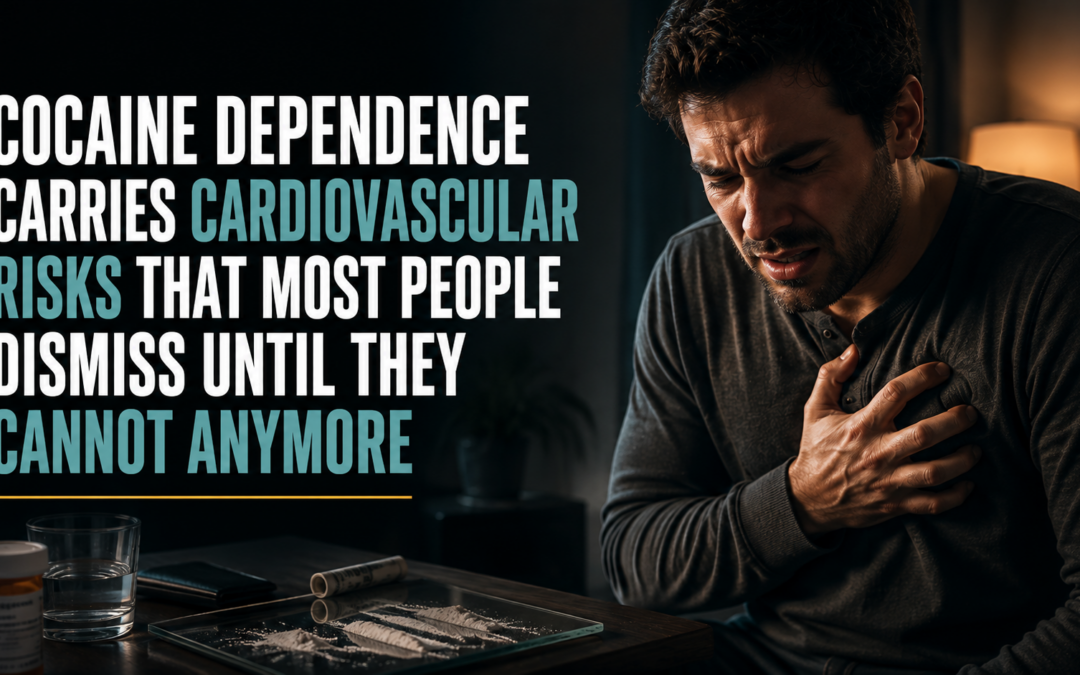
Cocaine dependence carries cardiovascular risks that many people brush aside for years, right up until a frightening symptom or a medical emergency makes those risks impossible to ignore. The heart takes a hit with every use, even when nothing feels wrong on the surface.
If you or someone you love is struggling with cocaine, you are not weak, and this is not a reflection of your worth. Cocaine is a powerful substance that puts real strain on the body, especially the heart.
The hopeful truth is that recovery is possible, and the heart can begin to recover when use stops and care begins. Understanding these risks, and why they are so easy to overlook, is a gentle first step toward steadier days ahead.
What Cardiovascular Risks Does Cocaine Dependence Actually Create?
Cocaine dependence creates serious cardiovascular risks by forcing the heart to work harder while narrowing the vessels that carry blood through the body. This combination puts dangerous pressure on a system that was never built to handle it.
Cocaine is a stimulant, which means it speeds up the heart and raises blood pressure almost immediately. At the same time, it tightens blood vessels, so the heart has to push harder to move blood.
Think of it like flooring the accelerator while pinching the fuel line. The engine strains against resistance, and that strain adds up fast, often long before a person feels any warning.
How Does Cocaine Strain the Heart During Use?
Cocaine strains the heart during use by spiking heart rate and blood pressure to levels the body cannot sustain safely. Each use forces the cardiovascular system into overdrive.
This surge can trigger an irregular heartbeat, chest pain, or in some cases a heart attack, even in young and otherwise healthy people. The risk is not limited to long-term or heavy use.
These effects can happen quickly and without warning. That is part of what makes cocaine so hard on the heart compared to many other substances.
Why Do So Many People Underestimate the Cardiovascular Risk?
Many people underestimate the cardiovascular risk of cocaine because the damage often builds quietly, without obvious symptoms in the early stages. A person can feel fine and still be under real strain.
Cocaine also carries a reputation as a social or recreational drug, which can make the danger feel distant. When use happens at parties or in short bursts, the heart risk rarely comes to mind.
Why Does Feeling Fine Create a False Sense of Safety?
Feeling fine creates a false sense of safety because cardiovascular damage can grow without producing clear signals until it becomes serious. The absence of symptoms is not the same as the absence of harm.
Picture a small crack forming in a foundation. Everything looks steady from above, while the damage spreads quietly underneath.
Cocaine works in a similar way. By the time chest pain, shortness of breath, or other warning signs appear, the strain on the heart may already be significant.
How Does the Pattern of Use Hide the Danger?
The pattern of use hides the danger because occasional or binge use can feel controlled, even when each episode carries real risk. A person may tell themselves that using now and then is harmless.
The trouble is that even a single use can trigger a cardiac event in the right circumstances. Risk does not require daily use.
This false comfort can delay the moment someone realizes help is needed. Understanding the real risk, without judgment, is what opens the door to care.
What Warning Signs Should Families Watch For?
Families should watch for a pattern of physical, emotional, and behavioral changes rather than a single dramatic moment. Cocaine use often reveals itself through several shifts happening together.
You do not need proof of a crisis to start a caring conversation. Noticing a change is reason enough to pay closer attention.
Common warning signs worth noticing include:
- Chest discomfort, a racing heart, or shortness of breath during or after use
- Bursts of high energy followed by exhaustion or low moods
- Increasing anxiety, restlessness, or irritability
- Financial trouble, secrecy, or withdrawing from loved ones
- Neglecting responsibilities, hobbies, or relationships that once mattered
Noticing one sign now and then is part of life. Noticing several together, especially over time, is a strong signal to reach out for guidance.
How Is Physical Dependence Different From Casual Use?
Physical dependence means the body and mind have come to rely on cocaine, while casual use may not yet involve that same loss of control. The two can blur together more quickly than people expect.
A person with dependence often keeps using despite clear consequences, including health scares. The pull to use can override even genuine intentions to stop.
Trusting your instinct matters here. If cocaine use has begun to feel like something that controls a person rather than something they choose, that is worth exploring with a caring professional.
What Does Treatment for Cocaine Dependence Involve?
Treatment for cocaine dependence involves medical support, therapy, and steady structure that helps a person heal in both body and mind. Care is personalized, never one-size-fits-all.
Because cocaine affects the heart and the brain, effective treatment supports the whole person. A strong plan meets someone where they are and adjusts as they grow stronger.
Why Does Detox Often Come First?
Detox often comes first because the body needs a safe, supported way to stabilize once cocaine use stops. Early withdrawal can bring intense cravings, exhaustion, and low moods that are hard to face alone.
For many people, medical detox provides a safe foundation where healing begins. Caring staff monitor a person’s health, ease discomfort, and offer steady reassurance through the hardest stretch.
Detox alone is rarely enough, though. It clears the path so the deeper work of recovery can begin with a stable start.
What Happens During Ongoing Treatment?
During ongoing treatment, a caring team helps a person understand their relationship with cocaine and build practical tools for lasting change. Treatment addresses both the substance use and the feelings underneath it.
Most plans blend several proven approaches:
- Individual therapy to explore personal triggers and develop coping skills
- Group sessions that offer connection, understanding, and encouragement
- Cognitive Behavioral Therapy, which helps a person reshape the thought patterns driving cocaine use
- Attention to physical health as the heart and body recover
- Support for any mental health struggles that appear alongside substance use
Each piece works toward the same goal. The aim is to help a person feel steadier, healthier, and more in control of their own life.
What Levels of Care Are Available?
Levels of care range from immersive residential support to flexible outpatient options, depending on how much structure a person needs right now. The right choice depends on the severity of use and a person’s home life.
At the Robert Alexander Center for Recovery, options include residential inpatient treatment for those who need a safe, focused environment away from daily triggers, along with outpatient care for people building recovery alongside work and family responsibilities.
As a person grows steadier, care can shift with them. Support is meant to meet each individual exactly where they are.
When Should You Seek Immediate Help?
You should seek immediate help when cardiovascular symptoms appear during or after cocaine use, because some signs point to a medical emergency. These symptoms cannot safely wait.
Call for emergency medical care right away if you or a loved one experiences any of these:
- Chest pain, pressure, or tightness
- Trouble breathing or shortness of breath
- A racing, pounding, or irregular heartbeat
- Sudden weakness, numbness, or trouble speaking
- Fainting, severe dizziness, or a loss of consciousness
If any of these appear, treat it as an emergency and call for help. These are not signs to push through or wait out.
How Do You Decide When to Seek Treatment?
You decide to seek treatment when cocaine use feels hard to control, or when it starts affecting your health, relationships, or peace of mind. You never have to wait for a rock-bottom moment to deserve care.
Consider reaching out if any of these feel true:
- You have tried to stop or cut back on cocaine but keep returning to it
- You have noticed chest discomfort, a racing heart, or other health scares
- Cocaine use is affecting your work, relationships, or daily responsibilities
- Worry about your heart or your health lingers in the back of your mind
- A loved one has gently expressed concern about your use
If any of these resonate, that is reason enough to start a conversation with a caring professional. An honest assessment can bring clarity and help you understand which kind of support fits best.
Common Questions Families Often Ask
Can cocaine really harm the heart even with occasional use?
Yes. Even a single use can trigger a dangerous rise in heart rate and blood pressure, which in some cases leads to a cardiac event. Risk is not limited to heavy or daily use.
Can the heart heal after cocaine use stops?
In many cases, the cardiovascular system begins to recover once use stops and health improves. The extent of healing depends on the person and any existing damage, which a medical team can help assess.
What if health problems have already appeared?
That is an important reason to seek care, not to feel ashamed. A caring team can coordinate treatment that supports both recovery and your physical health at the same time.
How soon can care begin?
Support can start soon after you reach out. Our admissions team is available to answer your questions, verify insurance, and guide you toward the next step with patience and care.
You Do Not Have to Face This Alone
Cocaine dependence carries cardiovascular risks that are far too easy to dismiss, until a health scare makes them impossible to ignore. The danger to the heart is real, but it does not have to define what comes next.
Recovery is possible, and reaching out is a brave, hopeful step. With medical support, therapy, and steady care, the strain on your heart can ease and steadier days can return.
If you or someone you love is struggling with cocaine, please reach out to the Robert Alexander Center for Recovery today. Our caring team is ready to listen, answer your questions, and help you take the next step toward steadier, more hopeful days ahead. You are not alone, and help is here whenever you are ready.