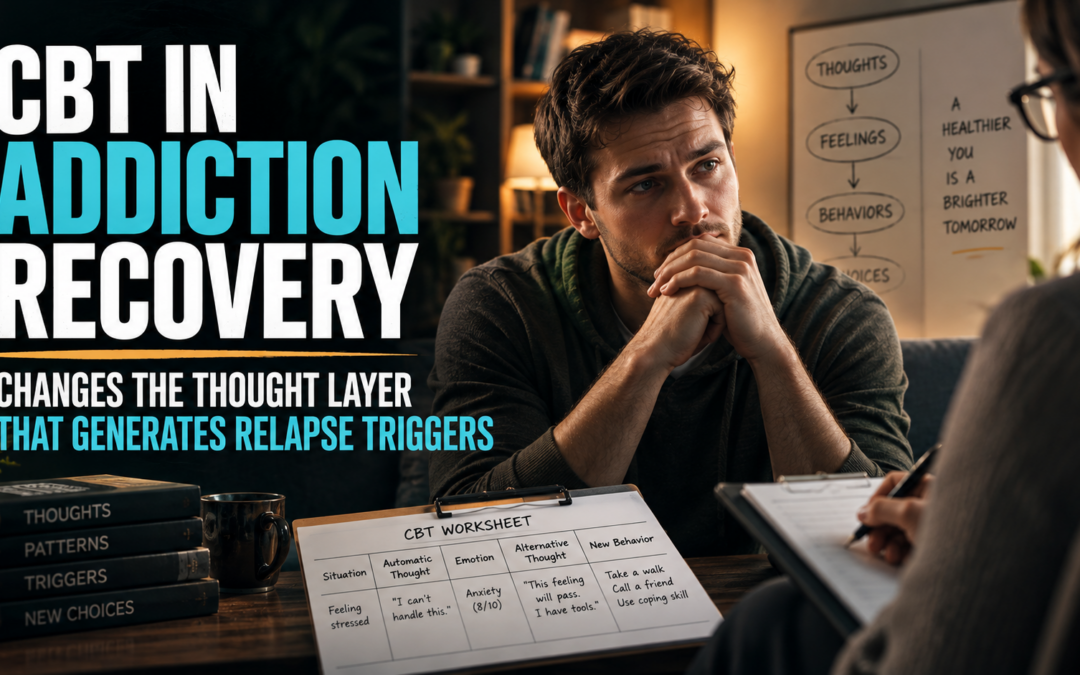
CBT applied within addiction recovery changes the thought layer that has been generating the relapse triggers all along, reaching the quiet patterns of thinking that keep pulling a person back toward substances. Cravings rarely appear out of nowhere. They usually start with a thought.
If you or someone you love has worked hard at recovery only to feel blindsided by triggers again and again, you are not failing. Something beneath the surface may have gone unaddressed.
The hopeful truth is that these thought patterns can change with the right support. Understanding how CBT reaches them is a gentle first step toward steadier, more confident days ahead.
What Is CBT Applied Within Addiction Recovery?
CBT applied within addiction recovery is a proven therapy that helps a person recognize and reshape the thoughts driving cravings, urges, and relapse. CBT stands for Cognitive Behavioral Therapy, an approach that focuses on the link between thoughts, feelings, and actions.
The idea is simple but powerful. What you think shapes how you feel, and how you feel shapes what you do.
Think of it like tracing a river back to its source. Cravings feel like the rushing water, but the thoughts underneath are the spring feeding it. CBT helps you find and change that source.
How Does CBT Work in Everyday Terms?
Cognitive Behavioral Therapy works by helping you notice automatic thoughts, question them, and replace them with more accurate, helpful ones. It brings hidden patterns into the light so they lose their power.
Many thoughts happen so fast we barely notice them. A stressful moment might trigger a thought like “I can’t handle this without using,” before we even realize it arrived.
CBT slows that process down. With practice, you learn to catch the thought, examine it, and choose a healthier response.
How Does CBT Change the Thought Patterns Beneath Cravings?
CBT changes the thought patterns beneath cravings by teaching a person to identify the specific beliefs and reactions that lead to substance use. Once those patterns are visible, they can be challenged and rebuilt.
Cravings are often the final step in a chain that began much earlier. A feeling, a memory, or a stressful thought sets the chain in motion.
What Are the Hidden Thoughts That Fuel Relapse?
The hidden thoughts that fuel relapse are quick, automatic beliefs that make using feel necessary or inevitable. They often go unexamined, which is exactly what makes them so influential.
Common examples include:
- “One time won’t hurt.”
- “I deserve this after the day I had.”
- “I’ll never feel normal without it.”
- “I’ve already slipped, so what’s the point.”
Each of these thoughts feels true in the moment. CBT helps you see them for what they are, temporary patterns rather than facts.
How Does Changing a Thought Change the Outcome?
Changing a thought changes the outcome because a different thought leads to a different feeling and a different choice. Break the chain early, and the craving loses momentum.
Imagine a row of dominoes. If you remove one near the beginning, the rest never fall.
CBT teaches you to spot that early domino. Instead of “I can’t cope without using,” you might practice “This feeling is hard, and it will pass.” That shift can be the difference between a trigger and a relapse.
How Does CBT Help With Relapse Triggers Specifically?
Cognitive Behavioral Therapy helps with relapse triggers by preparing you to recognize them and respond in advance, before they take over. Triggers lose their grip when you understand them and have a plan.
A trigger is anything that sparks the urge to use, such as a place, a person, a feeling, or a time of day. Left unexamined, triggers can feel overwhelming and sudden.
How Do You Learn to Spot Your Own Triggers?
You learn to spot your triggers by working with a therapist to map the patterns tied to your substance use. This process turns confusion into clarity.
Together, you look at when cravings tend to rise and what surrounds them. You might notice that loneliness, certain relationships, or specific stressors show up again and again.
Once you can name a trigger, it becomes far less frightening. Awareness is the first step toward staying steady when it appears.
What Coping Skills Does CBT Build?
CBT builds practical coping skills you can use the moment a trigger or craving arrives. These are real tools, not vague advice.
Common CBT-based coping skills include:
- Pausing to name the thought before reacting to it
- Challenging distorted beliefs with more balanced ones
- Using grounding techniques to steady the body and mind
- Planning healthier responses to high-risk situations
- Reaching out to a trusted person instead of isolating
Each skill gives you a way to respond with intention rather than impulse. With practice, these responses start to feel natural.
How Does CBT Fit Into a Broader Treatment Plan?
CBT fits into a broader treatment plan as one powerful tool among several, working best alongside other forms of care. It is highly effective, but it is not meant to stand alone.
Recovery is rarely about a single fix. Lasting change usually comes from a combination of support that addresses the whole person.
Why Does CBT Work Well With Other Therapies?
Cognitive Behavioral Therapy works well with other therapies because it strengthens the skills a person practices everywhere else in treatment. It gives structure to the emotional work happening in group sessions, individual therapy, and daily life.
For many people, substance use is tangled together with anxiety, depression, or trauma. Our mental health treatment programs are designed to care for these connected struggles side by side, so CBT becomes part of a coordinated, whole-person plan.
When CBT and other approaches reinforce each other, recovery gains a much stronger foundation.
At What Level of Care Does CBT Happen?
CBT happens across every level of care, adapting to a person’s needs at each stage of recovery. It can be part of intensive early treatment or ongoing support later on.
For someone who needs a safe, immersive setting, residential inpatient treatment often includes CBT as part of daily therapy. This gives a person focused time to practice new skills away from daily triggers.
As stability grows, outpatient care allows CBT to continue while a person returns to work, school, or family life. The skills keep building right where they are needed most.
When Is CBT Most Helpful in Recovery?
CBT is most helpful when a person is ready to look honestly at their thoughts and practice new responses over time. It rewards steady effort and gentle persistence.
You do not need to feel completely stable to benefit. CBT meets you where you are and grows with you.
Who Tends to Benefit Most From CBT?
People who benefit most from CBT are those who want practical tools and a clearer understanding of their own patterns. It suits many different situations and stages of recovery.
CBT may be especially helpful if any of these feel true:
- You keep facing the same triggers and want a real strategy for them.
- Cravings seem to come out of nowhere, and you want to understand why.
- Anxiety, depression, or stress often lead you back toward substances.
- You value learning skills you can use in everyday life.
- You want to strengthen the progress you have already made.
If several of these resonate, CBT could be a meaningful part of your path. A caring assessment can help clarify what fits best.
How Long Does CBT Take to Work?
CBT often begins helping within weeks, though lasting change grows with continued practice. Like any skill, it strengthens the more you use it.
Some people notice early relief simply from understanding their patterns. Others find the deeper benefits build gradually over months.
There is no single timeline, and that is okay. What matters is steady progress, one thought and one choice at a time.
How Do You Decide When to Seek Help?
You decide to seek help when substance use feels hard to manage or when the same triggers keep pulling you back despite real effort. You never have to wait for a crisis to deserve care.
Consider reaching out if any of these feel true:
- You have tried to stay sober but keep returning to substances despite wanting to stop.
- Cravings or triggers feel overwhelming and hard to predict.
- Anxiety, depression, or stress are closely tied to your substance use.
- You want practical tools to understand and change your patterns.
- A loved one has gently expressed concern about your substance use.
If any of these resonate, that is reason enough to start a conversation with a caring professional. An honest assessment can help you understand what is happening and which kind of support fits best.
Common Questions Families Often Ask
Is CBT proven to help with addiction?
Yes. CBT is one of the most widely studied and trusted approaches for substance use, valued for teaching practical, lasting skills. It helps people understand their patterns and respond to triggers with confidence.
Does CBT work on its own, or is other care needed?
CBT is powerful, but it works best as part of a fuller treatment plan. Combining it with other therapies, medical support, and community care gives recovery a much stronger foundation.
Will CBT bring up painful memories?
CBT focuses mainly on present thoughts and patterns rather than reliving the past. A skilled therapist moves at your pace and keeps the work practical, supportive, and manageable.
How soon can care begin?
Support can start soon after you reach out. Our admissions team is available to answer your questions, verify insurance, and guide you toward the next step with patience and care.
You Do Not Have to Untangle These Thoughts Alone
CBT applied within addiction recovery changes the thought layer that has been generating the relapse triggers all along, giving a person the awareness and tools to respond differently when cravings rise. Triggers no longer have to feel sudden or unstoppable once you understand the thoughts behind them.
Recovery is a journey, and you were never meant to walk it alone. With compassionate support and proven tools like CBT, steadier and more confident days are within reach.
If you or someone you love is ready to understand and change the patterns beneath substance use, please reach out to the Robert Alexander Center for Recovery® today. Our caring team is ready to listen, answer your questions, and help you take the next step toward steadier, more hopeful days ahead. You are not alone, and help is here whenever you are ready.