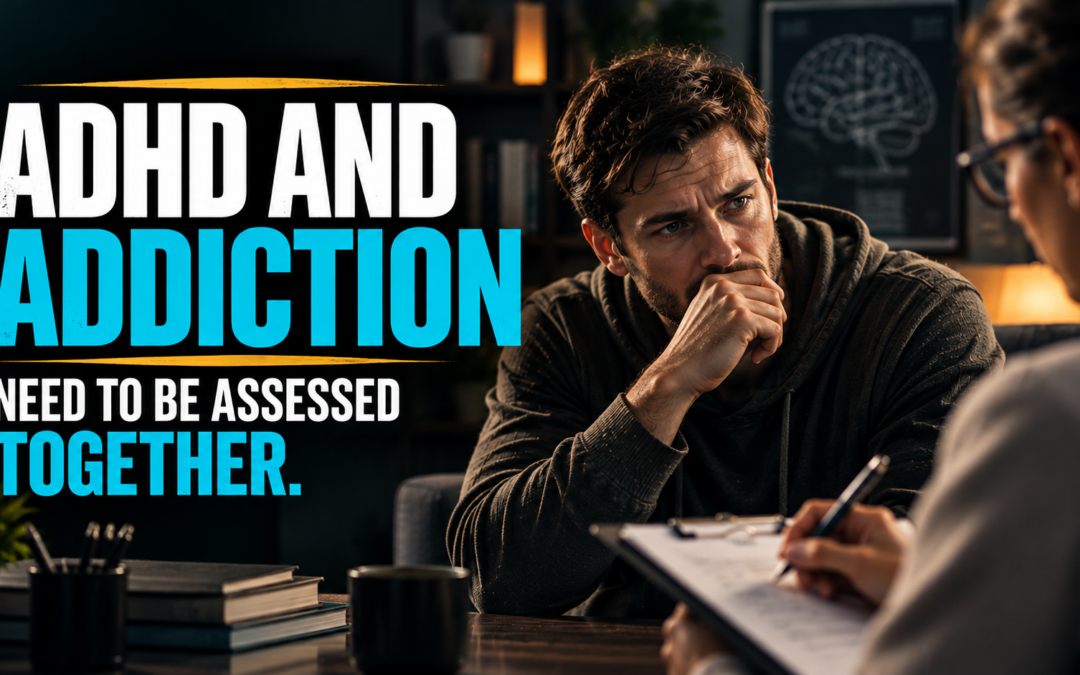
ADHD and addiction often appear together, yet attention-deficit/hyperactivity disorder (ADHD) is one of the conditions most easily missed when someone seeks help for substance use. A person may finish detox and attend therapy but still feel restless, scattered and pulled back toward old habits without knowing why.
If this sounds familiar, you are not failing and you are not lazy. Many adults with ADHD were never diagnosed as children. They spent years trying harder and feeling behind. Some found their own ways to cope, and sometimes those ways involved alcohol or drugs.
Both conditions respond to care. When a treatment team looks at ADHD and addiction together, recovery can reach the driver underneath and not only the symptoms on the surface. You deserve support that sees the whole picture.
How Do ADHD and Addiction Interact?
ADHD and addiction interact through shared brain pathways, impulsive decision-making and the search for relief from a mind that rarely feels settled. ADHD affects the brain’s reward and attention systems, which rely on dopamine, a chemical tied to motivation and focus.
Substances can change how those systems feel for a short time. Alcohol may quiet a racing mind. Stimulants may seem to sharpen focus, and cannabis may ease restlessness for a few hours.
Think of it like a car with a sticky gas pedal and soft brakes. A person with ADHD works hard to control the speed every day. Substances can feel like a fix, but they usually make the car harder to steer. Over time, ADHD and addiction can become so tangled that it is hard to tell where one ends and the other begins.
Why Do People With ADHD Turn to Substances?
People with ADHD often turn to substances to manage symptoms that feel exhausting, frustrating or isolating. This is usually self-medication, an attempt to feel normal rather than to get high.
Common reasons include:
- Calming racing thoughts so sleep comes more easily
- Easing anxiety after years of feeling behind
- Boosting focus to keep up at work or school
- Quieting shame from criticism or missed goals
- Feeling more at ease in social settings
These reasons make sense. Still, substance use tends to deepen the very struggles it was meant to soothe.
How Does Impulsivity Raise the Risk?
Impulsivity is one of the strongest links between ADHD and addiction because it makes pausing before a choice much harder. A person may say yes to a drink or a pill before weighing the consequences.
Impulsivity can also make cutting back difficult. Cravings hit fast, and the urge to act on them can feel immediate. This reflects how the ADHD brain works, not a lack of character.
Why Does Treating ADHD and Addiction Separately Undermine Recovery?
Treating ADHD and addiction separately undermines recovery because the untreated condition keeps feeding the other one. Progress in one area stalls when the driver behind it stays in place.
Recovery works best when the plan matches what a person is actually carrying. When half the story is missing, even skilled care can only go so far.
What Happens When Only the Addiction Is Treated?
When only the addiction is treated, ADHD symptoms often return with full force once substances are gone. Restlessness, distraction and impulsivity can feel louder in early recovery, and those feelings frequently become relapse triggers.
Picture draining a flooded basement without fixing the leaking pipe. The floor dries for a while, then the water slowly comes back.
A person may also struggle to follow the treatment plan itself. Missed appointments, forgotten coping tools and trouble sitting through long sessions can look like low motivation when they are actually signs of untreated ADHD.
What Happens When Only the ADHD Is Treated?
When only the ADHD is treated, ongoing substance use can block progress and create safety concerns. Alcohol and drugs affect focus, mood and sleep, which can blur the benefits of ADHD care.
Medication decisions also become more complicated. Some ADHD medications are stimulants, and prescribing them without understanding a person’s substance use history can carry risk. A coordinated team can weigh those choices carefully.
Why Does Assessing Both Together Matter?
Assessing ADHD and addiction together matters because it shows a care team how the two conditions connect for each person. That clarity shapes safer medication choices, better therapy goals and a stronger relapse prevention plan.
Many people feel real relief when someone finally says, “Your focus struggles are real, and they make sense alongside your substance use.” That honesty opens the door to deeper healing.
What Warning Signs Should Families Notice?
Families should notice a pattern where signs of ADHD and addiction seem to rise and fall together. One sign alone may reflect a hard season. Several signs together deserve a caring conversation.
Signs worth paying attention to include:
- Lifelong trouble with focus, organization or finishing tasks
- Using alcohol or drugs to sleep, calm down or “slow the brain down”
- Taking a prescribed stimulant in higher doses or seeking extra pills
- Impulsive spending, risky choices or sudden decisions
- Frequent job changes, missed deadlines or conflict at work
- Restlessness or irritability that grows during early sobriety
- Past treatment that addressed substance use but not attention struggles
How Is ADHD Different From the Effects of Substance Use?
ADHD usually shows a long history that began in childhood, while substance-related focus problems tend to begin or worsen with use. Sorting out the difference is one reason a careful assessment matters so much.
Substances can mimic ADHD symptoms, and withdrawal can cause poor concentration and restlessness as well. A skilled clinician looks at a person’s full history, often over time, rather than drawing quick conclusions.
What Does Integrated Assessment and Treatment Include?
Integrated assessment and treatment include a full evaluation of attention, mood and substance use, followed by one coordinated plan guided by one team. Neither condition is set aside or treated as an afterthought.
Our mental health treatment programs are designed to care for co-occurring conditions side by side. When one team sees the full picture, the plan can target what is actually driving the struggle.
What Does an Integrated Assessment Look At?
An integrated assessment looks at symptoms, timing and history to understand how ADHD and addiction connect for a specific person. It moves at a pace that feels safe and respectful.
Clinicians may ask about:
- Childhood focus, school experiences and early challenges
- When substance use began and what it seemed to help with
- Current symptoms after a period of stability
- Sleep, mood, anxiety and other mental health concerns
- Past prescriptions and how they were used
What Does Treatment Usually Include?
Treatment for ADHD and addiction usually blends therapy, skill-building and medical support tailored to each person. Care is personalized, never one-size-fits-all.
Most plans include:
- Individual therapy to explore patterns, triggers and the emotional weight of living with ADHD
- Cognitive Behavioral Therapy (CBT), which helps reshape thought patterns that fuel both impulsivity and substance use
- Practical skills training for organization, time management and planning
- Careful medication review, including non-stimulant options when appropriate
- Group therapy with peers who understand co-occurring struggles
- Family involvement to rebuild trust and improve communication at home
What Levels of Care Are Available?
Levels of care range from immersive residential support to flexible outpatient options. The right choice depends on safety, the severity of substance use and support at home.
At the Robert Alexander Center for Recovery in Mount Washington, Kentucky, residential inpatient care offers structure and support around the clock. For people living with ADHD and addiction, that steady daily routine can make it easier to settle into treatment without constant distractions.
Others may do well with outpatient care that fits around work, school and family life. As a person grows steadier, care can shift to match their progress.
How Do You Know When It Is Time to Seek Help?
It is time to seek help when focus struggles and substance use feel tangled together in ways that are hard to manage alone. You never have to wait for a crisis to deserve care.
Consider reaching out if any of these feel true:
- You use alcohol or drugs to calm your mind or help you focus.
- You have tried to cut back, but impulsive urges keep pulling you back.
- Earlier treatment helped with substance use but never addressed your attention struggles.
- You have misused a prescribed stimulant or worry about how you use it.
- Work, school or relationships keep slipping despite real effort.
- A loved one has gently shared concern about your well-being.
If any of these resonate, an honest conversation with a caring professional can bring clarity. An assessment that looks at ADHD and addiction together can help you understand which level of care fits best.
What Families Often Ask
Can adults have ADHD even if no one noticed it in childhood?
Yes. Many adults were never diagnosed, especially if they did well in school or learned to hide their struggles. A careful assessment can explore symptoms across a person’s whole life.
Is it safe to take ADHD medication during recovery?
It can be, with careful medical guidance. A prescriber weighs each person’s history and may consider non-stimulant options or close monitoring when stimulants are used.
Should ADHD or addiction be treated first?
Both should be addressed at the same time. Integrated care treats ADHD and addiction together because progress in one area supports progress in the other.
How soon can care begin?
Support can begin soon after you reach out. Our admissions team can answer your questions, verify insurance and guide you toward the next step with patience and care.
Recovery Can Reach the Whole Person
ADHD and addiction require assessment together because treating one alone leaves the other’s driver in place. When both are seen clearly, recovery rests on a stronger and steadier foundation.
Your struggles with focus and substance use say nothing about your worth. With compassionate, coordinated care, new patterns can take root and more hopeful days can return.
If you or someone you love is living with ADHD and addiction, please reach out to the Robert Alexander Center for Recovery today. Our caring team is ready to listen, answer your questions and help you take the next step. You are not alone, and help is here whenever you are ready.