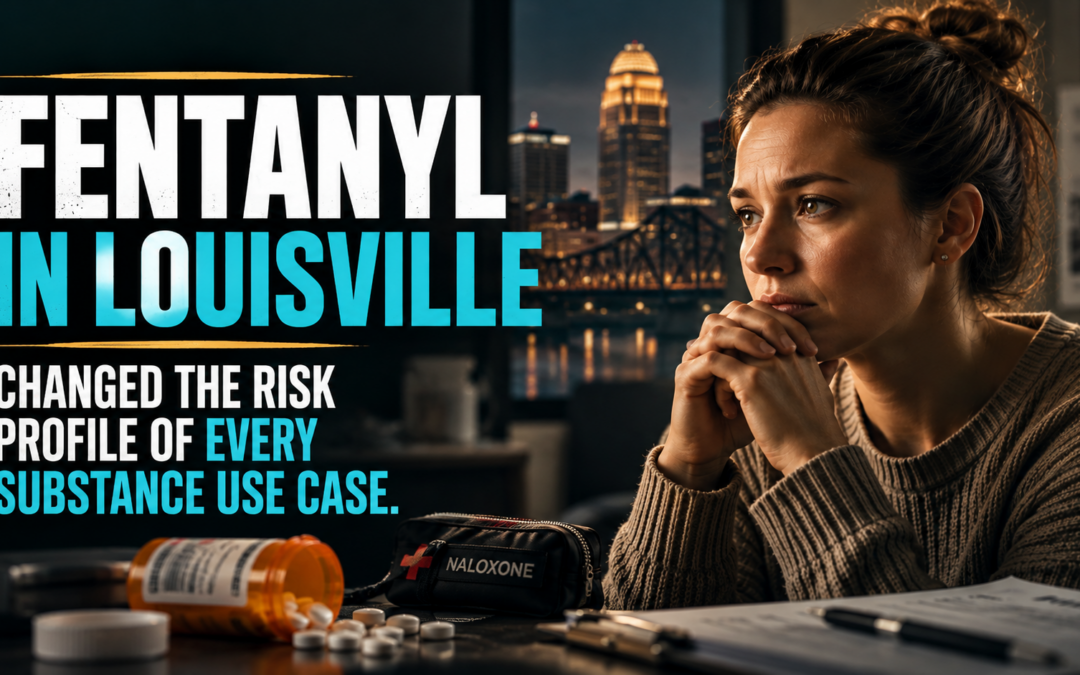
Fentanyl in Louisville has changed what it means to use any substance, not only opioids. A person who only uses cocaine on weekends, takes a pill from a friend to sleep or buys what they believe is Adderall now faces a risk that did not exist in the same way a decade ago.
If you are worried about yourself or someone you love, that fear makes sense. Many families assume fentanyl is only a concern for people who use heroin or prescription painkillers. That belief can leave people unprepared.
The hopeful truth is that knowledge protects lives. Understanding how this risk reaches across many substances, and knowing what to do when something goes wrong, gives you real power. Help is available, and you do not have to face this alone.
What Is Fentanyl in Louisville and Why Does It Affect More Than Opioid Use?
Fentanyl in Louisville is a powerful synthetic opioid that now appears in many street substances, including drugs that are not opioids at all. It affects more than opioid use because it is often mixed into stimulants, counterfeit pills and other substances without the buyer knowing.
Fentanyl is far stronger than morphine or heroin. A very small amount can slow or stop a person’s breathing.
Think of it like a hidden ingredient in a recipe. You cannot see it, smell it or taste it. Yet that one ingredient can change the entire outcome.
Why Does the Type of Substance No Longer Predict Safety?
The type of substance no longer predicts safety because fentanyl can be present in almost anything sold outside a pharmacy. The label a person trusts, whether it says cocaine, meth or a brand-name pill, may not match what is actually inside.
For years, people could make rough judgments about risk based on what they used. Those judgments no longer hold up.
This is why clinicians across Kentucky now treat every substance use concern as a possible fentanyl exposure. It is not about assuming the worst. It is about keeping people alive.
How Has Fentanyl in Louisville Changed the Risk for People Who Do Not Use Opioids?
Fentanyl in Louisville has changed the risk for people who do not use opioids by exposing them to a drug their bodies have no tolerance for. Someone who rarely or never uses opioids is especially vulnerable to an overdose from even a tiny amount.
People who use opioids regularly build some tolerance over time. That tolerance offers a thin margin of protection, though it is never truly safe.
A person who only uses stimulants has no such margin. Their body is unprepared, so a trace amount can be enough to stop their breathing.
Which Substances Can Contain Fentanyl?
Fentanyl has been found in a wide range of substances sold on the street or online. This includes drugs many people view as lower risk.
Substances that may contain fentanyl include:
- Cocaine and crack cocaine
- Methamphetamine
- Counterfeit pills made to look like oxycodone, Xanax or Adderall
- Heroin and other opioids
- Powders sold as something else entirely
Counterfeit pills deserve special attention. They can look nearly identical to real prescription medication, which makes them easy to trust.
Why Are Occasional Users at Special Risk?
Occasional users are at special risk because they often see themselves as careful and in control. They may use only at parties, during stressful weeks or on rare occasions.
That sense of control can be misleading. Each use is a separate exposure, and a single contaminated batch can be deadly.
This is not meant to frighten. It is meant to help people make informed choices and know when to reach out for support.
Why Do People Get Exposed to Fentanyl Without Realizing It?
People get exposed to fentanyl without realizing it because it is cheap to produce, easy to mix and impossible to detect with the senses. Sellers may add it to increase strength or stretch supply, often without telling buyers.
Sometimes the person selling the drug does not know it is there either. Contamination can happen at many points along the way.
Why Can’t You Tell by Looking?
You cannot tell by looking because fentanyl has no clear color, taste or smell when mixed into other substances. Even people with years of experience cannot reliably spot it.
Fentanyl test strips can detect its presence in many substances. They are a harm reduction tool, though they cannot guarantee safety or measure how much is present.
The safest path is reducing or stopping use with professional support. Until then, knowing the signs of overdose and keeping naloxone nearby can make a real difference.
What Warning Signs Should Louisville Families Watch For?
Families should watch for a pattern of changes in mood, behavior and health rather than one isolated moment. Substance use often reveals itself slowly, so the bigger picture matters most.
You do not need proof to start a caring conversation. Noticing a shift is reason enough to check in.
Signs worth noticing include:
- Pulling away from family, friends or activities they once enjoyed
- Sudden changes in sleep, appetite, energy or appearance
- Secrecy around money, phone use or where they spend time
- Unfamiliar pills, powders, foil or small baggies
- Mood swings, unusual drowsiness or confusion
- Pills that look slightly different from a real prescription
Seeing one sign now and then may simply reflect a hard season. Seeing several together is a strong signal to reach out for guidance.
What Are the Signs of a Fentanyl Overdose?
The signs of a fentanyl overdose include slow or stopped breathing, unresponsiveness and lips or fingertips that turn blue or gray. Recognizing these signs quickly can save a life.
Watch for these overdose signs:
- Breathing that is very slow, shallow or has stopped
- Inability to wake the person, even with a loud voice or firm touch
- Pinpoint pupils that look unusually small
- Pale, clammy or bluish skin, lips or nails
- Gurgling, choking or snoring-like sounds
- A limp body after using any substance
These signs can appear after stimulant use too. If fentanyl was hidden in cocaine or meth, the person may show opioid overdose signs even though they never meant to take an opioid.
Should You Give Naloxone if the Person Only Used Stimulants?
Yes, you should give naloxone if a person shows overdose signs, even if you believe they only used stimulants. Naloxone, often sold as Narcan, reverses opioid overdoses and is safe to give when you are unsure.
If fentanyl was present, naloxone may restore breathing. If it was not, naloxone will not cause harm.
Naloxone is available at many Louisville pharmacies without a prescription. Keeping it in your home, car or bag is a simple step that can protect someone you love.
What Does Treatment Include for Substance Use in the Fentanyl Era?
Treatment for substance use today combines medical care, therapy and steady structure that support the whole person. Because fentanyl exposure can happen with many substances, care teams assess each person carefully and build a plan around their real needs.
Care is personalized, never one-size-fits-all. A strong plan considers the substances involved, mental health, home life and personal goals.
Why Does Detox Often Come First?
Detox often comes first because withdrawal can be uncomfortable and, with some substances, medically risky. Unexpected fentanyl dependence can also make withdrawal more intense than a person expects.
Medical detox offers a safe, supervised setting where trained staff monitor symptoms and ease discomfort. It creates a stable starting point.
Detox is only the beginning, though. Ongoing care is what helps recovery hold.
What Happens During Ongoing Treatment?
During ongoing treatment, a caring team helps a person understand their substance use and build practical tools for lasting change. Treatment addresses both the behavior and the feelings beneath it.
Most plans include:
- Individual therapy to explore triggers and build coping skills
- Group therapy for connection and shared understanding
- Cognitive Behavioral Therapy (CBT), which helps reshape thought patterns that drive substance use
- Medication support when appropriate, guided by a prescriber
- Relapse prevention and overdose education for the person and their family
What Levels of Care Are Available Near Louisville?
Levels of care range from immersive residential treatment to flexible outpatient options. The right choice depends on safety, severity of use and support at home.
The Robert Alexander Center for Recovery® sits a short drive from Louisville in Mount Washington. Residential inpatient treatment offers around-the-clock support away from daily triggers. Outpatient care helps people build recovery while keeping up with work and family.
When Should You Seek Immediate Emergency Help?
You should seek emergency help any time you suspect an overdose, because fentanyl can stop breathing within minutes. Do not wait to see if the person wakes up on their own.
Take these steps right away:
- Call 911 immediately.
- Give naloxone if it is available.
- Try to keep the person breathing and lay them on their side if they are breathing.
- Stay with them until help arrives.
- Be ready to give a second dose of naloxone if they do not respond.
Kentucky has a Good Samaritan law that offers certain legal protections to people who call for help during an overdose. Fear should never stop anyone from making that call.
How Do You Know When It Is Time to Get Treatment?
It is time to get treatment when substance use of any kind feels hard to control or starts affecting health, safety or relationships. You never have to wait for an overdose or crisis to deserve care.
Consider reaching out if any of these feel true:
- You or a loved one uses any street substance or pills not from a pharmacy.
- Attempts to cut back or stop have not lasted.
- You or someone close to you has had a close call or overdose.
- Substance use is affecting work, school, family or finances.
- Worry about fentanyl is constant in the back of your mind.
If any of these resonate, a conversation with a caring professional can bring clarity and a clear next step.
What Families Often Ask
Can fentanyl really be in cocaine or meth?
Yes. Fentanyl has been found in cocaine, methamphetamine and counterfeit pills. This is why people who never use opioids can still overdose on fentanyl.
Is it safe to give naloxone if I am not sure what they took?
Yes. Naloxone is safe to give when you suspect an overdose. It reverses opioid effects and does not harm someone who has not taken opioids.
Where can I get naloxone in Louisville?
Many pharmacies in Louisville offer naloxone without a prescription. Some local health programs also provide it at no cost along with simple training.
How soon can treatment begin?
Support can begin soon after you reach out. Our admissions team can answer your questions, verify insurance and guide you toward the next step with patience and care.
You Do Not Have to Face This Risk Alone
Fentanyl in Louisville has changed the risk profile of every substance use presentation, not just opioids, which means no type of use is truly predictable anymore. That reality is serious, yet it does not have to define what happens next.
Recovery is possible, and reaching out is a brave, hopeful step. With medical care, therapy and steady support, people can move toward safer and steadier days.
If you or someone you love is using any substance, please reach out to the Robert Alexander Center for Recovery today. Our caring team is ready to listen, answer your questions and help you take the next step. You are not alone, and help is here whenever you are ready.
If you believe someone is overdosing right now, call 911 immediately and give naloxone if you have it. Every minute matters.