
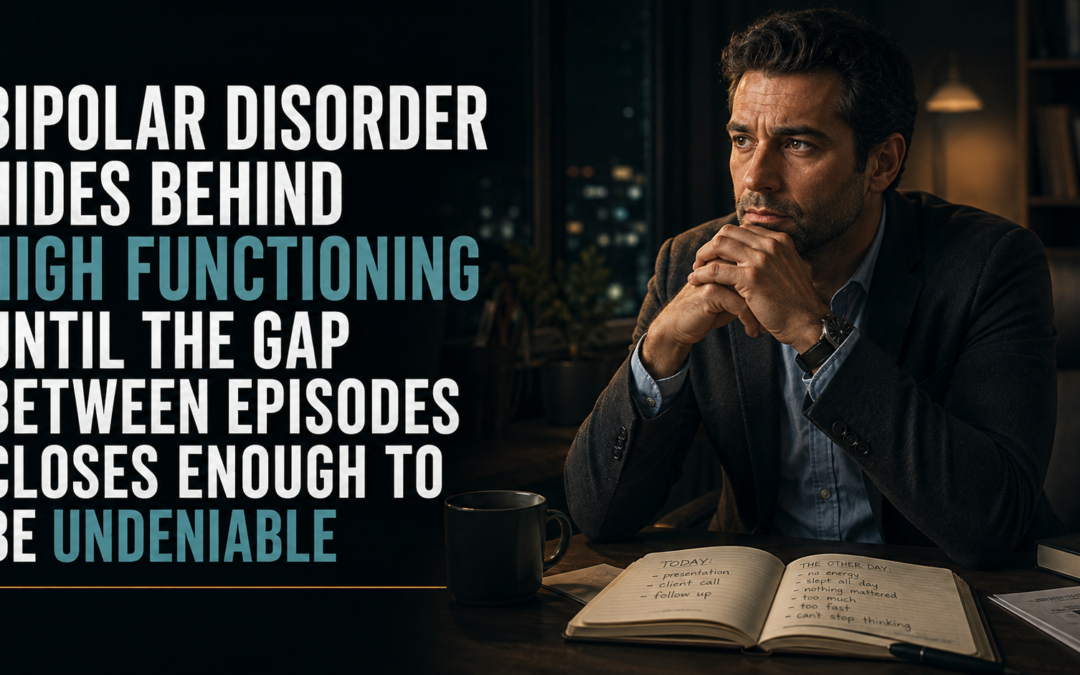
Bipolar disorder hides behind high functioning for years in many people, masked by strong performance at work, active social lives, and the appearance that everything is under control. From the outside, a person may look successful, driven, and capable. Inside, the mood shifts are already at work.
If you have quietly wondered whether the highs and lows in your life, or a loved one’s, add up to something more, you are not overreacting. That question deserves gentle, honest attention.
The hopeful truth is that once bipolar disorder is recognized, life can become far steadier. Understanding how it stays hidden for so long is a caring first step toward getting the right support.
How Does Bipolar Disorder Hide Behind High Functioning?
Bipolar disorder hides behind high functioning because the elevated periods often look like productivity, ambition, or simply a great stretch of feeling good. A person may accomplish more, socialize more, and feel unstoppable during these times.
These highs rarely raise concern. They can look like the best version of someone rather than a symptom.
Think of it like a tide that rises and falls quietly. When the water is high, everything seems fine. The trouble only becomes clear once the pattern of rising and falling comes into view.
What Does High Functioning Actually Look Like?
High functioning looks like meeting deadlines, holding a job, and maintaining relationships even while mood shifts happen underneath. A person keeps up appearances, so the struggle stays invisible to others.
During elevated periods, someone might take on new projects, stay up late with boundless energy, or feel especially confident and social. These stretches often feel positive.
The low periods get explained away too. A hard week, burnout, or stress becomes the story, when a deeper pattern is really at play.
Why Does Recognition of Bipolar Disorder Get Delayed So Often?
Recognition of bipolar disorder gets delayed because people usually seek help during the low periods, not the highs. When someone feels crushed by sadness or exhaustion, they reach out, and a depression diagnosis often follows.
The elevated states rarely get mentioned. They feel good, or at least productive, so there seems to be no reason to bring them up.
This leaves a clinician working with only half the picture. Without knowing about the highs, the full pattern stays hidden.
Why Do the High Periods Go Unreported?
The high periods go unreported because they often feel like relief or success rather than a problem. Nobody rushes to a doctor to say they feel confident and energized.
During hypomania, a person may sleep less, think faster, and feel remarkably capable. These experiences can seem like a welcome change after a low stretch.
By the time the low returns, that earlier high feels like a normal good spell. The connection between the two rarely gets made without help.
How Does High Functioning Delay a Diagnosis?
High functioning delays a diagnosis because visible success can convince everyone, including the person, that nothing is seriously wrong. When someone is thriving on paper, mood swings get dismissed as personality.
Loved ones may notice intensity or unpredictability but chalk it up to stress or temperament. The steady output masks the internal turbulence.
Trusting your instincts matters here. If the pattern of highs and lows feels bigger than ordinary ups and downs, a careful evaluation can bring real clarity.
How Does the Condition Affect Work, Relationships, and Substance Use?
Bipolar disorder affects work, relationships, and substance use in ways that build slowly over time. Even a high functioning person carries a quiet cost that grows as the gap between episodes narrows.
The effects often stay hidden at first. As episodes come closer together, they become harder to explain away or manage alone.
What Happens to Work Over Time?
Work is affected because the same energy that fuels bursts of achievement can also lead to overcommitment and burnout. A person may launch ambitious projects during a high, then struggle to finish them when the mood drops.
Missed deadlines, sudden job changes, or a cycle of excelling and crashing can follow. Colleagues may see inconsistency without understanding the reason.
These patterns are not signs of laziness or lack of discipline. They reflect an untreated condition that responds well to proper care.
How Are Relationships Affected?
Relationships are affected because loved ones cannot always predict which version of the person they will meet. Mood shifts can feel personal, even when a condition is driving them.
During elevated periods, irritability or impulsive choices can create tension. During low periods, withdrawal and silence can leave family and friends feeling shut out.
Over time, this unpredictability wears on trust. Many families describe feeling confused, unsure how to help someone whose struggle has no clear name yet.
Why Does It Raise the Risk of Substance Use?
The risk of substance use rises because people often try to manage moods they do not understand. Alcohol or drugs can feel like a way to slow a racing mind or lift a heavy low.
This coping strategy usually backfires. Substances can intensify mood swings, deepen depression, and make episodes harder to control.
When mood symptoms and substance use overlap, both need attention at the same time. Our mental health treatment programs are designed to address these connected challenges together, rather than treating one and ignoring the other.
What Warning Signs Should Families Watch For?
Families should watch for patterns of mood change that repeat over time, not just single difficult moments. Bipolar disorder reveals itself through cycles, so the shape of the pattern matters more than any one day.
You do not need proof of a crisis to start a caring conversation. Noticing a pattern is reason enough to pay closer attention.
Common signs worth noticing include:
- Periods of unusually high energy, reduced need for sleep, or rapid speech that feel out of character
- Bursts of impulsive spending, risk-taking, or grand plans followed by crashes
- Stretches of deep depression, hopelessness, or withdrawal that last for weeks
- Episodes that seem to be arriving closer together over time
- Growing reliance on alcohol or drugs to manage emotional highs and lows
Noticing one sign now and then is part of life. Noticing a repeating cycle, especially one that is tightening, is a strong reason to seek an evaluation.
How Is This Different From Ordinary Mood Changes?
The difference is intensity, duration, and impact on daily functioning. Everyone has good days and bad days, but bipolar mood shifts are more extreme and last longer.
Ordinary mood changes usually match what is happening in life. Bipolar episodes often arrive without an obvious trigger and disrupt sleep, judgment, and relationships.
As the gap between episodes closes, the pattern becomes harder to ignore. What once looked like personality starts to look like something that deserves care.
What Does Treatment for Bipolar Disorder Involve?
Treatment for bipolar disorder usually combines therapy, medication support, and steady daily routines that help stabilize mood over time. Care is personalized, never one-size-fits-all.
The process often begins with a thoughtful evaluation. Sharing details about past high periods, not just the lows, is one of the most helpful things you can do.
Most treatment plans blend several proven approaches:
- Individual therapy to explore triggers and build practical tools for managing mood
- Cognitive Behavioral Therapy, which helps you recognize and reshape the thought patterns that fuel distress
- Medication management when appropriate, guided by a caring prescriber who monitors how you feel
- Routine and structure, since consistent sleep and daily habits play a powerful role in stability
Each piece works toward the same goal. The aim is to help you feel steadier, more in control, and more like yourself.
What Levels of Care Are Available?
Levels of care range from around-the-clock support to flexible outpatient options, depending on how much structure you need. The right choice depends on your current symptoms and your safety.
At the Robert Alexander Center for Recovery, options include residential inpatient care for those who need an immersive, supportive environment, partial hospitalization for structured daytime treatment, and outpatient services for people building skills alongside daily responsibilities.
As you grow steadier, care can shift with you. Support is meant to meet you exactly where you are.
How Do You Decide When to Seek Help?
You decide to seek help when mood patterns feel disruptive, confusing, or hard to manage on your own. You never have to wait for things to fall apart to deserve care.
Consider reaching out if any of these feel true:
- Your highs and lows are affecting relationships, work, or finances in ways you cannot ignore
- Episodes seem to be arriving closer together than they used to
- Sleep, energy, and focus shift dramatically without an obvious cause
- You have started using alcohol or drugs to cope with emotional extremes
- A previous depression diagnosis or treatment has not brought lasting relief
If any of these resonate, that is reason enough to start a conversation with a caring professional. A proper evaluation can finally connect the dots.
Common Questions Families Often Ask
Can someone have bipolar disorder and still be successful?
Yes. Many people maintain careers, relationships, and daily responsibilities for years while living with bipolar disorder. Outward success does not mean the struggle is not real or that help is unnecessary.
Why did the diagnosis take so long to appear?
Because people usually seek help during low periods, the high periods often go unmentioned. Without knowing about both, a clinician may see only depression until the full pattern becomes clear.
Does treatment mean medication forever?
Not always. Treatment is highly individualized. Some people benefit from long-term medication, while others rely more on therapy, routine, and skills-based support, all guided by a caring provider.
How soon can care begin?
Support can start soon after you reach out. Our admissions team is available to answer your questions, verify insurance, and guide you toward the next step with patience and care.
You Do Not Have to Wait Until It Becomes Undeniable
Bipolar disorder can hide behind high functioning for a long time, but the widening pattern of highs and lows does not have to become a crisis before it earns your attention. Recognizing the pattern is not a failure. It is a brave, honest step toward steadier days.
Stability is possible with the right support. Once the pattern is understood, life can feel far more manageable, and relationships can begin to heal.
If you or someone you love has been quietly cycling through unexplained highs and lows, please reach out to the Robert Alexander Center for Recovery today. Our compassionate team is ready to listen, answer your questions, and help you take the next step toward understanding and steadier days ahead. You are not alone, and help is here whenever you are ready.