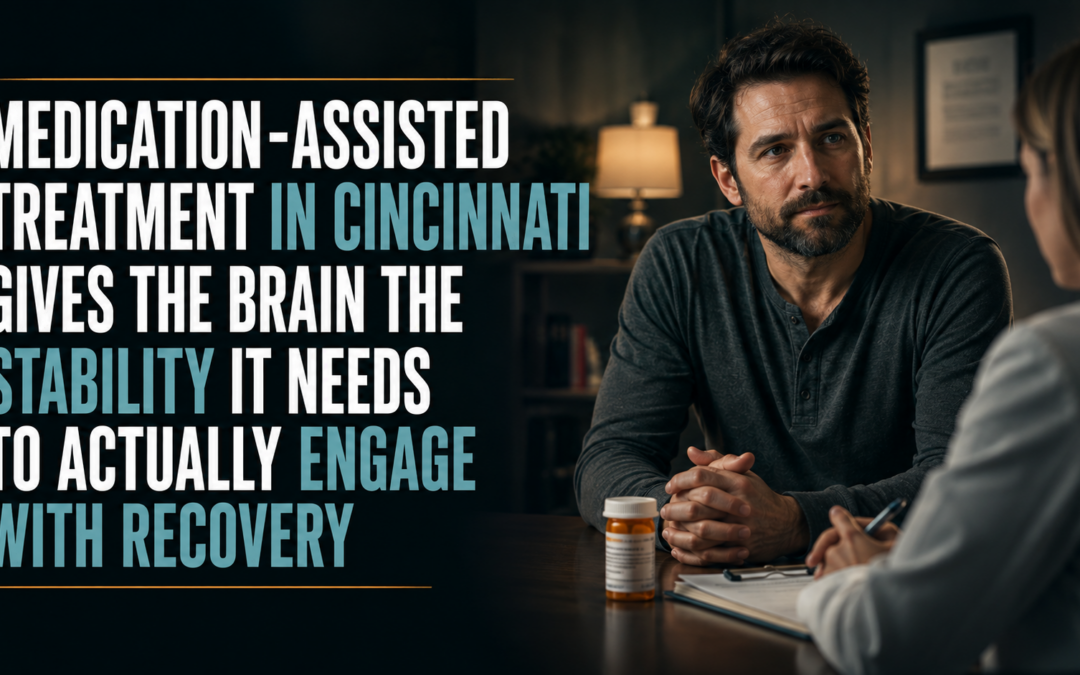
Medication-Assisted Treatment in Cincinnati gives the brain the stability it needs to actually engage with recovery, quieting the constant pull of cravings so a person can focus on healing. For many people, that steadiness is the difference between struggling to hold on and finally moving forward.
If you or someone you love has tried to recover through willpower alone and felt overwhelmed by cravings, you are not weak and you are not alone. Substance use changes the brain in real ways, and those changes do not simply disappear when a person decides to stop.
The hopeful truth is that recovery becomes far more possible when the brain has room to steady itself. Understanding how this kind of care works is a gentle first step toward lasting change.
What Is Medication-Assisted Treatment in Cincinnati and How Does It Work?
Medication-Assisted Treatment in Cincinnati is an evidence-based approach that combines FDA-approved medications with counseling and therapy to treat substance use disorders. It works by easing withdrawal, reducing cravings, and helping the brain function more normally during recovery.
The medications used are carefully prescribed and monitored by trained professionals. They are not a way to trade one substance for another. They are a clinical tool that supports healing.
Think of it like a cast on a broken bone. The cast does not do the healing itself, but it holds everything steady so the body can mend. Medication provides that same kind of stability while deeper recovery work takes place.
Why Does the Brain Need Stability First?
The brain needs stability first because substance use disrupts the chemistry that controls mood, reward, and self-control. Until that chemistry settles, the constant noise of cravings can drown out everything else.
When someone is caught in withdrawal or intense cravings, it is nearly impossible to focus on therapy. The brain is stuck in survival mode, fixated on relief.
Medication helps quiet that noise. Once the storm calms, a person can actually hear, absorb, and use the tools that lead to lasting recovery.
How Does Medication-Assisted Treatment Reduce Cravings?
Medication-Assisted Treatment reduces cravings by acting on the same brain systems that substance use affected, restoring balance without producing a harmful high. This allows a person to feel more like themselves again.
Cravings are not a matter of poor discipline. They are powerful physical and emotional signals rooted in changes to the brain.
What Happens When Cravings Take Over?
Cravings take over by pulling a person’s attention toward substance use again and again, no matter how badly they want to stop. This can feel exhausting and defeating.
Imagine trying to concentrate on an important task while a fire alarm keeps ringing. No amount of effort makes the noise easier to ignore.
That is what unmanaged cravings can feel like. Medication helps turn down that alarm, so a person can breathe, think, and begin to rebuild.
How Does Reduced Cravings Change the Recovery Experience?
Reduced cravings change the recovery experience by freeing up the mental and emotional energy that recovery truly requires. Instead of fighting urges all day, a person can invest in real growth.
With cravings eased, therapy becomes more meaningful. Relationships have room to heal, and daily life feels more manageable.
This shift often brings relief and renewed hope. Recovery starts to feel like something a person can actually sustain, not just survive.
How Does Stability Support Engagement in Therapy?
Stability supports engagement in therapy by giving the brain the calm it needs to focus, reflect, and learn new coping skills. Medication and counseling work best together, each strengthening the other.
Medication alone is not the full answer, and neither is therapy alone for many people. The combination is what makes this approach so effective.
Why Is Therapy So Important Alongside Medication?
Therapy is so important alongside medication because it addresses the deeper reasons behind substance use. Medication steadies the brain, and therapy helps a person understand and heal what led them there.
In counseling, a person can explore triggers, past pain, and the thought patterns that fuel substance use. Approaches like Cognitive Behavioral Therapy help reshape those patterns over time.
This deeper work is where lasting change takes root. Medication opens the door, and therapy helps a person walk through it with confidence.
How Do the Two Work Together?
The two work together by combining physical stability with emotional and psychological healing. One calms the body, and the other strengthens the mind.
Picture learning to swim while someone steadies you in the water. The support keeps you safe long enough to build real skill.
Medication provides that steadying support. Therapy teaches the skills that carry a person forward, so they can eventually navigate recovery on their own.
Who Is Medication-Assisted Treatment For?
Medication-Assisted Treatment is for people whose substance use, especially involving opioids or alcohol, has made stopping feel overwhelming or unsafe. It is often a strong fit for those who have tried other approaches without lasting relief.
You do not need to have reached a crisis point to consider this kind of care. Needing support to manage cravings is reason enough.
Who Benefits Most From This Approach?
People who benefit most from Medication-Assisted Treatment (MAT) are those who feel trapped by cravings and withdrawal despite a real desire to recover. This approach can offer the steadiness they have been missing.
Medication-Assisted Treatment may be a good fit if any of these feel true:
- Cravings or withdrawal have made it nearly impossible to stay sober
- Previous attempts at recovery have not held, despite genuine effort
- Substance use involves opioids or alcohol, where medication can be especially helpful
- You feel ready to engage in therapy but keep getting pulled back by physical urges
- You want a whole-person approach that supports both body and mind
If several of these resonate, that is a meaningful sign that Medication-Assisted Treatment could help. A caring assessment can bring clarity about what fits best.
How Does Detox Connect to This Kind of Care?
Detox connects to this care by providing a safe first step before ongoing treatment begins. For many people, clearing substances from the body safely is where recovery starts.
At the Robert Alexander Center for Recovery, medical detox offers supervised support through withdrawal, easing discomfort and keeping a person stable. From there, medication and therapy can continue the work with a steadier foundation.
This smooth transition matters. Pairing detox with ongoing care helps protect early progress and keeps recovery moving forward.
What Levels of Care Are Available Near Cincinnati?
Levels of care near Cincinnati range from immersive residential support to flexible outpatient options, depending on how much structure a person needs. The right choice depends on individual symptoms, safety, and daily life.
The Robert Alexander Center for Recovery, within reach of the greater Cincinnati area, offers a full continuum of care so support can shift as a person grows stronger.
Many people find that outpatient care pairs naturally with medication support, allowing them to receive treatment while staying connected to work, family, and daily responsibilities. As stability grows, care can adapt to meet each person where they are.
How Do You Decide When to Seek Help?
You decide to seek help when substance use feels hard to control, or when cravings keep pulling you back despite your best efforts. You never have to wait for a crisis to deserve care.
Consider reaching out if any of these feel true:
- Cravings or withdrawal symptoms make staying sober feel impossible on your own
- You have tried to stop before, but the physical pull kept bringing you back
- Substance use is affecting your health, relationships, work, or peace of mind
- You want to engage in recovery but feel overwhelmed by the urge to use
- A loved one has gently expressed concern about your substance use
If any of these resonate, that is reason enough to start a conversation with a caring professional. An honest assessment can bring clarity and help you understand which kind of support fits best, whether that is therapy, peer support, or Medication-Assisted Treatment (MAT).
Common Questions Families Often Ask
Is Medication-Assisted Treatment just replacing one drug with another?
No. The medications used are prescribed and closely monitored to stabilize brain chemistry, not to produce a high. They help a person function normally and engage in recovery, which is very different from continued substance use.
How long does someone stay on medication?
It varies from person to person. Some people benefit from shorter-term support, while others stay on medication longer as part of a lasting plan. A caring provider works with each person to find what fits their needs.
Does this approach really include therapy too?
Yes. Medication and therapy work together in this approach. Medication steadies the brain, while counseling addresses the deeper roots of substance use, giving a person the strongest foundation for recovery.
How soon can care begin?
Support can start soon after you reach out. Our admissions team is available to answer your questions, verify insurance, and guide you toward the next step with patience and care.
You Do Not Have to Do This on Willpower Alone
Medication-Assisted Treatment in Cincinnati gives the brain the stability it needs to actually engage with recovery, easing cravings so a person can focus on real, lasting healing. Recovery is not a test of willpower. It is a journey that becomes far more possible with the right support.
Healing takes time, and it takes courage. With compassionate care that treats both body and mind, the constant pull of substance use can begin to loosen its grip.
If you or someone you love is struggling to find steady footing in recovery, please reach out to the Robert Alexander Center for Recovery today. Our caring team is ready to listen, answer your questions, and help you take the next step toward steadier, more hopeful days ahead. You are not alone, and help is here whenever you are ready.