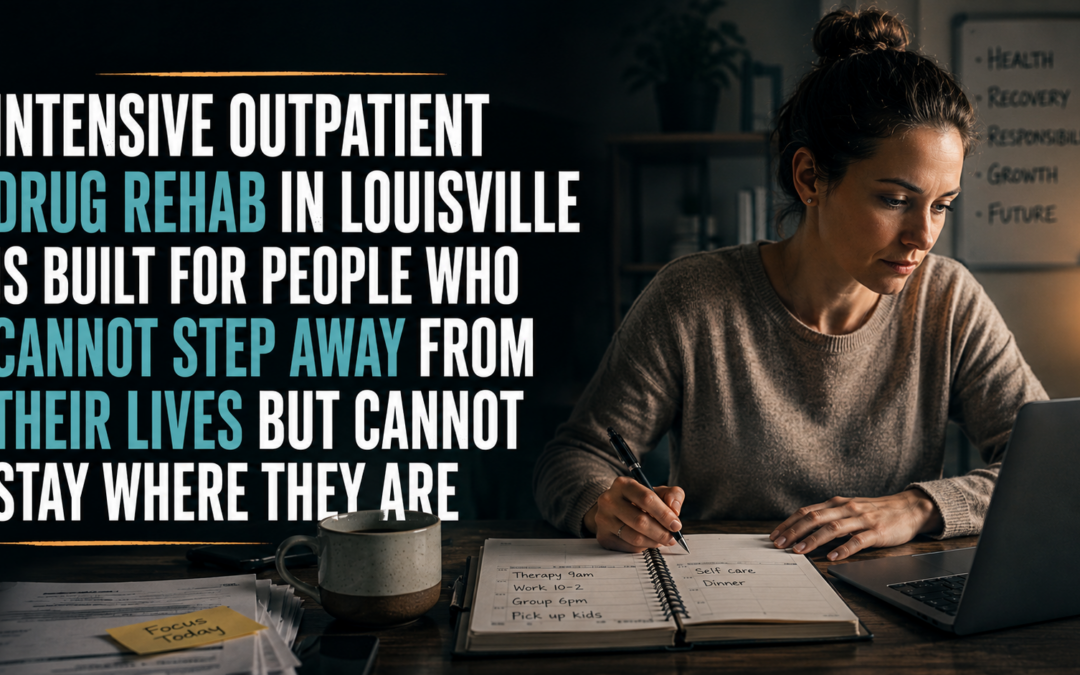
Intensive outpatient drug rehab in Louisville is built for people who cannot step away from their lives yet know they cannot keep living the way they have been. It offers real, structured treatment while you continue to work, care for your family, and sleep in your own bed each night.
If you or someone you love feels stuck between needing serious help and being unable to disappear from daily responsibilities, you are not alone. Many people reach this exact point, unsure how to move forward.
The hopeful truth is that you do not have to choose between getting meaningful care and keeping your life intact. Understanding how this level of care works is a gentle first step toward steadier days ahead.
What Is Intensive Outpatient Drug Rehab in Louisville and Who Is It For?
Intensive outpatient drug rehab in Louisville is a structured treatment program where a person attends several hours of therapy each week while continuing to live at home. It offers focused, serious care without requiring an overnight stay.
Most programs meet a few days a week, often for a few hours each session. That schedule provides steady support while leaving room for work, school, or family life.
Think of it like scaffolding around a building under repair. The structure holds things steady while the deeper work happens, then eases away as strength returns.
Who Benefits Most From This Level of Care?
People who benefit most are those who need more than a weekly appointment but do not require round-the-clock supervision. It suits someone stable enough to live at home yet still in need of frequent, meaningful support.
This level of care often fits a person stepping down from residential treatment. It also helps someone whose daily responsibilities make a full-time program impossible.
You do not need to be in crisis to qualify. Needing consistent, structured support is reason enough to consider this path.
How Does Intensive Outpatient Care Fit Into Real Life?
Intensive outpatient care fits into real life by shaping treatment around your existing responsibilities instead of asking you to abandon them. Sessions are often scheduled during parts of the day that leave room for work, caregiving, or school.
For many people in Louisville, stepping away completely is simply not an option. Bills still need paying, children still need parents, and jobs still need doing.
This level of care respects those realities. It delivers the depth of treatment recovery requires while keeping you connected to the life you are working to protect.
Why Do Some People Need to Keep Their Daily Routines?
Some people need to keep their daily routines because their responsibilities cannot pause, and stepping away would create more harm than help. A single parent may not be able to leave children for weeks. A sole provider may not be able to leave a job.
For these situations, a live-in program may not fit the moment, even when the need for care is real. Intensive outpatient rehab offers a way to receive serious treatment without walking away from what matters most.
Keeping your routine can also strengthen recovery. Practicing new skills in your everyday world helps them take root where you actually live.
How Does Intensive Outpatient Rehab Help You Balance Recovery and Responsibilities?
Intensive outpatient rehab helps you balance recovery and responsibilities by letting you apply what you learn in treatment to real life the same day. You practice a coping tool in a session, then use it that evening at home or work.
This constant practice is what makes the skills stick. Instead of learning in isolation, you build recovery where it matters most.
How Does Going Home Each Night Support Healing?
Going home each night supports healing by giving you a chance to test new skills in real situations while still receiving steady guidance. You learn a strategy in the morning, then have a chance to use it that same day.
This builds confidence over time. Real progress happens when new tools meet real stress, real relationships, and real triggers.
Returning home also keeps you connected to loved ones. That connection can be a powerful source of comfort and motivation throughout recovery.
How Does Accountability Keep You on Track?
Accountability keeps you on track by offering regular points of connection and gentle responsibility. When a caring team and a group expect you, showing up becomes part of who you are.
This kind of accountability comes from support, not judgment. Nobody is grading you or waiting to catch a mistake.
Instead, people notice your progress, welcome your honesty, and celebrate your steadiness. Over time, that presence helps you show up for yourself.
What Does Treatment Actually Include?
Treatment in intensive outpatient care includes a blend of individual therapy, group sessions, and evidence-based approaches tailored to each person. Together, these address both substance use and the feelings underneath it.
Care is personalized, never one-size-fits-all. A strong plan reflects your history, your goals, and the challenges you face day to day.
Common parts of the program include:
- Individual therapy to explore personal triggers and build practical coping skills
- Group sessions that offer connection, shared understanding, and encouragement
- Cognitive Behavioral Therapy, which helps you reshape the thought patterns driving substance use
- Relapse prevention planning that prepares you for real-life challenges
- Education about addiction and recovery in clear, approachable terms
Each piece works toward the same goal. The aim is to help you feel steadier, more supported, and better equipped for daily life.
How Does It Support Mental Health Too?
Intensive outpatient care supports mental health by treating the whole person, not just the substance use. Many people face both challenges at once, and this level of care is built to address them together.
Mental health struggles and substance use often feed into each other. Treating only one while ignoring the other leaves gaps where setbacks can grow.
Our mental health treatment programs are designed to care for these connected struggles side by side. When your team understands the full picture, your support becomes far more effective.
How Does It Fit Into the Larger Recovery Journey?
Intensive outpatient care fits into the larger journey as a bridge between higher levels of care and full independence. It carries earlier progress into steady, everyday practice.
For many people, this level of care follows detox, residential treatment, or partial hospitalization. It keeps momentum going without a sudden drop in support.
As you grow stronger, care can ease into lighter outpatient support. The goal is always to meet you exactly where you are.
How Does Staying in Louisville Help Your Recovery?
Staying in Louisville helps your recovery by keeping you close to the people, work, and community that give your life meaning. You heal within your own environment rather than stepping fully outside it.
The Robert Alexander Center for Recovery sits a short drive from Louisville in Mount Washington. That location keeps care accessible while letting you stay connected to home.
This closeness matters. Recovery feels more sustainable when it happens alongside the relationships and routines you are working to strengthen, not apart from them.
How Do You Decide When to Seek Help?
You decide to seek help when substance use feels hard to manage on your own, or when your current level of support no longer feels like enough. You never have to wait for a crisis to deserve care.
Consider reaching out if any of these feel true:
- Weekly appointments are not keeping your cravings or symptoms under control
- You need structure and accountability but cannot commit to a full-time program
- You are stepping down from residential care and want to keep your progress steady
- Substance use is affecting your work, relationships, or sense of self
- A loved one has gently expressed concern about how you are doing
If any of these resonate, that is reason enough to start a conversation with a caring professional. An honest assessment can help you understand what is happening and which level of care fits best.
Common Questions Families Often Ask
How many hours a week does intensive outpatient care require?
Most programs involve several hours of treatment across a few days each week. The exact schedule varies by program and by your needs, and a caring team will help you find a rhythm that works.
Can I keep working or caring for my family?
In many cases, yes. This level of care is designed to fit around daily responsibilities, which is one of its greatest strengths. Many people arrange sessions around work, school, or family life.
Is intensive outpatient care effective on its own?
It can be, especially for people with a stable home and a strong commitment to recovery. It is also highly effective as a step down from higher levels of care, helping progress hold steady over time.
How soon can care begin?
Support can start soon after you reach out. Our admissions team is available to answer your questions, verify insurance, and guide you toward the next step with patience and care.
You Do Not Have to Choose Between Your Life and Your Recovery
Intensive outpatient drug rehab in Louisville is built for people who cannot step away from their lives but cannot stay where they are, offering real treatment that fits around the responsibilities you cannot set aside. Recovery does not have to mean leaving everything behind. It can grow right alongside the life you are working to protect.
Recovery is a journey, and you were never meant to walk it alone. With compassionate support and a level of care matched to your life, steadier and more hopeful days are within reach.
If you or someone you love is ready to build a recovery that fits real life, please reach out to the Robert Alexander Center for Recovery today. Our caring team is ready to listen, answer your questions, and help you take the next step toward steadier, more hopeful days ahead. You are not alone, and help is here whenever you are ready.