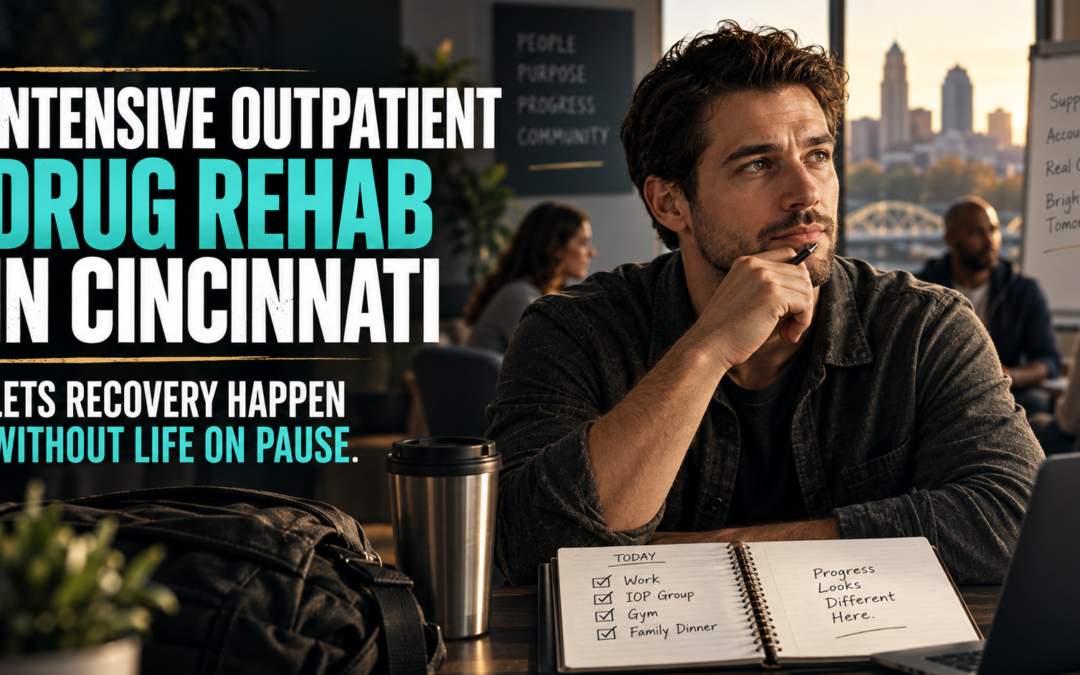
Intensive outpatient drug rehab in Cincinnati is the level of care that lets recovery happen without asking you to walk away from the life you have built. You can keep working, caring for family, and meeting daily responsibilities while still receiving serious, structured treatment.
If you or someone you love has held back from getting help because life simply cannot stop, you are not alone. That worry is real, and it keeps many people stuck for far too long.
The hopeful truth is that recovery does not always require pressing pause on everything you love. Understanding how this level of care works is a gentle first step toward steadier days ahead.
What Is Intensive Outpatient Drug Rehab in Cincinnati?
Intensive outpatient drug rehab in Cincinnati is a structured treatment program where a person attends several hours of therapy each week while continuing to live at home. It offers focused, meaningful care without requiring an overnight stay or a long absence from daily life.
Most programs meet a few days a week, often for a few hours at a time. That schedule delivers real support while leaving room for work, family, or school.
Think of it as scaffolding around a building under repair. The structure holds everything steady while the deeper work happens, then eases away as strength returns.
How Is It Different From Standard Outpatient Care?
Intensive outpatient care offers more hours, more structure, and more support each week than standard outpatient care. It sits a clear step above a single weekly appointment.
Standard outpatient care usually involves one or two sessions a week. That works well for people who feel stable and need lighter, ongoing support.
Intensive outpatient care fills a bigger gap. It provides frequent, focused treatment while you practice recovery in your own daily environment.
Who Is Intensive Outpatient Treatment For?
Intensive outpatient treatment is for people who need more than a weekly session but do not require round-the-clock care. It suits those who are stable enough to live at home yet still need consistent, structured support.
You do not need to be in crisis to qualify. Needing steady, meaningful help is reason enough to consider this path.
Who Benefits Most From This Level of Care?
People who benefit most have a stable home environment and responsibilities they cannot easily set aside. The structure works best when you have a safe place to return to each night.
This level of care may be a strong fit if any of these feel true:
- You need to keep working, studying, or caring for family while receiving treatment
- Weekly appointments no longer feel like enough to keep you steady
- You are stepping down from residential care and want to protect your progress
- Your home life is supportive and mostly free from constant triggers
- You want real accountability while building independence
If several of these resonate, that is a meaningful sign this path could help. A caring assessment can bring clarity about what fits best.
How Does It Balance Daily Responsibilities With Structured Care?
Intensive outpatient care balances daily life and treatment by scheduling sessions around the hours you need for work, family, and rest. You receive focused clinical support without stepping away from the people and roles that matter to you.
This balance is one of the greatest strengths of the model. Recovery becomes something you build into your real life, not something you pause your life to pursue.
Why Does Staying in Your Daily Life Help Recovery?
Staying in your daily life helps because you practice new skills where they matter most, in real situations, right away. You learn a coping tool in a session, then use it that same evening at home or work.
Picture learning to swim in the water you actually swim in, rather than a separate pool. The skills transfer directly, with no gap to cross later.
This steady, real-world practice builds lasting confidence. Instead of learning in isolation, you strengthen recovery in the exact places you live it.
How Does Structure Protect Your Progress in Cincinnati?
Structure protects your progress by giving each week a dependable rhythm you can count on. Regular sessions create anchors that keep recovery front and center even as ordinary life pulls at your attention.
For many people in and around Cincinnati, this rhythm makes the difference between drifting and staying steady. Life speeds back up quickly, and structure keeps you grounded.
That predictable cadence also builds accountability. When a caring team and a group expect you each week, showing up becomes part of who you are.
What Does Treatment Actually Include?
Treatment in intensive outpatient care blends individual therapy, group sessions, and evidence-based approaches tailored to you. Together, these address both substance use and the feelings underneath it.
Care is personalized, never one-size-fits-all. A strong plan reflects your history, your goals, and the challenges you face day to day.
Common parts of the program include:
- Individual therapy to explore personal triggers and build practical coping skills
- Group sessions that offer connection, shared understanding, and encouragement
- Cognitive Behavioral Therapy, which helps you reshape the thought patterns driving substance use
- Relapse prevention planning that prepares you for real-life challenges
- Education about addiction and recovery in clear, approachable terms
Each piece works toward the same goal. The aim is to help you feel steadier, more supported, and better equipped for daily life.
How Does It Support Mental Health Too?
Intensive outpatient care supports mental health by treating the whole person, not just the substance use. Many people face both challenges at once, and this level of care is built to address them together.
Mental health struggles and substance use often feed into each other. Treating only one while overlooking the other leaves gaps where setbacks can grow.
Our mental health treatment programs are designed to care for these connected struggles side by side. When your team understands the full picture, your support becomes far more effective.
How Does It Fit Into the Bigger Recovery Journey?
Intensive outpatient care fits into the bigger journey as a bridge between higher levels of care and full independence. It carries earlier progress into steady, everyday practice.
For many people, this level of care follows detox, residential treatment, or partial hospitalization. It keeps momentum going without a sudden drop in support.
As you grow stronger, care can ease into lighter outpatient support. The goal is always to meet you exactly where you are.
How Do You Decide When to Seek Help?
You decide to seek help when substance use feels hard to manage on your own, or when your current level of care no longer feels like enough. You never have to wait for a crisis to deserve stronger support.
Consider reaching out if any of these feel true:
- Weekly appointments are not keeping your cravings or symptoms under control
- You need structure and accountability but cannot commit to a full-time program
- You are stepping down from residential care and want to keep your progress steady
- Substance use is affecting your work, relationships, or sense of self
- A loved one has gently expressed concern about how you are doing
If any of these resonate, that is reason enough to start a conversation with a caring professional. An honest assessment can help you understand what is happening and which level of care fits best.
Common Questions Families Often Ask
How many hours a week does intensive outpatient care require?
Most programs involve several hours of treatment across a few days each week. The exact schedule varies by program and by your needs, and a caring team will help you find a rhythm that works.
Can I keep working or going to school?
In many cases, yes. This level of care is designed to fit around daily responsibilities, which is one of its greatest strengths. Many people arrange sessions around work, classes, or family life.
Is intensive outpatient care effective on its own?
It can be, especially for people with a stable home and a strong commitment to recovery. It also works well as a step down from higher levels of care, helping progress hold steady over time.
How soon can care begin?
Support can start soon after you reach out. Our admissions team is available to answer your questions, verify insurance, and guide you toward the next step with patience and care.
You Do Not Have to Put Your Life on Hold to Heal
Intensive outpatient drug rehab in Cincinnati is the level of care that lets recovery happen without putting life on pause, offering real, structured support that fits around the responsibilities you carry. Recovery does not have to mean stepping away from everything you love. It can mean building steadiness right in the middle of your daily life.
Recovery is a journey, and you were never meant to walk it alone. With compassionate support and care matched to your life, steadier days are within reach.
If you or someone you love needs more than weekly care but cannot leave daily life behind, please reach out to the Robert Alexander Center for Recovery today. Our caring team is ready to listen, answer your questions, and help you take the next step toward steadier, more hopeful days ahead. You are not alone, and help is here whenever you are ready.