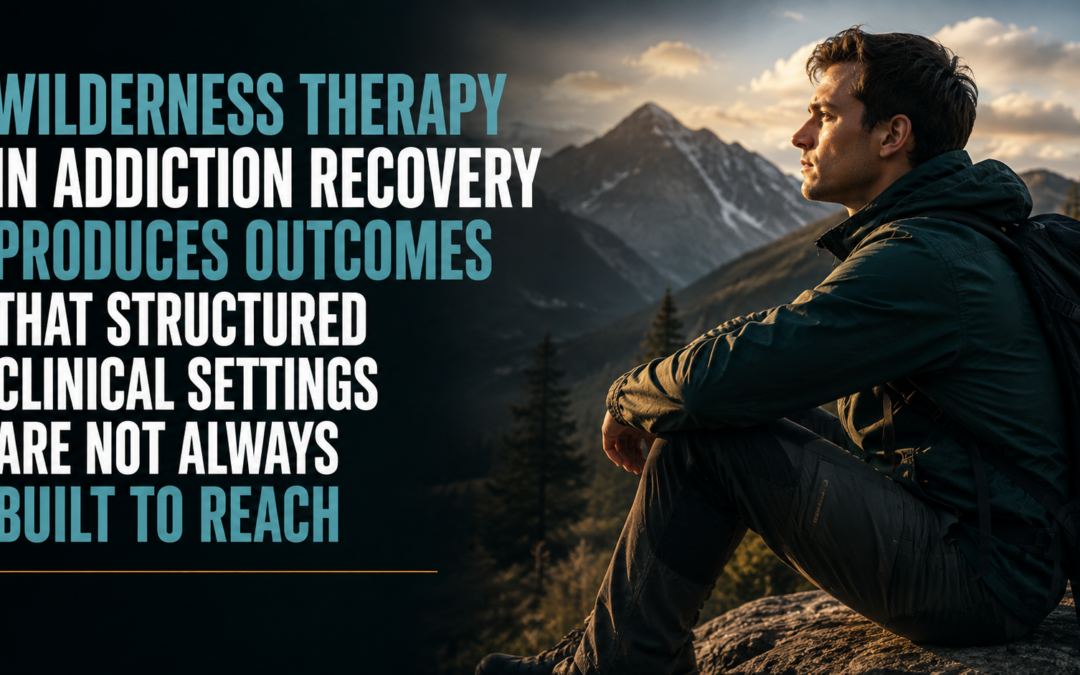
Wilderness therapy in addiction recovery reaches parts of a person that four walls and scheduled sessions sometimes cannot, using nature, movement, and shared experience to spark change from the inside out. For some people, healing deepens when it happens outdoors, away from the noise of daily life.
If you or someone you love has tried traditional treatment and felt like something was still missing, you are not imagining it. Different people connect with recovery in different ways.
The hopeful truth is that healing is not one-size-fits-all. Understanding what wilderness therapy offers, and how it works alongside clinical care, is a gentle first step toward finding an approach that fits.
What Is Wilderness Therapy in Addiction Recovery?
Wilderness therapy in addiction recovery is an experiential approach that combines outdoor activities, physical challenge, and therapeutic guidance to support healing from substance use. It moves treatment out of a clinic and into nature, where lessons are learned through doing rather than only talking.
This is not a wilderness survival trip or a punishment. It is a structured, clinically informed approach led by trained professionals who weave therapy into outdoor experiences.
Think of it like learning to swim by gently entering the water with a skilled guide, rather than only reading about it in a book. The learning becomes real because you live it.
How Is It Different From Traditional Treatment?
Wilderness therapy differs from traditional treatment by making the experience itself part of the healing, not just the conversation about it. Instead of sitting in a room describing challenges, a person faces real ones and works through them with support.
In a clinical setting, insight often comes through discussion. In the outdoors, insight can come through action, like completing a hike or working as part of a group.
Both approaches have real value. The difference is that wilderness therapy engages the body and the environment, reaching people who learn and heal through experience.
Why Do Experiential Approaches Reach What Clinical Settings Sometimes Cannot?
Experiential approaches reach what clinical settings sometimes cannot because they engage the whole person, not just the thinking mind. When a person is physically active and fully present, defenses often soften and new lessons take root more deeply.
Talking through a problem is powerful, but some people struggle to open up in a formal office. Movement, nature, and shared challenge can lower those barriers in ways words alone do not.
How Does Being Outdoors Support Healing?
Being outdoors supports healing by calming the nervous system and offering a break from the triggers of everyday life. Natural settings can lower stress, steady the mind, and create space for reflection.
For many people, the constant reminders of daily life keep them in a cycle of stress and coping. Stepping into a quiet, natural environment interrupts that pattern.
This calm is not just pleasant. A settled nervous system makes it easier to face hard emotions and absorb the deeper work of recovery.
Why Does Experience Stick When Words Sometimes Do Not?
Experience sticks because doing something builds confidence and memory in a way that hearing about it rarely matches. When a person accomplishes a real task, they carry proof that they are capable.
Picture the difference between being told you are resilient and actually pushing through a demanding hike. The second one becomes a lived truth you can return to.
These earned moments often translate directly into recovery. The persistence practiced on a trail can become the persistence used in a craving or a hard day.
Who Might Wilderness Therapy Help?
Wilderness therapy might help people who feel stuck in traditional treatment or who connect more naturally with hands-on, active approaches. It can reach those who find it hard to open up in a standard clinical setting.
This approach is not right for everyone, and that is okay. The best care fits the person, not the other way around.
Who Tends to Benefit From This Approach?
People who tend to benefit are those who learn by doing, feel drawn to nature, or need a fresh setting to break old patterns. It can also help those carrying stress that eases in calmer surroundings.
Wilderness therapy may be worth exploring if any of these feel true:
- You or a loved one has felt disconnected or restless in traditional talk-based treatment
- You process emotions more easily through movement or activity than through conversation alone
- Everyday surroundings feel full of triggers that make focus difficult
- You respond well to challenge, accomplishment, and being part of a supportive group
- You are seeking an approach that complements clinical care rather than replacing it
If several of these resonate, that is a meaningful sign this approach could add value. A caring assessment can help you understand what fits best.
Is It a Replacement for Clinical Care?
Wilderness therapy is not a replacement for clinical care, and it works best as one part of a broader treatment plan. Substance use is complex, and lasting recovery usually calls for more than a single approach.
Experiential work can open doors and build confidence, but it does not address every layer of addiction on its own. Medical support, therapy, and structure remain essential.
The strongest results tend to come when experiential and clinical approaches support each other. Each one reaches what the other may miss.
How Does Wilderness Therapy Fit With Clinical Treatment?
Wilderness therapy fits with clinical treatment as a complement that deepens and reinforces the work done in more structured settings. It adds experiential learning to the proven tools of professional care.
A thoughtful recovery plan often blends several approaches, choosing what fits each person at each stage. Experiential work can strengthen that plan rather than compete with it.
How Do the Two Approaches Strengthen Each Other?
The two approaches strengthen each other by pairing insight with action. Clinical therapy helps a person understand their patterns, while experiential work lets them practice new responses in real time.
For example, a person might explore a trigger in individual therapy, then build resilience and confidence through an outdoor challenge. The lessons reinforce one another.
Our mental health treatment programs are built to care for the whole person, so different approaches can work together. When substance use and mental health receive attention side by side, recovery gains a stronger foundation.
What Clinical Foundations Still Matter Most?
The clinical foundations that matter most include medical support, evidence-based therapy, and steady structure that keep recovery safe and grounded. These pieces protect a person through every stage.
For many people, residential inpatient treatment provides the immersive, supportive environment early recovery often needs. It offers around-the-clock care and a break from daily triggers.
Experiential approaches can enrich that care, but they rest on this clinical base. The two together offer both depth and safety.
How Do You Decide When to Seek Help?
You decide to seek help when substance use feels hard to manage on your own, or when you sense that a different approach might reach what earlier efforts did not. You never have to wait for a crisis to deserve care.
Consider reaching out if any of these feel true:
- Substance use is affecting your health, relationships, work, or peace of mind
- Traditional treatment has helped some, but you feel something is still missing
- You or a loved one connects more with active, hands-on approaches to healing
- You want a recovery plan shaped around how you actually learn and grow
- A loved one has gently expressed concern about your substance use
If any of these resonate, that is reason enough to start a conversation with a caring professional. An honest assessment can help you understand what is happening and which approach fits best.
Common Questions Families Often Ask
Is wilderness therapy safe?
When led by trained professionals, experiential approaches are designed with safety in mind at every step. A qualified team plans activities around each person’s ability, health, and comfort, and clinical support remains part of the process.
Can wilderness therapy work on its own?
It works best as part of a fuller treatment plan, not as a standalone solution. Lasting recovery usually combines medical care, therapy, structure, and experiential work, so each element reinforces the others.
How do I know if this approach fits my loved one?
Consider how they learn and connect. People who respond to activity, nature, and hands-on challenge often find experiential approaches meaningful. A caring assessment can help clarify whether it belongs in their plan.
How soon can care begin?
Support can start soon after you reach out. Our admissions team is available to answer your questions, verify insurance, and guide you toward the next step with patience and care.
You Do Not Have to Find the Right Path Alone
Wilderness therapy in addiction recovery can reach outcomes that structured clinical settings are not always built to reach, offering healing through experience, nature, and genuine connection. It is not a magic fix or a replacement for proven care. It is one meaningful piece of a fuller, more personal approach.
Recovery is a journey, and you were never meant to walk it alone. With compassionate support and a plan shaped around who you are, steadier days are within reach.
If you or someone you love is looking for an approach to recovery that fits, please reach out to the Robert Alexander Center for Recovery today. Our caring team is ready to listen, answer your questions, and help you take the next step toward steadier, more hopeful days ahead. You are not alone, and help is here whenever you are ready.