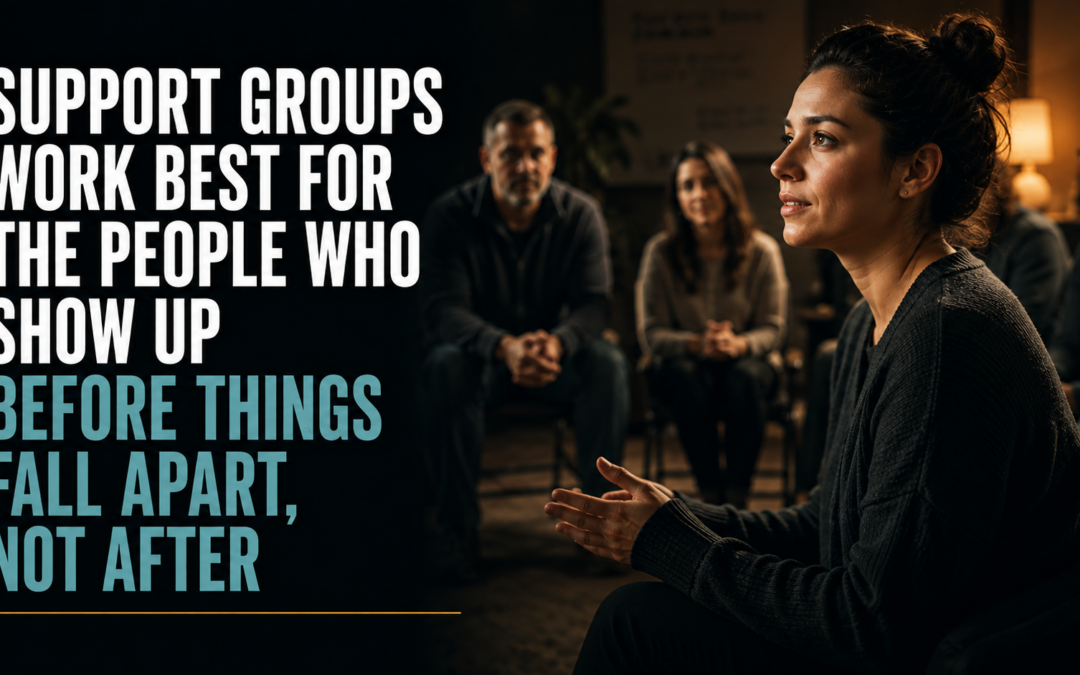
Support groups work best for the people who show up before things fall apart, not after a crisis has already taken hold and left them scrambling for help. Too many people treat these gatherings like an emergency exit, reaching for them only when a craving spikes or everything starts to unravel.
If that sounds familiar, you are not doing anything wrong. It makes sense to seek help when things feel hardest.
The trouble is that recovery does not only happen in a crisis. Real, lasting change tends to grow in the quiet, ordinary weeks, and showing up consistently is what makes the difference over time.
Why Do Support Groups Work Best Before a Crisis, Not After?
Support groups work best before a crisis because recovery is built through steady connection, not last-minute rescue. Showing up regularly, even when life feels calm, keeps you tied to the people and tools that help you stay well.
When you attend only after things have fallen apart, you often arrive already overwhelmed. You are reacting to a fire rather than tending the space so fires stay smaller and rarer.
Think of it like watering a plant. Steady, regular care keeps it healthy, while waiting until the leaves wilt makes recovery far harder. Consistency protects you long before you feel you need protection.
What Happens When You Only Show Up in a Crisis?
Showing up only in a crisis often means you meet your support group as a stranger, right when you most need familiarity. You have missed the shared stories, quiet understanding, and trust that build week after week.
It also reinforces a hidden belief that you can handle recovery alone until things break down. That belief can leave you isolated in the very moments connection matters most.
Crisis-only attendance is not a failure. It is simply a signal that a steadier rhythm could offer more comfort and protection.
How Does Consistency Build Accountability?
Consistency builds accountability by turning support into something expected rather than optional. When your group knows you will be there each week, and you know they are counting on you, showing up becomes part of who you are.
Accountability here is not about pressure or judgment. It is about being seen by people who understand what you are working toward.
Why Does Being Expected Matter So Much?
Being expected matters because it gently pulls you forward on days when motivation runs low. On a hard morning, knowing that familiar faces are saving a seat for you can be the small nudge that gets you there.
This kind of accountability works because it comes from care, not control. Nobody is grading you or waiting to catch a slip.
Over time, that steady noticing becomes a quiet form of strength. You begin to show up for yourself the way others show up for you.
How Does Showing Up Early Create a Sense of Belonging?
Showing up early creates belonging because trust and closeness grow through repeated, shared experience. The more often you attend, the more the group shifts from a room of strangers into a community that truly knows you.
Belonging is one of the most protective forces in recovery. Feeling genuinely connected reduces the isolation that so often fuels substance use and mental health struggles.
What Does Belonging Actually Feel Like?
Belonging feels like walking into a room where you do not have to explain yourself. People already know your story, your progress, and your setbacks, and they hold all of it with care.
This safety takes time to build. You cannot rush trust into existence in a single hard week.
When you attend consistently, you become part of the fabric of the group. You start remembering others’ milestones, and they start remembering yours, and that shared history becomes something worth protecting.
How Do Support Groups Fit Into Aftercare?
Support groups fit into aftercare as a steady thread that connects everything else you are doing to stay well. They reinforce the skills learned in treatment and offer ongoing connection long after a formal program ends.
Recovery does not stop when treatment does. In many ways, the real work of building a sustainable life begins in the months that follow, and structure is what holds that work together.
Why Are Support Groups So Important After Treatment?
Support groups are so important after treatment because they help you carry your progress into everyday life. The structure of a program provides safety, and regular groups help you keep that steadiness once you return to your usual routine.
A strong aftercare plan often includes regular group attendance for exactly this reason. It gives you a dependable place to process challenges, celebrate wins, and stay accountable as life speeds back up.
Without that ongoing connection, it is easy to drift. Support groups offer a gentle anchor that keeps you tethered to your goals.
How Do Groups Work Alongside Ongoing Care?
Groups work alongside ongoing care by adding a layer of peer connection that professional treatment cannot provide on its own. They complement therapy, medication support, and clinical care rather than replacing any of them.
For many people, support groups pair naturally with outpatient treatment, where structured sessions and peer meetings reinforce each other. One offers clinical guidance, and the other offers shared understanding.
Together, they create a fuller safety net. When one strand feels weak, the others help hold you steady.
How Do You Turn Support Groups Into a Steady Habit?
You turn support groups into a steady habit by anchoring them to a fixed time and treating them as nonnegotiable, the same way you would a doctor’s appointment. Consistency comes from structure, not willpower alone.
Small, practical steps make this far easier to sustain over time.
Here are a few ways to build the habit:
- Choose a regular meeting time and protect it on your calendar every single week.
- Pair attendance with something you already do, such as a meal or your drive home from work.
- Find one or two people in the group you can check in with between meetings.
- Notice how you feel after each session, and let that feeling reinforce the routine.
- Give yourself grace if you miss a week, then return without shame the following week.
The goal is not perfection. The goal is rhythm, so that support becomes a natural part of your life rather than a last resort.
When Should You Seek Additional Treatment?
You should seek additional treatment when support groups alone no longer feel like enough to keep you steady. Groups are powerful, but they are one part of a larger picture, not a replacement for clinical care.
Consider reaching out for more support if any of these feel true:
- Cravings, urges, or thoughts of using have grown stronger or more frequent.
- Your mental health symptoms are deepening despite regular group attendance.
- You have returned to substance use, or you feel a relapse building.
- Daily responsibilities like work, relationships, or self-care are slipping.
- You feel isolated, hopeless, or unsure how to move forward on your own.
If any of these resonate, that is not a sign of failure. It is a sign that a higher level of care could give you the steadier foundation you deserve.
Common Questions People Ask About Support Groups
How often should I attend a support group?
Aim for a consistent weekly rhythm, even during calm stretches. Regular attendance builds the trust, accountability, and belonging that make groups so protective over time.
What if I feel like I do not need it that week?
Those are often the best weeks to attend. Showing up when things feel steady strengthens the habit and deepens your connection, so support is already in place when harder days arrive.
Can support groups replace therapy or treatment?
No, and they are not meant to. Support groups work best alongside professional care, adding peer connection to the clinical tools that address the deeper roots of recovery.
What if I relapse or miss several weeks?
Come back as soon as you can, without shame. A caring group welcomes returns, and our admissions team can help if you feel you need additional support.
You Do Not Have to Wait for Things to Fall Apart
Support groups work best for the people who show up before things fall apart, because steady connection quietly protects your progress long before any crisis appears. Showing up consistently is not about doing recovery perfectly. It is about staying tied to the people and practices that help you feel whole.
Recovery is a journey, and you were never meant to walk it alone. With steady support and the right care, the ordinary weeks become the foundation that carries you through the difficult ones.
If you or someone you love is working toward recovery and could use more support, please reach out to the Robert Alexander Center for Recovery today. Our compassionate team is ready to listen, answer your questions, and help you take the next step toward steadier, more hopeful days ahead. You are not alone, and help is here whenever you are ready.