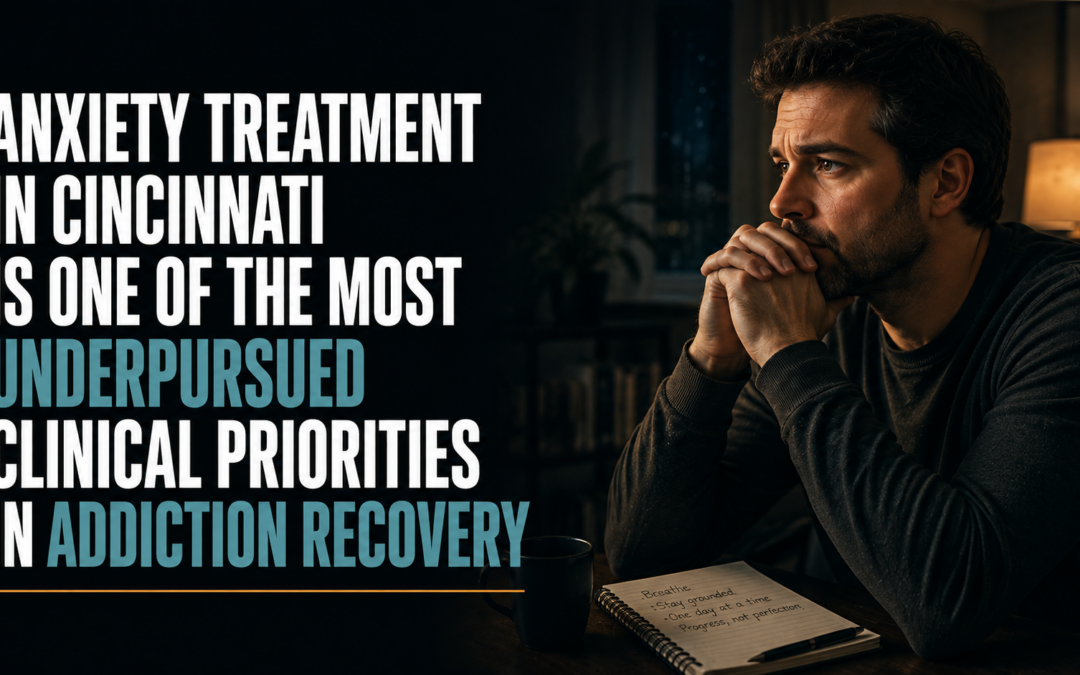
Anxiety treatment in Cincinnati is one of the most overlooked priorities in addiction recovery, even though anxiety quietly fuels so much of what makes staying sober hard. Many people focus on the substance itself and never realize that the racing thoughts underneath were part of the story all along.
If you or someone you love has worked hard at recovery only to feel a constant undercurrent of worry, you are not failing. That worry may be a piece of the puzzle that never got the attention it deserved.
The hopeful truth is that anxiety responds well to care, especially when it is treated alongside substance use. Understanding why it so often gets missed is a gentle first step toward steadier days.
What Is Anxiety Treatment in Cincinnati and Why Is It So Often Overlooked?
Anxiety treatment in Cincinnati is focused clinical care that helps a person manage persistent worry, fear, and physical tension, especially when it appears alongside substance use. It is often overlooked because anxiety hides behind the more visible signs of addiction.
When someone enters recovery, the substance use tends to demand all the attention. The drinking or drug use is obvious, while anxiety works quietly in the background.
Think of anxiety like the roots of a weed. The part above ground gets pulled, but if the roots stay, the problem keeps returning. Treating anxiety reaches those roots.
Why Does Anxiety Get Lost in the Focus on Substances?
Anxiety gets lost because substance use produces clearer, more urgent consequences that naturally take priority. A missed workday or a health scare feels concrete, while chronic worry can seem like just a personality trait.
Many people have lived with anxiety for so long that it feels normal. They may not even name it as a problem worth mentioning.
That silence lets anxiety slip past unnoticed. A recovery plan that skips it leaves a powerful trigger fully intact.
How Does Untreated Anxiety Drive Relapse Risk?
Untreated anxiety drives relapse risk because it keeps a person in a state of distress that substances once seemed to relieve. When worry stays high, the pull toward old coping habits grows stronger.
For many people, drinking or using started as a way to quiet an overactive mind. If that mind is still racing in recovery, the temptation to return to what worked before can feel intense.
Why Do Substances Feel Like Relief for Anxiety?
Substances feel like relief because they briefly quiet the physical and mental symptoms of anxiety. For a short time, the tension eases and the worry fades into the background.
That relief is real, which is exactly what makes it so risky. The brain remembers the shortcut and reaches for it again under stress.
The trouble is that this calm never lasts. As substances wear off, anxiety often returns even stronger, and the cycle tightens with each round.
How Does This Cycle Sabotage Recovery?
This cycle sabotages recovery by leaving the true driver of substance use untouched. A person can complete treatment, stay sober for a while, and still feel the old pressure building.
Without tools to manage anxiety, that pressure has nowhere to go. Over time, it can quietly wear down even the strongest resolve.
This is why treating both together matters so much. Care that addresses anxiety and substance use side by side closes the gap where relapse tends to grow.
What Symptoms of Anxiety Should Families Watch For?
Families should watch for signs of anxiety that show up in the body, the mind, and everyday behavior, not just obvious worry. Anxiety rarely announces itself clearly, and it often looks like irritability or restlessness instead.
You do not need proof of a diagnosis to start a caring conversation. Noticing a pattern is reason enough to pay closer attention.
Common signs worth noticing include:
- Constant worry or a sense of dread that is hard to shake
- Trouble sleeping, or a racing mind that will not quiet at night
- Irritability, restlessness, or feeling on edge much of the time
- Physical symptoms like a racing heart, tension, or an upset stomach
- Avoiding people, places, or situations that feel overwhelming
Noticing one sign now and then is part of life. Noticing several together, especially during recovery, is a strong signal to reach out for guidance.
How Is Everyday Stress Different From an Anxiety Disorder?
The difference is that an anxiety disorder persists, feels out of proportion, and interferes with daily life. Everyday stress usually eases once a situation resolves.
Anxiety that rises to a clinical level tends to linger regardless of circumstances. It can make ordinary tasks feel heavy and steady calm feel out of reach.
Trusting your instinct matters here. If the worry feels constant and larger than the moment calls for, a caring professional can bring clarity.
What Does Integrated Anxiety and Addiction Treatment Include?
Integrated treatment includes caring for anxiety and substance use together, within one coordinated plan and one supportive team. Nothing gets set aside or treated as less important.
This approach looks at the whole person, not just a checklist of symptoms. It considers your history, your daily life, and the goals that matter most to you.
Most integrated plans blend several proven approaches:
- Individual therapy to explore the roots of both the anxiety and the substance use
- Cognitive Behavioral Therapy, which helps you notice and gently reshape the thought patterns that fuel worry
- Medication support when appropriate, guided by a caring prescriber who monitors how you feel
- Grounding and relaxation skills that calm the body when anxiety rises
- Group support that reminds you others understand and you are not alone
Each piece works toward the same goal. The aim is to help you feel steadier, calmer, and more in control of your own life.
How Does Care Address the Whole Person?
Care addresses the whole person by treating your experiences as connected rather than separate. Your team shares information and adjusts your plan as you grow.
Our mental health treatment programs are built around this idea, so anxiety and substance use receive attention side by side instead of in isolation. That coordination helps you feel understood as a full person, not a diagnosis.
When both struggles get real care, recovery has a far stronger foundation to stand on.
What Levels of Care Are Available Near Cincinnati?
Levels of care range from immersive residential support to flexible outpatient options, depending on how much structure you need right now. The right choice depends on your symptoms and your daily life.
The Robert Alexander Center for Recovery, within reach of the greater Cincinnati area, offers residential inpatient care for those who need a safe, focused environment, along with outpatient care for people building recovery alongside work and family responsibilities.
As you grow steadier, care can shift with you. Support is meant to meet you exactly where you are.
How Do You Decide When to Seek Help?
You decide to seek help when anxiety feels constant, overwhelming, or tangled up with substance use. You never have to wait for a crisis to deserve care.
Consider reaching out if any of these feel true:
- Worry or dread follows you through most of your day
- You use alcohol or drugs to quiet a racing mind or calm your nerves
- Anxiety is disrupting your sleep, focus, work, or relationships
- Recovery feels harder because the underlying tension never fully eases
- A loved one has gently expressed concern about your stress or your patterns
If any of these resonate, that is reason enough to start a conversation with a caring professional. An honest assessment can bring clarity and help you understand which kind of support fits best.
Common Questions Families Often Ask
Can anxiety really make relapse more likely?
Yes. Untreated anxiety is a common relapse trigger, because substances often served as a way to quiet worry. When anxiety receives care, that trigger loses much of its power.
Should we treat the anxiety or the substance use first?
Both, at the same time. Integrated treatment addresses anxiety and substance use together, since progress in one area supports progress in the other.
Does treating anxiety always mean medication?
Not always. Some people benefit from medication alongside therapy, while others find relief mainly through counseling, skills, and steady support. A caring provider helps you weigh what fits your situation.
How soon can care begin?
Support can start soon after you reach out. Our admissions team is available to answer your questions, verify insurance, and guide you toward the next step with patience and care.
You Do Not Have to Carry This Worry Alone
Anxiety treatment in Cincinnati deserves to be a real priority in addiction recovery, because the worry underneath so often shapes how hard staying well can feel. Naming that anxiety is not a setback. It is a brave, honest step toward lasting steadiness.
Recovery is possible, and reaching out is a hopeful act of courage. With compassionate care that treats both anxiety and substance use, the tension you have carried can begin to ease.
If you or someone you love is struggling with anxiety alongside recovery, please reach out to the Robert Alexander Center for Recovery today. Our caring team is ready to listen, answer your questions, and help you take the next step toward steadier, more hopeful days ahead. You are not alone, and help is here whenever you are ready.