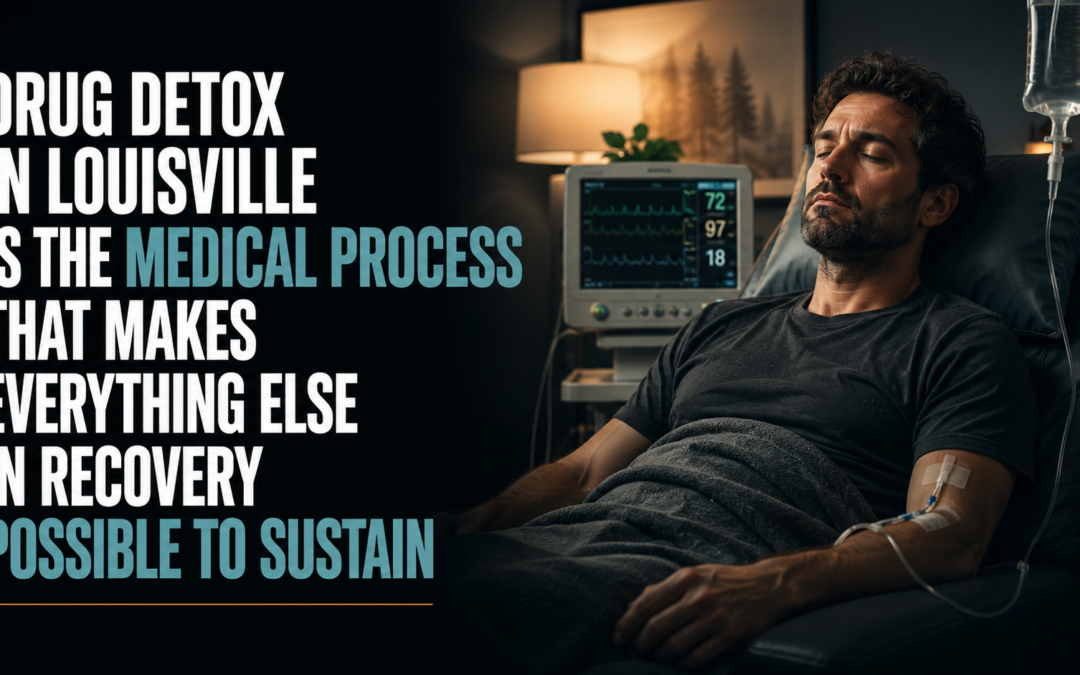
Drug detox in Louisville is the medical process that clears substances from the body safely, and it lays the foundation that every later part of recovery depends on. Without a steady start, the deeper work of healing has nothing solid to stand on.
If you or someone you love is thinking about getting help, you may feel scared, uncertain, or unsure where to begin. That is completely understandable, and you are not alone in it.
The hopeful truth is that detox does not have to be something you face by sheer force of will. With professional care, it can be safer, more comfortable, and far more likely to lead somewhere lasting. Understanding what detox really is, and why it matters so much, is a gentle first step toward steadier days.
What Is Drug Detox in Louisville and Why Is It a Medical Process?
Drug detox in Louisville is the medically supervised process of clearing drugs or alcohol from the body while managing withdrawal symptoms safely. It is a medical process because withdrawal affects the whole body, not just the mind, and those changes need real oversight.
When a person uses substances regularly, the body adapts to their presence. Stopping suddenly leaves the body scrambling to rebalance, and that adjustment produces withdrawal.
Think of it like a thermostat that has been reset over time. Change the setting too quickly, and the whole system reacts. Medical detox eases that reset in a way the body can handle.
Why Does Withdrawal Need Medical Oversight?
Withdrawal needs medical oversight because it can affect the heart, brain, and other vital systems in ways that shift quickly. What feels like mild discomfort one hour can become serious the next.
Trained staff know what to watch for and how to respond. They can track vital signs, ease symptoms, and step in fast if something changes.
This level of attention is hard to recreate at home. A supervised setting keeps help close, which turns an unpredictable process into a far safer one.
Why Does Detox Make Everything Else in Recovery Possible?
Detox makes everything else in recovery possible because it creates a stable, clear-minded starting point for the healing work ahead. Therapy, skill-building, and lasting change all require a body and brain that are no longer in crisis.
Trying to do the emotional work of recovery while still in withdrawal is like trying to build on shifting ground. The foundation has to come first.
How Does Detox Prepare the Mind for Real Work?
Detox prepares the mind by giving the brain space to steady itself after substance use. Once withdrawal settles, focus, memory, and emotional balance begin to return.
During active use and early withdrawal, the brain is often overwhelmed. Concentrating on therapy or absorbing new coping skills feels nearly impossible.
After detox, that fog begins to lift. A clearer mind can finally engage with the deeper reasons behind substance use, which is where lasting change takes root.
Why Is a Smooth Transition So Important?
A smooth transition is important because getting through detox safely means a person can move directly into ongoing care without a dangerous gap. That seamless flow protects early progress.
When detox stands alone, the risk of returning to substance use rises quickly. The body may be clear, but the deeper patterns remain untouched.
Pairing detox with continued treatment, such as residential inpatient care, gives recovery a far stronger foundation. Detox opens the door, and ongoing care helps a person walk through it.
What Are the Risks of Detoxing Alone?
The risks of detoxing alone include severe withdrawal symptoms, medical complications, and a high chance of returning to substance use. Without support, the process can feel overwhelming and unsafe.
Many people who try to detox at home mean well. They simply do not realize how demanding and unpredictable withdrawal can be.
What Physical Dangers Can Arise?
Physical dangers can arise because certain withdrawals, especially from alcohol and some sedatives, can trigger seizures or dangerous changes in the body. These reactions can appear suddenly and need immediate medical attention.
Even withdrawals that are not life-threatening can bring intense nausea, dehydration, and exhaustion. These symptoms wear a person down fast.
Without monitoring, warning signs can go unnoticed until they become emergencies. Supervised care removes that risk by keeping help close at hand.
Why Does Detoxing Alone Often Lead Back to Substance Use?
Detoxing alone often leads back to substance use because the discomfort of withdrawal can feel unbearable without support. In a moment of intense distress, using again may seem like the only way to make the pain stop.
This is not a sign of failure or weakness. It is a predictable response to a body under real strain.
A supervised program eases symptoms and surrounds a person with encouragement. That combination makes it far easier to move through withdrawal without turning back.
What Does Supervised Detox in Louisville Include?
Supervised detox in Louisville includes a calm, caring environment where trained staff help a person manage withdrawal safely and comfortably. The goal is to keep someone stable while the body adjusts.
Every person’s experience is a little different, shaped by the substance involved, the length of use, and overall health. Care is personalized, never one-size-fits-all.
What Happens When You First Arrive?
When you first arrive, a caring team completes a thorough assessment of your health, history, and needs. This helps them build a plan tailored to your situation.
You will settle into a safe, supportive space designed for comfort and rest. Staff will explain what to expect and answer your questions with patience.
This early stage is about easing fear and beginning to stabilize. From the very first moment, the focus is on helping you feel secure.
What Does Daily Care Look Like?
Daily care during detox usually includes regular check-ins, symptom management, and gentle support around the clock. Staff monitor how a person feels and adjust care as the body changes.
Common parts of supervised detox include:
- Regular monitoring of vital signs and overall comfort
- Medication support to ease withdrawal symptoms when appropriate
- Access to medical staff at any hour, day or night
- A quiet, restful environment that supports healing
- Encouragement and reassurance from a compassionate team
Each part works toward the same goal. The aim is to help a person feel safe, steady, and ready for the next step in recovery.
How Long Does Detox Usually Take?
Detox usually takes several days to a week, though the exact length depends on the substance and the person. Some withdrawals ease within a few days, while others take longer to settle.
Your care team will guide you through the timeline and help you know what to expect. They understand that uncertainty can feel unsettling.
Once the body has stabilized, a person is ready to move into ongoing treatment. Detox opens the door, and continued care carries them forward.
When Should You Seek Immediate Help?
You should seek immediate help when withdrawal symptoms become severe, frightening, or hard to manage on your own. Some symptoms signal a medical emergency and cannot safely wait.
Reach out for urgent care right away if you or a loved one experiences any of these:
- Seizures, confusion, or a sudden change in awareness
- A racing heart, chest pain, or trouble breathing
- Severe vomiting, dehydration, or inability to keep fluids down
- Intense agitation, hallucinations, or a loss of touch with reality
- Thoughts of harming yourself or feeling that life is not worth living
If any of these appear, please treat it as an emergency and call for medical help. These are not signs to push through alone.
Common Questions Families Often Ask
Is it ever safe to detox at home?
It can be risky, especially with alcohol or sedatives, where withdrawal can turn dangerous quickly. A professional assessment is the safest way to know what level of care you truly need.
Will detox be painful?
Withdrawal can be uncomfortable, but medical detox is designed to ease that discomfort as much as possible. Staff use medication and steady support to help you feel safer and more at ease.
Is detox enough on its own?
No, detox is only the first step. Lasting recovery usually requires continued care that addresses the deeper roots of substance use, which is why detox flows directly into ongoing treatment.
How soon can care begin?
Support can start soon after you reach out. Our admissions team is available to answer your questions, verify insurance, and guide you toward the next step with patience and care.
You Do Not Have to Take This First Step Alone
Drug detox in Louisville is the medical process that makes everything else in recovery possible to sustain, giving the body and mind a safe, steady place to begin. It is not the whole journey, but it is the foundation the rest of your healing can rest on.
Recovery is possible, and reaching out is a brave, hopeful step. With compassionate medical support, the hardest part of starting over can become far more manageable.
If you or someone you love is ready to begin recovery safely, please reach out to the Robert Alexander Center for Recovery today. Our caring team is ready to listen, answer your questions, and help you take the next step toward steadier, more hopeful days ahead. You are not alone, and help is here whenever you are ready.