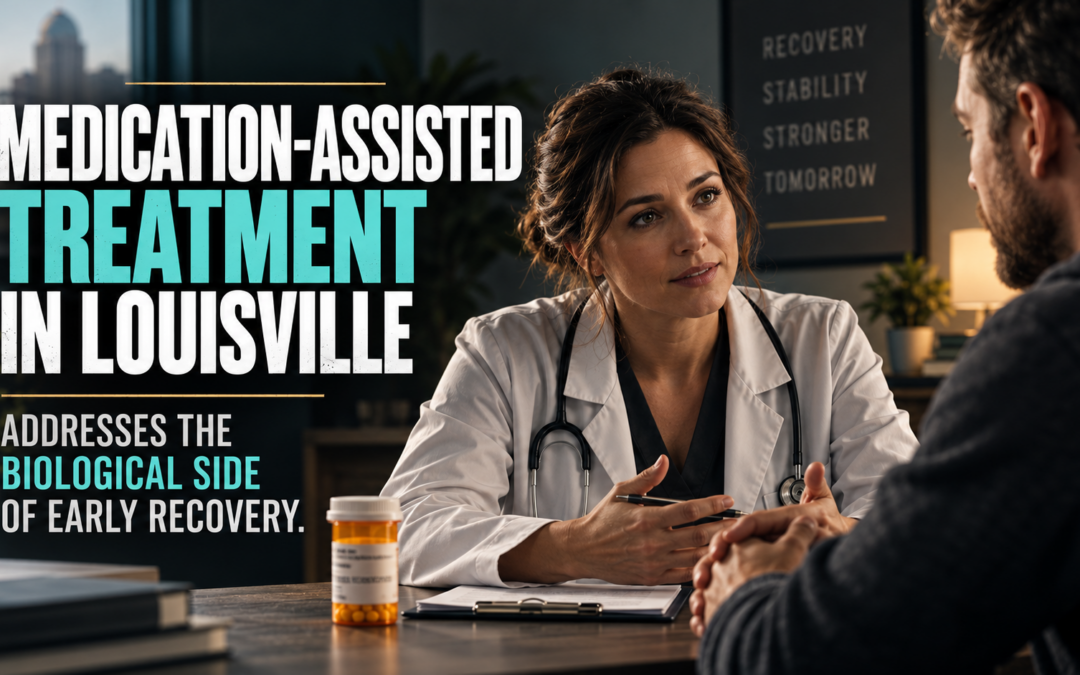
Medication-assisted treatment in Louisville works because it addresses the biological side of addiction, the very part that makes the first weeks of recovery so physically and mentally demanding. When the body is fighting withdrawal and cravings, willpower alone rarely feels like enough, and it should not have to be.
If you or someone you love has tried to get sober only to feel overwhelmed by symptoms that never seemed to ease, you are not weak and you are not failing. Early recovery asks a great deal of the body.
The hopeful truth is that recovery becomes far more manageable when the biology gets the support it needs. Understanding how this kind of care works is a gentle first step toward steadier days ahead.
What Is Medication-Assisted Treatment in Louisville and How Does It Work?
Medication-assisted treatment in Louisville is an evidence-based approach that combines FDA-approved medications with counseling and therapy to treat substance use disorders. It works by easing withdrawal symptoms and reducing cravings, so a person can focus on the deeper work of recovery.
The medications used in this approach are carefully prescribed and monitored by trained medical providers. They help restore balance to a brain and body thrown off course by substance use.
Think of it like a cast on a broken bone. The cast does not do the healing itself, but it holds everything steady so the body can mend. Medication offers that same kind of support while recovery takes hold.
Why Does the Body Struggle So Much in Early Recovery?
The body struggles in early recovery because addiction changes how the brain manages stress, reward, and basic function. These changes do not vanish the moment a person stops using, which is why the first weeks can feel so demanding.
During active use, the body adapts to the presence of a substance. When that substance is removed, the body scrambles to rebalance, producing withdrawal and intense cravings.
This is not a failure of character. It is a physical process, and physical processes respond to medical support.
Why Does the Biological Component of Addiction Matter So Much?
The biological component matters because addiction is not only a matter of choice or habit. It reshapes the brain and body in ways that make quitting far harder than most people expect.
For many years, addiction was treated as a moral failing. We now understand it as a health condition that affects real, physical systems.
How Does Substance Use Change the Brain and Body?
Substance use changes the brain and body by rewiring the systems that control mood, motivation, and physical comfort. Over time, the body begins to rely on the substance simply to feel normal.
This is why stopping brings such discomfort. The body has adjusted to a new baseline, and returning to balance takes time.
Picture a thermostat that has been reset over months of use. Change the setting suddenly, and the whole system reacts. Medication eases that reset in a way the body can handle.
Why Isn’t Willpower Enough on Its Own?
Willpower is not enough on its own because it cannot fully override the physical drive that addiction creates. A person can want recovery deeply and still be overwhelmed by cravings and withdrawal.
Imagine trying to hold your breath through sheer determination. At some point, biology takes over no matter how strong your intentions are.
Cravings can work in a similar way. Medication-assisted treatment quiets that biological pull, so a person’s genuine effort finally has room to succeed.
How Does Medication-Assisted Treatment Reduce Cravings and Withdrawal?
Medication-assisted treatment reduces cravings and withdrawal by acting on the same brain systems affected by substance use, but in a safe and controlled way. This eases the powerful urges and physical distress that so often lead back to use.
Cravings and withdrawal are not signs of weakness. They are physical responses from a body trying to return to a familiar state.
What Happens When Withdrawal Is Not Managed?
When withdrawal is not managed, the discomfort can become so intense that using again feels like the only relief. Many hopeful attempts to quit unravel in exactly these moments.
Withdrawal can bring nausea, aches, anxiety, sleeplessness, and relentless cravings. Facing all of that alone is exhausting and, at times, unsafe.
Medication softens these symptoms. With the worst of the discomfort eased, a person can stay the course instead of turning back.
How Does Easing Cravings Support Real Progress?
Easing cravings supports progress by freeing up the mental and emotional energy that recovery requires. When the constant urge to use fades, a person can pour that energy into healing.
Therapy becomes more productive. New coping skills stick more easily. Everyday moments feel more manageable.
This is why medication and counseling work so well together. One steadies the body, and the other helps rebuild the life around it.
How Does It Fit With Therapy and Ongoing Treatment?
Medication-assisted treatment works best when combined with therapy, counseling, and ongoing support, never as a standalone solution. Medication steadies the biology, while therapy addresses the roots of substance use.
This combination treats the whole person, not just the physical side of addiction. Both parts reinforce each other, creating a stronger foundation for lasting change.
Why Is Therapy So Important Alongside Medication?
Therapy is important because medication eases cravings, but it does not resolve the thoughts, patterns, and pain beneath substance use. Real healing addresses both the body and the mind.
Most treatment plans blend several proven approaches:
- Individual therapy to explore personal triggers and build practical coping skills
- Group sessions that offer connection, understanding, and encouragement
- Cognitive Behavioral Therapy, which helps a person reshape the thought patterns driving substance use
- Attention to daily structure, including sleep, stress, and healthy routines
Each piece works toward the same goal. The aim is to help a person feel steadier, more supported, and more in control of their own life.
How Does It Support Mental Health Too?
Medication-assisted treatment supports mental health by creating the stability needed to address anxiety, depression, or trauma alongside substance use. Many people face more than one struggle at the same time.
When cravings quiet down, there is finally room to focus on emotional healing. Underlying conditions can receive the attention they deserve.
Our mental health treatment programs are designed to care for these connected struggles together. When your team understands the full picture, your support becomes far more effective.
What Levels of Care Are Available Near Louisville?
Levels of care range from immersive residential support to flexible outpatient options, depending on how much structure a person needs right now. The right choice depends on individual needs and daily life.
The Robert Alexander Center for Recovery, a short drive from Louisville in Mount Washington, offers residential inpatient care for those who need a safe, focused environment, along with outpatient care for people building recovery alongside work and family responsibilities.
As a person grows steadier, care can shift with them. Support is meant to meet each individual exactly where they are.
How Do You Decide When to Seek Help?
You decide to seek help when substance use feels hard to control, or when cravings and withdrawal keep pulling you back despite real effort. You never have to wait for a crisis to deserve care.
Consider reaching out if any of these feel true:
- You have tried to stop using but cravings keep overwhelming your best intentions.
- Withdrawal symptoms make quitting feel impossible on your own.
- Substance use is affecting your health, relationships, work, or peace of mind.
- You want a recovery approach that gives your body real, steady support.
- A loved one has gently expressed concern about your substance use.
If any of these resonate, that is reason enough to start a conversation with a caring professional. An honest assessment can bring clarity and help you understand which kind of support fits best.
Common Questions Families Often Ask
Is medication-assisted treatment safe?
Yes. The medications used are FDA-approved and prescribed by trained medical providers who monitor each person closely. Doses are carefully managed to support stability and safety throughout recovery.
Is this just replacing one drug with another?
No. The medications are taken under medical supervision at controlled doses that stabilize the body rather than produce a high. There is an important difference between therapeutic, monitored support and active addiction.
How long does someone stay on medication?
The length varies from person to person, and there is no single right answer. Some people benefit from shorter-term support, while others stay on medication longer, always guided by a caring medical team.
How soon can care begin?
Support can start soon after you reach out. Our admissions team is available to answer your questions, verify insurance, and guide you toward the next step with patience and care.
You Do Not Have to Fight Your Body Alone
Medication-assisted treatment in Louisville works because it addresses the biological component that makes early recovery so physiologically demanding, easing cravings and withdrawal so a person can focus on healing. This approach is not a shortcut or a substitute. It is a proven, compassionate tool that helps recovery take hold.
Recovery is possible, and reaching out is a brave, hopeful step. With medical support, therapy, and steady guidance, the hardest weeks can become far more manageable and steadier days can return.
If you or someone you love is struggling with substance use, please reach out to the Robert Alexander Center for Recovery today. Our caring team is ready to listen, answer your questions, and help you take the next step toward steadier, more hopeful days ahead. You are not alone, and help is here whenever you are ready.