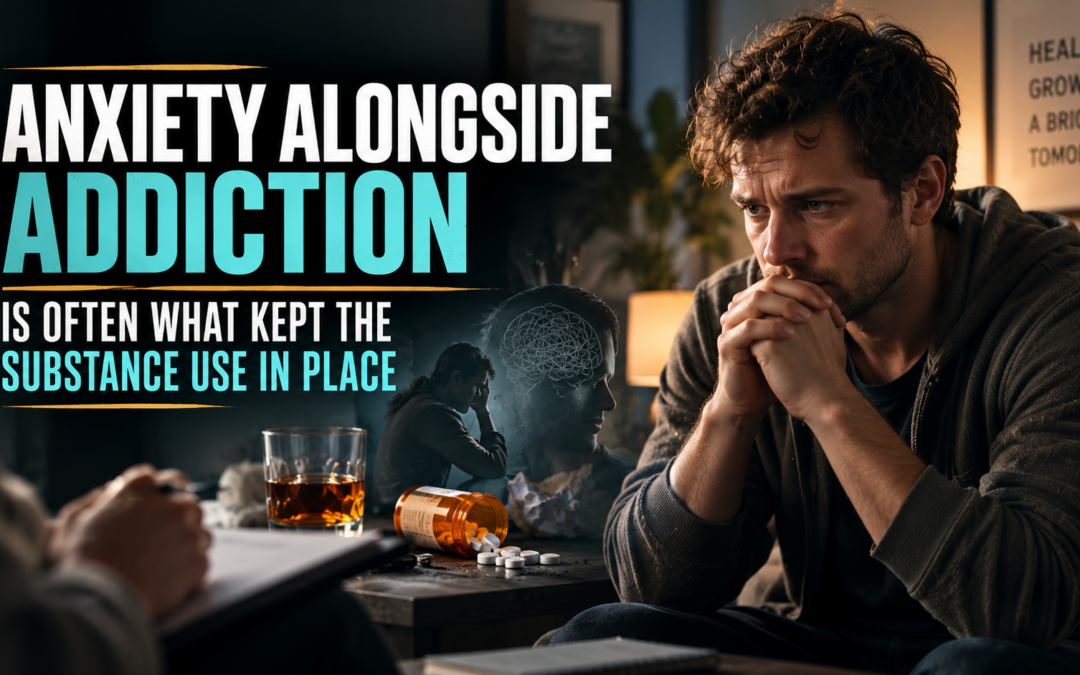
Anxiety running alongside addiction is often the quiet reason substance use stays firmly in place long after every other motivation has faded away. A person may no longer chase a high or feel the pull of old habits, yet the substance remains because it still calms a mind that will not settle.
If you or someone you love has wondered why recovery feels so hard even when the desire to use seems gone, you are not failing. Something deeper may be holding the pattern together.
The hopeful truth is that anxiety responds well to care, especially when it is treated alongside substance use. Understanding how these two struggles keep each other alive is a gentle first step toward steadier days ahead.
What Does Anxiety Running Alongside Addiction Actually Mean?
Anxiety running alongside addiction means a person is living with persistent worry or fear at the same time as a substance use disorder, with each condition shaping the other. The two become woven together, so tightly that separating them can feel impossible without help.
Anxiety is more than everyday stress. It is ongoing worry, tension, or dread that can affect sleep, focus, and the ability to feel at ease.
Think of it like two vines growing up the same fence. Over time they wrap around each other so completely that pulling one loose without addressing the other rarely works. Treating both together is what finally loosens the grip.
Why Does Anxiety Keep Substance Use in Place?
Anxiety keeps substance use in place because the substance often becomes the main tool a person relies on to quiet their worry. Even when other reasons for using fade, that one job remains.
Many people first turned to alcohol or drugs to ease a racing mind or a constant sense of unease. That relief felt real, which is exactly what made it so hard to let go.
Over time, the substance stops being about pleasure and starts being about survival from moment to moment. When the anxiety never gets treated, the reason to keep using never fully disappears.
How Does Anxiety Outlast Every Other Reason for Using?
Anxiety outlasts other reasons for using because it addresses a need that does not go away on its own. Curiosity fades, social pressure eases, and old routines change, but untreated anxiety stays.
This is why so many people feel confused in early recovery. They no longer want the substance, yet they still reach for it when worry rises.
What Happens When the Original Reasons Fade?
When the original reasons fade, the substance often takes on a single, powerful role as a way to manage anxiety. Everything else falls away, and this one function keeps the pattern alive.
Picture a coat you first wore for warmth on a cold day. Long after the cold passes, you keep wearing it out of habit and comfort, because taking it off feels exposing.
For someone with anxiety, the substance becomes that coat. Setting it aside can feel like facing the world with no protection at all.
Why Does This Make Recovery So Confusing?
This makes recovery confusing because a person can want sobriety deeply and still feel pulled back by anxiety they cannot name. The struggle no longer looks like classic craving.
Instead, it shows up as tension, restlessness, or a sense that something is wrong. Using seems like the only way to make that feeling stop.
Recognizing anxiety as the missing piece can bring real relief. It means the struggle is not weakness. It is an untreated condition that deserves care.
Why Does Integrated Treatment Matter So Much?
Integrated treatment matters because caring for anxiety and substance use together closes the gap where relapse tends to grow. Treating only one while ignoring the other leaves the deeper driver untouched.
For years, some programs focused on substance use alone. That approach often left people stuck, still carrying the worry that started the cycle in the first place.
What Happens When Only the Addiction Is Treated?
When only the addiction is treated, the anxiety usually remains and quietly pulls a person back toward using. The tools may be in place, but the pressure underneath never eases.
Imagine draining a flooded room without fixing the leak. You can work hard and still watch the water return.
That is what single-focus treatment often feels like. Progress happens, then anxiety builds until using again feels like the only relief. Treating both at once changes that outcome.
How Does Integrated Care Treat the Whole Person?
Integrated care treats the whole person by addressing anxiety and substance use as one connected experience rather than two separate problems. Your care team shares information and adjusts your plan as you grow.
Our mental health treatment programs are built around this idea, so worry and substance use receive attention side by side. That coordination helps you feel understood as a full person, not a diagnosis.
When both struggles get real care, recovery has a far stronger foundation to stand on.
What Symptoms Should Families Watch For?
Families should watch for signs of anxiety that appear in the body, the mind, and everyday behavior, not just obvious worry. Anxiety often hides behind irritability or restlessness rather than announcing itself clearly.
You do not need proof of a diagnosis to start a caring conversation. Noticing a pattern is reason enough to pay closer attention.
Common signs worth noticing include:
- Constant worry or a sense of dread that is hard to shake
- Trouble sleeping, or a mind that races and will not quiet at night
- Irritability, restlessness, or feeling on edge much of the time
- Physical symptoms like a racing heart, tension, or an upset stomach
- Reaching for alcohol or drugs whenever stress or worry rises
Noticing one sign now and then is part of life. Noticing several together, especially alongside substance use, is a strong signal to reach out for guidance.
How Is Everyday Stress Different From an Anxiety Disorder?
The difference is that an anxiety disorder persists, feels out of proportion, and interferes with daily life. Everyday stress usually eases once a situation resolves.
Anxiety that rises to a clinical level tends to linger no matter the circumstances. It can make ordinary tasks feel heavy and steady calm feel out of reach.
Trusting your instinct matters here. If the worry feels constant and larger than the moment calls for, a caring professional can bring clarity.
What Does Treatment for Anxiety and Addiction Include?
Treatment includes caring for anxiety and substance use together, within one coordinated plan and one supportive team. Nothing gets set aside or treated as less important.
This approach looks at your history, your daily life, and the goals that matter most to you. Care is personalized, never one-size-fits-all.
Most integrated plans blend several proven approaches:
- Individual therapy to explore the roots of both the anxiety and the substance use
- Cognitive Behavioral Therapy, which helps you notice and gently reshape the thought patterns that fuel worry
- Medication support when appropriate, guided by a caring prescriber who monitors how you feel
- Grounding and relaxation skills that calm the body when anxiety rises
- Group support that reminds you others understand and you are not alone
Each piece works toward the same goal. The aim is to help you feel steadier, calmer, and more in control of your own life.
What Levels of Care Are Available?
Levels of care range from immersive residential support to flexible outpatient options, depending on how much structure you need right now. The right choice depends on your symptoms and your daily life.
For many people, outpatient care offers a way to treat anxiety and substance use while staying connected to work, family, and daily responsibilities. It provides real structure without asking you to step away from your life.
As you grow steadier, care can shift with you. Support is meant to meet you exactly where you are.
How Do You Decide When to Seek Help?
You decide to seek help when anxiety feels constant, overwhelming, or tangled up with substance use. You never have to wait for a crisis to deserve care.
Consider reaching out if any of these feel true:
- You keep using alcohol or drugs mainly to quiet worry or calm your nerves.
- The old reasons for using seem gone, yet the pattern still holds.
- Anxiety is disrupting your sleep, focus, work, or relationships.
- Recovery feels harder because the underlying tension never fully eases.
- A loved one has gently expressed concern about your stress or your patterns.
If any of these resonate, that is reason enough to start a conversation with a caring professional. An honest assessment can bring clarity and help you understand which kind of support fits best.
Common Questions Families Often Ask
Can anxiety really keep substance use going after the cravings fade?
Yes. When a substance has become a person’s main way to manage anxiety, that role can outlast every other reason for using. Treating the anxiety directly is what finally eases the pull.
Should we treat the anxiety or the substance use first?
Both, at the same time. Integrated treatment addresses anxiety and substance use together, since progress in one area supports progress in the other.
Does treating anxiety always mean medication?
Not always. Some people benefit from medication alongside therapy, while others find relief mainly through counseling, skills, and steady support. A caring provider helps you weigh what fits your situation.
How soon can care begin?
Support can start soon after you reach out. Our admissions team is available to answer your questions, verify insurance, and guide you toward the next step with patience and care.
You Do Not Have to Carry This Worry Alone
Anxiety running alongside addiction is often the condition that kept the substance use in place after every other reason had faded, which means naming that anxiety can change everything about recovery. Recognizing it is not a setback. It is a brave, honest step toward lasting steadiness.
Recovery is possible, and reaching out is a hopeful act of courage. With compassionate care that treats both anxiety and substance use, the tension you have carried can begin to ease.
If you or someone you love is struggling with anxiety alongside substance use, please reach out to the Robert Alexander Center for Recovery today. Our caring team is ready to listen, answer your questions, and help you take the next step toward steadier, more hopeful days ahead. You are not alone, and help is here whenever you are ready.