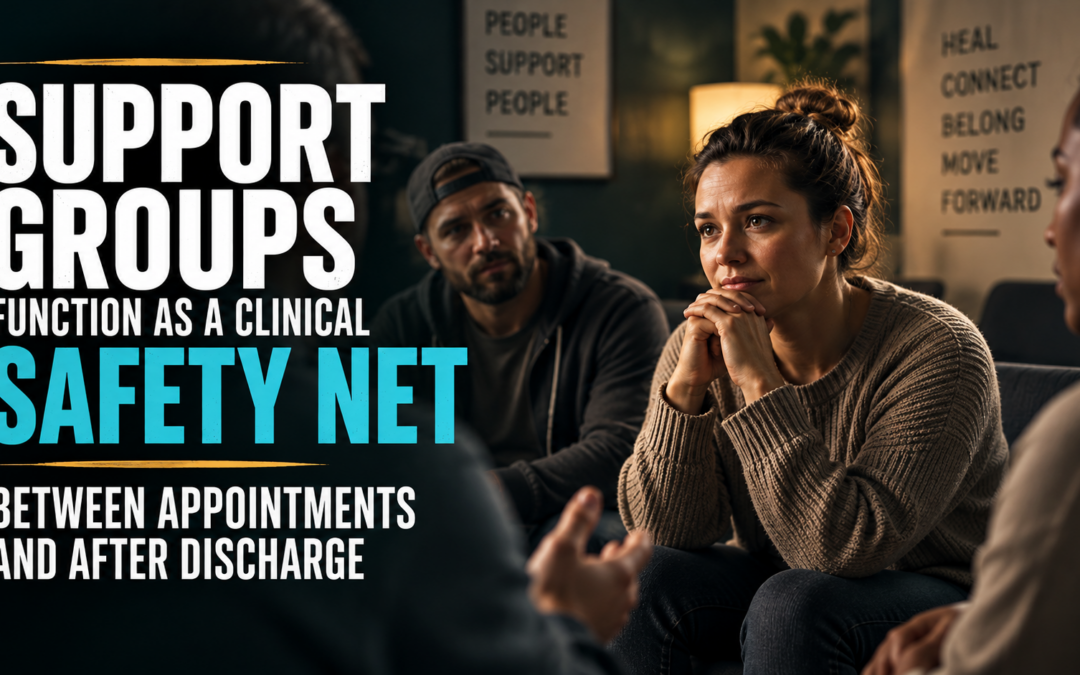
Support groups function as a clinical safety net that catches what happens between appointments and after discharge, holding a person steady during the hours when no therapist is in the room. Recovery does not pause between sessions or end the day a program does. Life keeps moving, and so do the challenges that come with it.
If you or someone you love has felt strong inside treatment yet shaky the moment ordinary life returns, you are not doing anything wrong. That gap is real, and it catches many people off guard.
The hopeful truth is that this gap does not have to be faced alone. Understanding how support groups fill that space is a gentle first step toward steadier days ahead.
What Does It Mean That Support Groups Function as a Clinical Safety Net?
Support groups function as a clinical safety net by offering steady, ongoing connection that catches struggles before they turn into setbacks. They stand ready in the everyday moments that formal treatment cannot always reach.
A therapist may see you once a week. A treatment program may last a set number of days. Support groups fill the space in between, staying present when appointments end and daily life resumes.
Think of it like the net beneath a tightrope walker. The walker still does the hard work of moving forward, but the net is there to catch a slip before it becomes a fall. Support groups offer that same quiet reassurance.
How Do Support Groups Work Alongside Formal Treatment?
Support groups work alongside formal treatment by reinforcing the skills learned in therapy and adding a layer of peer connection. They complement professional care rather than replacing it.
In therapy, you build tools and gain insight with a trained clinician. In a support group, you practice those tools among people who truly understand the journey.
One offers clinical guidance, and the other offers shared experience. Together, they create a fuller, sturdier foundation for lasting recovery.
Why Do the Moments Between Appointments Matter So Much?
The moments between appointments matter because most of recovery happens there, in the ordinary hours of daily life. Cravings, stress, and difficult emotions rarely wait for your next scheduled session.
A hard conversation on a Tuesday evening or a lonely Sunday afternoon can test your resolve long before you see your therapist again. Those stretches are where recovery is truly lived.
What Happens During the Gaps in Care?
During the gaps in care, a person faces real life without immediate professional support nearby. This is where old patterns can quietly resurface if nothing steadies them.
Picture learning a new skill in a class, then being sent home to practice alone for days. Without support, small doubts can grow, and progress can slip.
Support groups shrink those gaps. Between appointments, you have a place to turn, people to reach out to, and a reminder that you are not managing this on your own.
Why Is the Time After Discharge So Vulnerable?
The time after discharge is vulnerable because a person moves from structured, around-the-clock care back into everyday surroundings, often quite suddenly. The drop in support can feel steep.
Inside a program, each day has a clear shape. After discharge, that structure disappears, and old triggers, relationships, and stressors are still there waiting.
This is exactly where a strong aftercare plan makes such a difference. Regular support group attendance gives the transition home a dependable anchor, so early progress has something steady to rest on.
How Do Support Groups Build Accountability?
Support groups build accountability by turning recovery into something shared rather than solitary. When a group expects you, and you know others are counting on your presence, showing up becomes part of who you are.
Accountability here is never about judgment or pressure. It is about being seen and supported by people who understand what you are working toward.
Why Does Being Expected Help People Stay Steady?
Being expected helps because it gently pulls you forward on days when motivation runs low. On a hard morning, knowing that familiar faces are saving a seat for you can be the small nudge that gets you there.
This kind of accountability works because it comes from care, not control. No one is grading you or waiting to catch a mistake.
Over time, that steady noticing becomes a quiet source of strength. You slowly learn to show up for yourself the way others show up for you.
How Do Support Groups Create Belonging?
Support groups create belonging through repeated, shared experience that builds trust over time. The more you attend, the more a room of strangers becomes a community that truly knows you.
Belonging is one of the most protective forces in recovery. Feeling genuinely connected eases the isolation that so often fuels substance use and mental health struggles.
What Does Belonging Feel Like in a Group?
Belonging feels like walking into a room where you do not have to explain yourself. People already know your story, your progress, and your setbacks, and they hold all of it with care.
This safety takes time to build. Trust cannot be rushed into place during a single difficult week.
When you attend consistently, you become part of the fabric of the group. You start remembering others’ milestones, and they remember yours, and that shared history becomes something worth protecting.
How Does Connection Protect Recovery?
Connection protects recovery by reducing the loneliness that can quietly undermine progress. When you feel supported, difficult moments become easier to carry.
A support group offers people who have faced similar struggles and understand without needing long explanations. That understanding can be deeply steadying.
When one person feels weak, the group helps hold them up. This web of care is part of what makes support groups such a reliable safety net.
How Do Support Groups Fit With Ongoing Care?
Support groups fit with ongoing care by adding peer connection to the clinical tools that treatment provides. They strengthen the work happening in therapy, medical care, and structured programs.
For many people, groups pair naturally with outpatient care, where scheduled sessions and peer meetings reinforce each other. Clinical guidance and shared experience work hand in hand.
When substance use and mental health struggles overlap, this combination matters even more. Our mental health treatment programs care for the whole person, and support groups help extend that care into daily life between sessions.
When Is Additional Treatment Needed?
Additional treatment is needed when support groups alone no longer feel like enough to keep you steady. Groups are powerful, but they are one part of a larger picture, not a replacement for clinical care.
Recognizing this is not a failure. It is a wise, honest step toward the level of support you deserve.
Consider reaching out for more support if any of these feel true:
- Cravings, urges, or thoughts of using have grown stronger or more frequent.
- Your mental health symptoms are deepening despite regular group attendance.
- You have returned to substance use, or you sense a relapse building.
- Daily responsibilities like work, relationships, or self-care are slipping.
- You feel isolated, hopeless, or unsure how to move forward on your own.
If any of these resonate, that is a sign a higher level of care could give you a steadier foundation. Reaching out early is a strength, not a setback.
Common Questions Families Often Ask
Can support groups replace therapy or treatment?
No, and they are not meant to. Support groups work best alongside professional care, adding peer connection to the clinical tools that address the deeper roots of recovery. Both together offer far more than either one alone.
How often should someone attend a support group?
Aim for a steady, regular rhythm, even during calm stretches. Consistent attendance builds the trust, accountability, and belonging that make groups such a dependable safety net over time.
Are support groups helpful right after discharge?
Yes, and this is one of the most important times to attend. The stretch after discharge often feels vulnerable, and regular groups help bridge the gap between structured care and everyday life.
How soon can care begin?
Support can start soon after you reach out. Our admissions team is available to answer your questions, verify insurance, and guide you toward the next step with patience and care.
You Do Not Have to Navigate the In-Between Alone
Support groups function as a clinical safety net that catches what happens between appointments and after discharge, offering steady connection during the exact moments recovery is most often tested. They do not replace professional care. They extend it into the ordinary hours where real life unfolds.
Recovery is a journey, and you were never meant to walk it alone. With consistent support and care matched to your needs, the space between sessions can feel far less daunting.
If you or someone you love needs steady support to protect the progress you have worked so hard to build, please reach out to the Robert Alexander Center for Recovery today. Our caring team is ready to listen, answer your questions, and help you take the next step toward steadier, more hopeful days ahead. You are not alone, and help is here whenever you are ready.