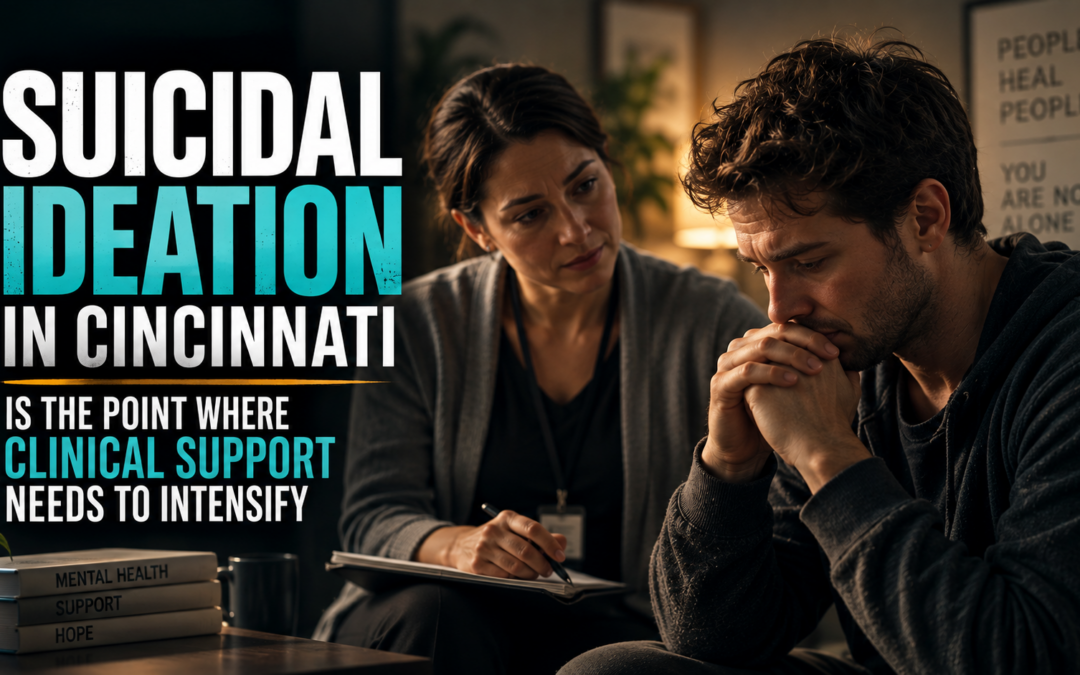
Suicidal ideation in Cincinnati is a clear signal that a person’s level of clinical support needs to rise, not stay where it is or fade into the background. When thoughts of not wanting to be here appear, that moment calls for more care, not less.
If you or someone you love is having these thoughts, please know that you are not weak, broken, or beyond help. These thoughts are a sign that pain has grown heavy, and pain that heavy deserves real support.
The hopeful truth is that suicidal thoughts can ease with the right care, and many people move through them into steadier days. Understanding what these thoughts mean, and why they call for stronger support, is a gentle first step toward safety and hope.
What Is Suicidal Ideation and Why Does It Signal a Need for More Support?
Suicidal ideation in Cincinnati refers to thoughts about ending one’s life, ranging from passing wishes to not exist to detailed and specific plans. It signals a need for more support because it reflects a level of emotional pain that has outgrown a person’s current coping tools.
These thoughts are not a character flaw. They are a symptom, much like a fever signals that something in the body needs attention.
Think of it like a warning light on a dashboard. Ignoring it or waiting for it to fade rarely helps. It is a message that something important needs care right now.
Why Should Care Intensify Rather Than Hold Steady?
Care should intensify because suicidal thoughts show that a person’s usual support is no longer meeting the weight they are carrying. Staying at the same level of care can leave someone alone with pain that has already proven too heavy.
When these thoughts appear, the goal is to add support, not maintain the status quo. That might mean more frequent sessions, a higher level of care, or closer monitoring.
Rising to meet the moment is an act of compassion. It tells a person that their pain is taken seriously and that they do not have to hold it alone.
Why Do Suicidal Thoughts Call for a Higher Level of Clinical Care?
Suicidal thoughts call for a higher level of clinical care because safety and stabilization become the first priority. A more intensive setting can offer the structure, supervision, and support that lighter care cannot.
Different levels of care exist for exactly this reason. As distress grows, treatment can grow with it.
What Does a Higher Level of Care Actually Offer?
A higher level of care offers more time with professionals, more structure, and a safer environment during a vulnerable stretch. It surrounds a person with support instead of leaving long gaps between check-ins.
For someone in significant distress, residential care provides a safe, focused setting with support available around the clock. That steady presence can make a real difference when thoughts feel overwhelming.
This kind of care is not about losing independence. It is about borrowing extra strength and safety until a person feels steadier again.
How Does Stepping Up Care Protect a Person?
Stepping up care protects a person by reducing isolation and increasing the support available in hard moments. When thoughts feel darkest, having people nearby matters deeply.
Imagine trying to cross a rushing stream alone versus crossing with someone holding your hand. The water is the same, but the safety is not.
More intensive care offers that steady hand. It keeps a person connected to help exactly when connection matters most.
How Does Suicidal Ideation Intersect With Substance Use and Mental Health?
Suicidal ideation often intersects with substance use and mental health conditions, and each one can deepen the others. When these struggles overlap, the risk rises and the need for coordinated care grows.
This connection is common, and understanding it helps families see the fuller picture. Treating one struggle while ignoring the others often leaves a person exposed.
How Do Substance Use and These Thoughts Feed Each Other?
Substance use and suicidal thoughts feed each other because substances can deepen depression, lower inhibition, and intensify hopelessness. What may start as an attempt to numb pain can quietly make that pain more dangerous.
Alcohol and many drugs affect mood and judgment. In a low moment, that combination can make dark thoughts feel more urgent and harder to resist.
This is why care that addresses both together is so important. Treating substance use and emotional pain as one connected experience gives a person a stronger, safer foundation.
Why Does Integrated Care Matter So Much Here?
Integrated care matters because it treats the whole person rather than splitting their struggles into separate boxes. When mental health and substance use are cared for together, nothing important slips through the cracks.
Our mental health treatment programs are built around this idea, so emotional pain and substance use receive attention side by side. Your care team shares information and adjusts the plan as needs change.
That coordination helps a person feel understood as a full human being. It also allows care to intensify quickly when safety becomes the priority.
What Should Families Watch For?
Families should watch for changes in words, behavior, and mood that suggest a person is struggling with thoughts of ending their life. These signs often appear gradually, so paying gentle attention matters.
You do not need to be certain to start a caring conversation. Noticing a shift is reason enough to reach out with love.
Common warning signs worth noticing include:
- Talking about wanting to die, feeling hopeless, or being a burden to others
- Withdrawing from family, friends, or activities they once enjoyed
- Giving away possessions or saying goodbye in unusual ways
- Increasing use of alcohol or drugs, especially during low moods
- Sudden calm after a period of deep despair, which can sometimes follow a decision
Noticing one sign is reason enough to check in. Noticing several together is a strong signal to seek professional help right away.
How Can You Talk to a Loved One About This?
You can talk to a loved one by asking directly, listening without judgment, and letting them know they are not alone. Asking about suicide does not plant the idea. It often brings relief.
Try gentle, honest questions like, “Are you thinking about hurting yourself?” Then simply listen, without rushing to fix or minimize what they share.
Let them know you care and that help is available. Offering to sit with them while they reach out can turn a frightening moment into a shared step toward safety.
What Does Treatment Look Like Once Care Intensifies?
Treatment once care intensifies focuses first on safety, then on healing the pain underneath the thoughts. A caring team works to stabilize a person while building a plan for lasting support.
Care is personalized, never one-size-fits-all. It considers a person’s history, their current safety, and the struggles that brought them to this point.
Most plans blend several supportive elements:
- Individual therapy to explore the pain behind the thoughts and build coping tools
- Cognitive Behavioral Therapy, which helps a person gently reshape hopeless or distorted thinking
- Medication support when appropriate, guided by a caring prescriber who monitors how a person feels
- Group support that reminds a person they are not alone in what they are facing
- Attention to substance use, so emotional pain and substance use heal together
Each piece works toward the same goal. The aim is to help a person feel safer, steadier, and more able to imagine a hopeful future.
When Should You Seek Immediate Emergency Help?
You should seek immediate emergency help when a person is in danger of acting on suicidal thoughts. Some moments cannot safely wait, and reaching out fast can save a life.
Treat it as an emergency and get help right away if you or a loved one:
- Has a plan or the means to act on suicidal thoughts
- Has taken steps toward ending their life
- Is talking about suicide with growing urgency or detail
- Feels unable to stay safe on their own right now
- Has combined intense despair with heavy substance use
In these moments, call 988, the Suicide and Crisis Lifeline, call 911, or go to the nearest emergency room. Please do not wait, and please do not try to carry this alone.
Common Questions Families Often Ask
Does asking about suicide make it more likely?
No. Research consistently shows that asking about suicide does not plant the idea. In fact, asking openly often brings relief and opens the door to help.
Can suicidal thoughts really go away?
Yes. With the right support, many people find that these thoughts ease over time. Suicidal thoughts are a signal of deep pain, and that pain can be treated and eased.
What if my loved one refuses help?
Keep showing up with love, and involve professionals when you can. In an emergency, call 988 or 911. A caring team can guide you through how to support someone who is hesitant.
How soon can care begin?
Support can start soon after you reach out. Our admissions team is available to answer your questions, verify insurance, and guide you toward the next step with patience and care.
You Do Not Have to Face This Alone
Suicidal ideation in Cincinnati is the point where clinical support needs to intensify, not hold steady, because pain this heavy deserves more care, more connection, and more safety. Rising to meet that moment is not an overreaction. It is an act of hope and love.
Recovery and relief are possible, and reaching out is a brave, life-affirming step. With compassionate support, the weight you or your loved one is carrying can begin to ease.
If you or someone you love is struggling with thoughts of suicide, please reach out to the Robert Alexander Center for Recovery today. Our caring team is ready to listen, answer your questions, and help you take the next step toward steadier, more hopeful days ahead. You are not alone, and help is here whenever you are ready.
If you are in crisis or worried about someone’s immediate safety, please call or text 988, the Suicide and Crisis Lifeline, any time of day or night. You can also call 911 or go to the nearest emergency room. Help is always available, and you deserve support.